Does Non-Alcoholic Wine Have Sulfites? Read the Label
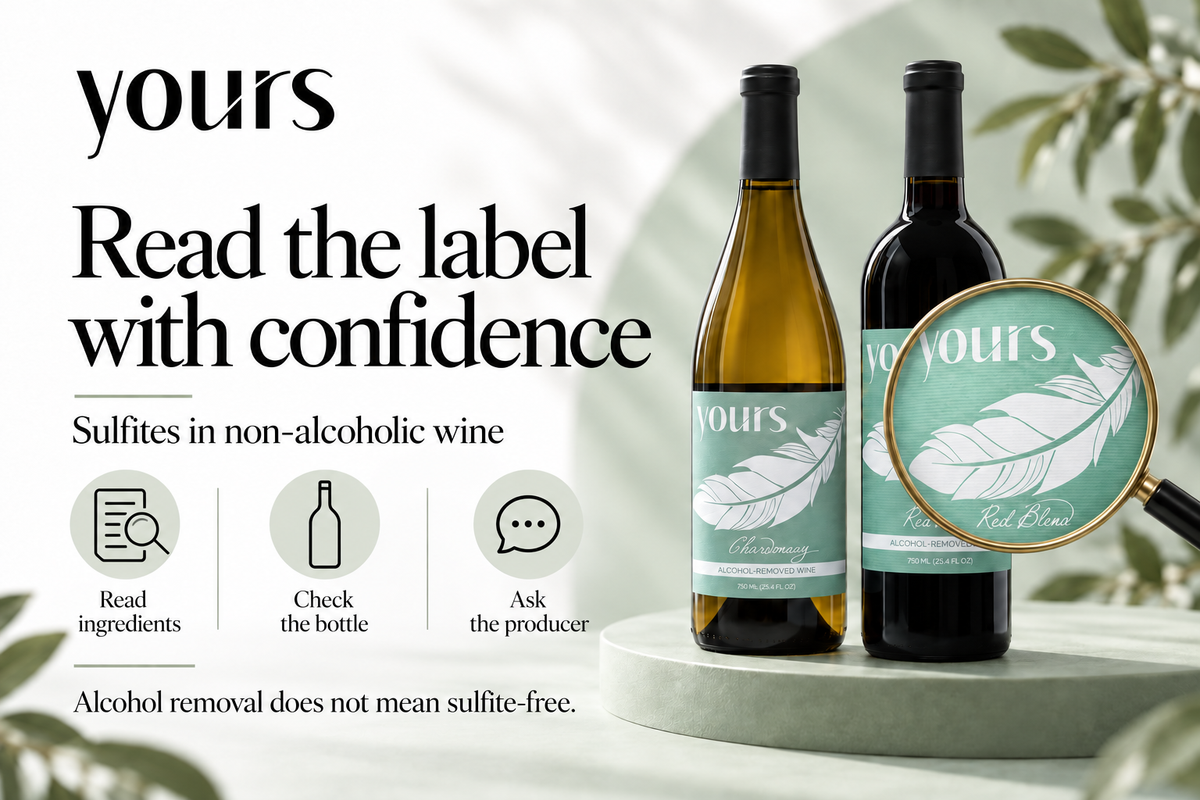
Yes, non-alcoholic wine can contain sulfites. Removing alcohol does not establish that a wine is sulfite-free. Read the ingredients and any sulfite statement for the exact bottle. YOURS Red Blend and Chardonnay both list sulfites as a preservative in their current product information.
This YOURS guide explains what to check and which claims need different evidence. We make wine, so our products are identified clearly. This is general label information, not a diagnosis or a personalized dietary recommendation. Product details and primary sources were checked on September 12, 2026.
Alcohol content and sulfites are separate label facts

Alcohol by volume, or ABV, describes alcohol concentration. A sulfite statement describes a different part of the product. One fact cannot be used to calculate the other.
The TTB guide to sulfite declarations explains that sulfites can occur naturally during winemaking and can also be added. A wine's production method and formulation matter. An alcohol-removal claim alone does not tell you its sulfite level.
| Label detail | What it tells you | What it does not establish |
|---|---|---|
| Less than 0.5% ABV | The stated alcohol limit | A sulfite concentration |
| Alcohol-removed wine | Alcohol has been removed from wine | A sulfite-free product |
| Contains sulfites | The product carries a sulfite declaration | An exact amount per serving |
| Sulfites listed as a preservative | A declared preservative ingredient | A personal tolerance level |
YOURS wines contain less than 0.5% ABV. They should not be described as zero-alcohol wines. Our alcohol label guide covers those terms separately so that the two questions remain clear.
“No added sulfites” and “sulfite-free” mean different things

“No added sulfites” describes an addition claim. Naturally occurring sulfites can still be relevant. “Sulfite-free” is a broader claim that should have its own support. Do not treat the phrases as interchangeable when shopping.
An absent statement also needs care. Labeling requirements depend on the product and applicable rules. The FDA's guidance on undeclared sulfiting agents distinguishes ingredients that perform a function from certain incidental amounts. That detail is one reason a missing statement should not be treated as a personal safety certificate.
For a practical comparison, ask the producer a specific question: does this bottle contain sulfites, and is a measured concentration available for the relevant batch? A general claim about the brand may be less useful than information tied to the exact product.
The phrase organic addresses another set of rules. It should not be used as a shortcut for every ingredient or sensitivity question. Read the actual claim and the product information rather than inferring an answer from a single front-label word.
What does YOURS disclose?

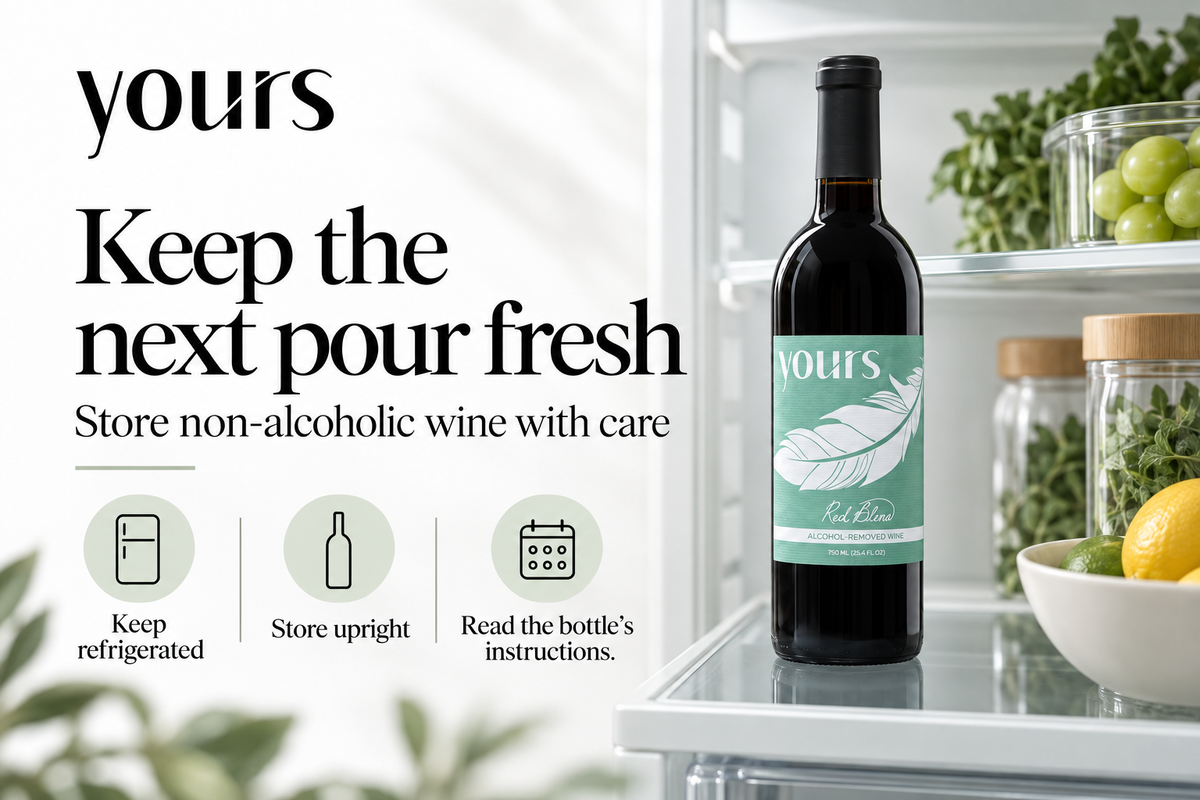
The current product information for the following wines includes sulfites as a preservative:
| YOURS wine | Current ingredient disclosure | Alcohol statement |
|---|---|---|
| California Red Blend | Sulfites listed as a preservative | Less than 0.5% ABV |
| California Chardonnay | Sulfites listed as a preservative | Less than 0.5% ABV |
This table reports the listed ingredients. It does not claim a laboratory-measured amount, compare sulfite concentrations, or establish suitability for someone with a sensitivity. A number cannot be inferred from the position of an ingredient in a short marketing description.
For another YOURS wine, including Sauvignon Blanc, read its current bottle information or ask our team. We do not extend a confirmed ingredient statement from one product to another without checking it.
Product information can change. The bottle you receive and current batch-specific guidance are the right starting points when an ingredient affects your decision. Keep a photograph of the label or the package available when you contact the producer.
How to check a bottle before buying or serving it

Use this short sequence to get a useful answer:
- Identify the exact brand, wine, bottle size, and batch details if available.
- Read the ingredient list and any sulfite declaration on the package.
- Check the current producer page for matching product information.
- Ask the producer about any missing or conflicting detail before serving it.
- If you have a known sensitivity or a medical concern, ask a qualified clinician for advice that fits your situation.
Cooking or storage is not a substitute for that check. Do not assume that heating a sauce or opening a bottle removes a declared ingredient. Our cooking guide discusses flavor and substitutions; it does not certify a dish as free of allergens or sulfites.
For guests, make the original label available and describe the drink accurately. Give people a choice without asking them to explain a private health concern. A clearly identified alternative can make hosting easier for everyone.
Frequently asked questions
Does non-alcoholic wine contain sulfites?
It can. Read the exact bottle's ingredients and sulfite statement. Alcohol removal does not establish that a product is sulfite-free.
Does YOURS Red Blend contain sulfites?
The current YOURS Red Blend product information lists sulfites as a preservative. It also states less than 0.5% ABV.
Does YOURS Chardonnay contain sulfites?
The current YOURS Chardonnay product information lists sulfites as a preservative. It also states less than 0.5% ABV.
Is no added sulfites the same as sulfite-free?
No. No added sulfites describes an addition claim. Naturally occurring sulfites can still be present, so the broader sulfite-free claim needs separate support.
Where can I get an exact sulfite amount?
Ask the producer whether measured information is available for the exact product and batch. An ingredient declaration alone does not supply a concentration.