Non-Alcoholic Wine vs Kombucha: Taste, Labels and Use
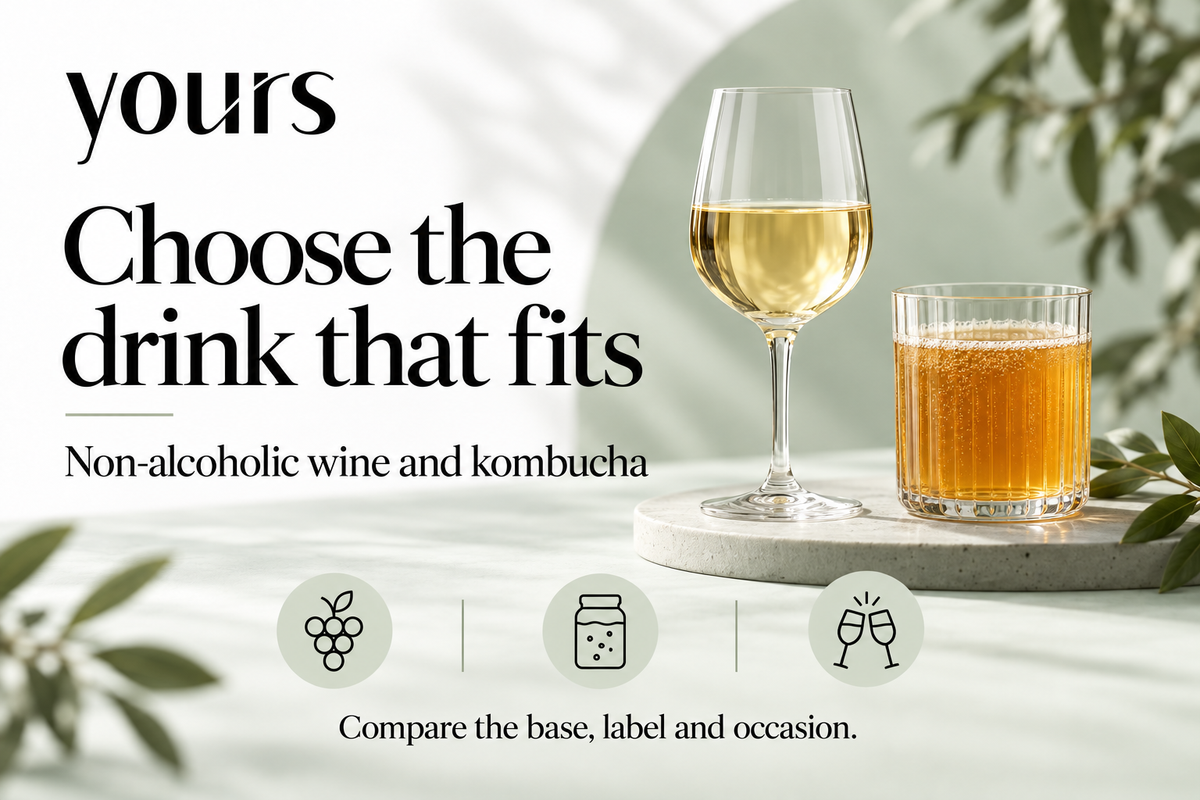
Non-alcoholic wine and kombucha start with different ingredients and suit different tastes. Alcohol-removed wine starts as fermented grape wine. Kombucha starts with sweetened tea and a culture of yeast and bacteria. Both need a label check for alcohol, sugar, ingredients, and storage. Neither category has one universal nutrition profile.
Choose by the drink you want and the bottle you have. This YOURS comparison covers flavor, label details, and everyday serving choices. We make non-alcoholic wine, so our role in this comparison is disclosed. Product information and primary sources were checked on September 12, 2026.
What are the two drinks made from?

Alcohol-removed wine goes through winemaking before an alcohol-removal process. The resulting product can retain some alcohol. YOURS wines contain less than 0.5% ABV, where ABV means alcohol by volume. See our guide to wine label terms for the difference between non-alcoholic and alcohol-free claims.
Kombucha uses a different base. The U.S. Alcohol and Tobacco Tax and Trade Bureau's kombucha guide describes fermentation of sweetened tea with yeast and bacteria. That fermentation can produce alcohol as well as the flavor changes associated with the drink.
| Feature | Alcohol-removed wine | Kombucha |
|---|---|---|
| Starting point | Fermented grape wine | Sweetened tea and cultures |
| Flavor cues | Vary by grape, winemaking, and formulation | Vary by tea, fermentation, and added flavors |
| Bubbles | Still or sparkling, depending on the product | Often fizzy; check the product |
| Alcohol | Read the exact alcohol statement | Read the exact alcohol statement |
| Ingredients | Check the bottle or producer information | Check tea, sweeteners, cultures, and flavor ingredients |
These are buying distinctions, not quality rankings. A person who likes a tea-based drink at lunch may also enjoy a wine-style drink with dinner. Taste each product in the setting where you plan to serve it.
Compare alcohol, sugar, and caffeine on the label

Start with the serving size. Sugar and calorie figures for 100 mL, 5 oz, and a whole bottle cannot be compared as if they describe the same amount. Use the same volume when you compare products, and distinguish total sugar from added sugar.
For example, YOURS Red Blend lists 10 calories and 1 gram of total sugar per 5 oz. YOURS Chardonnay lists 30 calories and 4 grams of total sugar per 5 oz. These are two specific wines, not category averages. Our nutrition comparison explains why serving sizes matter.
Tea-based kombucha can contain caffeine. Health-Ade's ingredient information, for example, identifies black and green tea in its base. Check the exact product if caffeine matters to you; a category name alone does not give you the amount in your glass.
Alcohol also needs its own check. TTB explains that continued fermentation can raise kombucha's alcohol content, and refrigeration alone does not guarantee it stays below the applicable alcohol threshold. A bottle sold as kombucha should never be assumed to contain zero alcohol just because it is tea-based.
Choose for the meal and the flavor you enjoy

Use these as tasting starting points rather than promises about every brand:
| What you want | A useful place to start | What to compare |
|---|---|---|
| A familiar wine-glass ritual | A non-alcoholic red or white wine | Grape style, body, sweetness, and the meal |
| Tea-based flavor with a tangy profile | A kombucha with ingredients you enjoy | Tea base, added flavors, sweetness, and fizz |
| Bubbles for an occasion | A product explicitly labeled sparkling or fizzy | Carbonation and the alcohol statement |
| A drink for a mixed group | More than one clearly labeled option | Guests' preferences and ingredient needs |
For a wine-style dinner, explore the YOURS collection and our food-pairing guide. Red Blend, Chardonnay, and Sauvignon Blanc offer different starting points. The current YOURS range discussed here consists of still wines; a separate sparkling drink is a different choice.
Keep health claims out of the taste decision. Words such as fermented, natural, or no added sugar do not establish that one drink is suitable for every person. This comparison does not rank either category as a treatment or a health solution.
Store each bottle as its producer directs

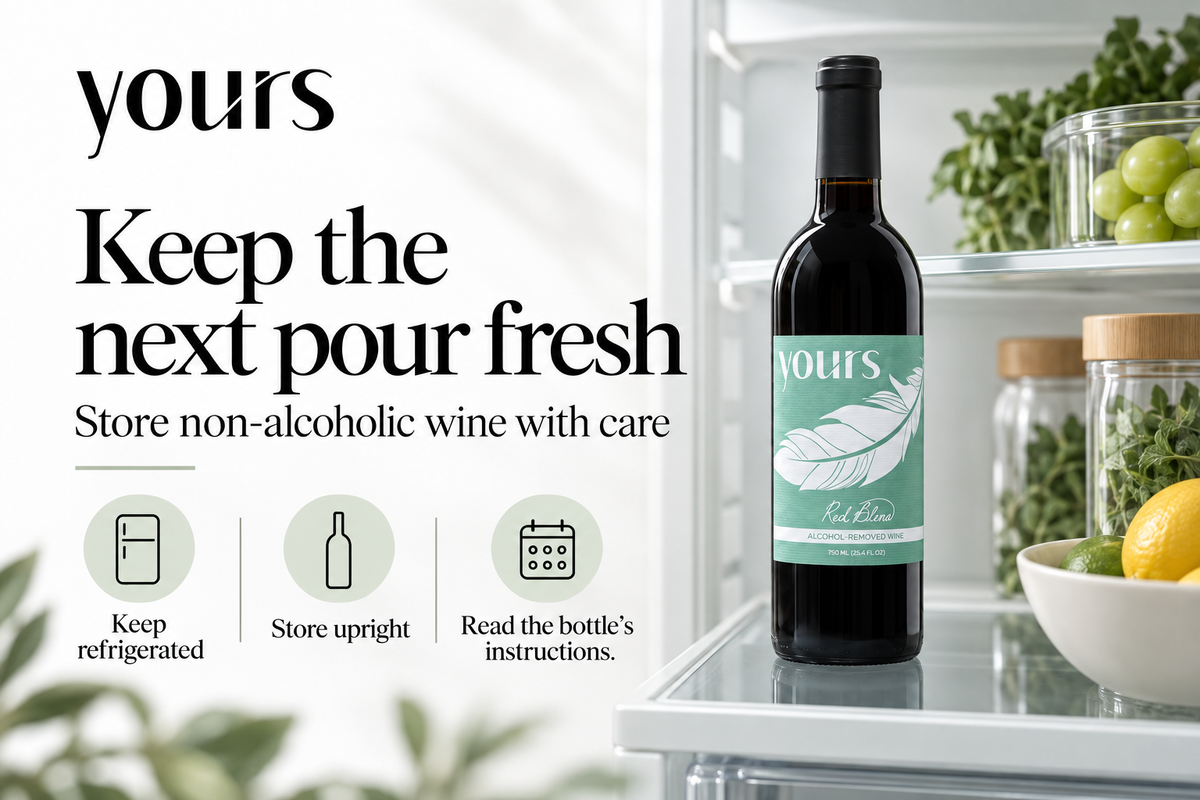
Read storage instructions before opening. Keep the original label available and follow any refrigeration requirement. After opening, use the specific producer's storage and use guidance. Do not copy a shelf-life claim from one brand onto another.
For wine, our storage guide explains the practical steps: reseal, refrigerate as directed, and record the opening date. Kombucha can have different handling needs, particularly where fermentation continues. Its own package instructions should guide you.
When choosing for a guest, show the label and let the guest decide. If someone needs to avoid alcohol completely, neither the phrase non-alcoholic wine nor the word kombucha settles that question. Provide a clearly identified alternative and respect their choice.
Frequently asked questions
Is kombucha the same as non-alcoholic wine?
No. Kombucha starts with sweetened tea and cultures. Alcohol-removed wine starts as fermented grape wine before alcohol removal.
Can either drink contain alcohol?
Yes. YOURS wines contain less than 0.5% ABV. Kombucha can also contain alcohol, so check the exact product statement.
Does kombucha contain caffeine?
Tea-based kombucha can contain caffeine. Check the producer's information for the exact product and serving size.
Which drink has less sugar?
Compare the nutrition information for the specific bottles using the same serving volume. The category name does not establish a lower sugar content.
Can I use the same storage rule for both?
Follow each product's own instructions. Formulation, packaging, and fermentation can differ, so one shared shelf-life rule is unreliable.