Non-Alcoholic Wine Food Pairing: A Pantry-to-Table Guide
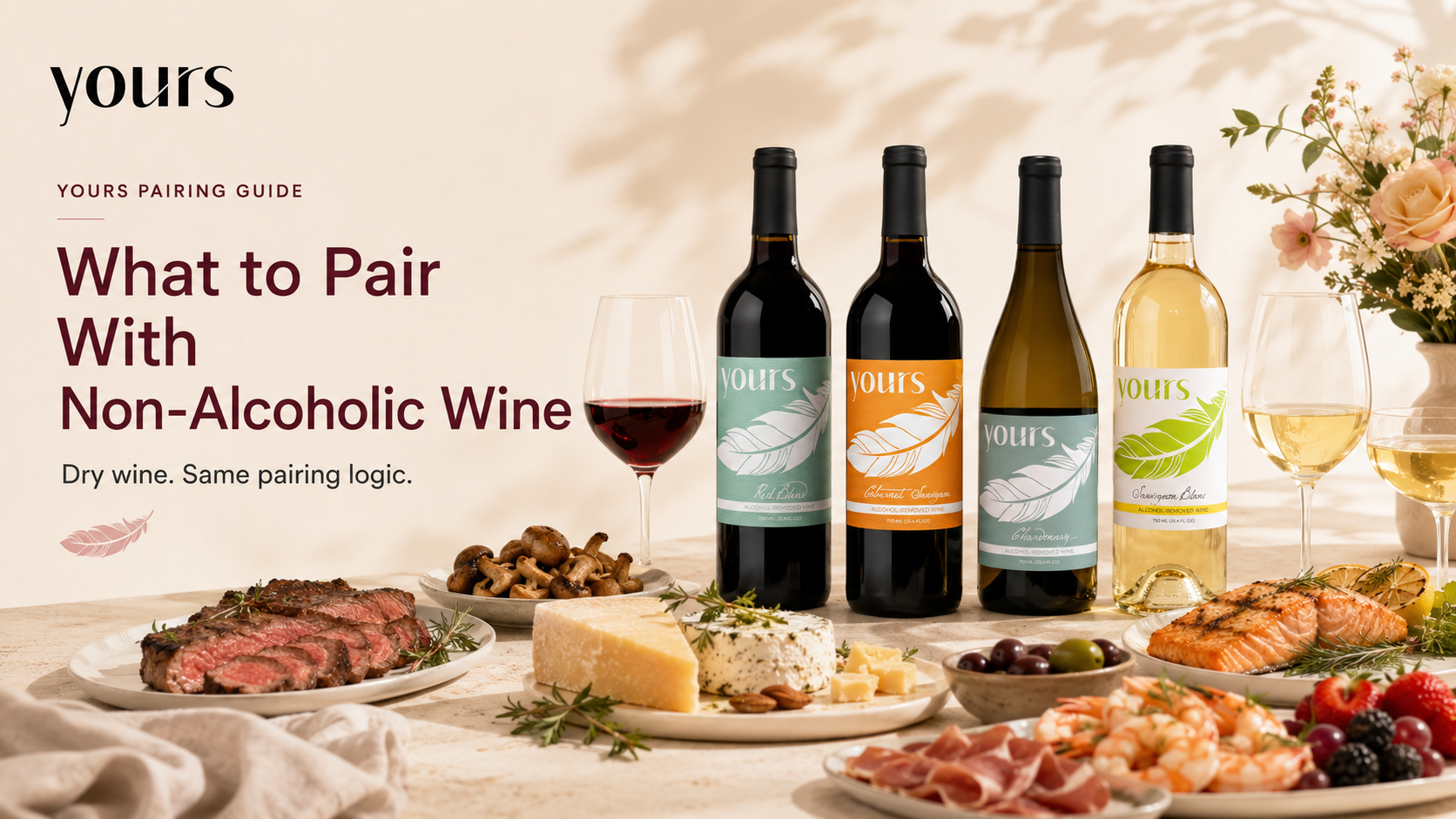
Most people ask the wrong question when they set the table.

"What do I serve instead of wine?" is the question. It frames NA wine as a substitute, something you tolerate when the real thing isn't an option. That framing breaks the pairing logic before you've even opened the bottle.
The right question is: "What do I pair with this wine?" Same rules. Same logic. Because if the wine is actually dry, the chemistry that governs pairing still applies.
YOURS is dry. Made by California winemakers from real grapes, dealcoholized at the end, with no added sugar and a clean, structured finish. That's the detail that changes everything about pairing. Sweet NA wines clash with savory food the same way a dessert wine clashes with a steak. Dry NA wine pairs the same way dry wine always has. For a full breakdown of the YOURS range, tasting notes, nutrition, and how each SKU is built, the YOURS Non-Alcoholic Wine review covers it all.
Here's how to use it.
Pairing at a Glance: Which YOURS Wine With Which Food
The pairing logic for non-alcoholic wine follows the same principles as its alcoholic counterpart, acidity, tannins, and sugar balance all apply. Here's the short version:
| YOURS Wine | Best Pairings | Avoid |
|---|---|---|
| California Red Blend | Grilled beef, lamb, aged cheddar, mushroom risotto | Delicate white fish, light salads |
| Cabernet Sauvignon | Ribeye, lamb chops, hard cheese, dark chocolate | Oysters, sushi, cream sauces |
| Washington Sauvignon Blanc | Goat cheese, asparagus, grilled shrimp, Thai food, salads | Heavy red meat, rich cream sauces |
| Rosé | Salmon, charcuterie, soft cheese, light pasta, watermelon | Heavily spiced dishes, heavy red meat |

What to Pair with Non-Alcoholic Red Wine (The Tannin Logic Still Applies)
Red wine pairing is built on one principle: tannins bind to protein.
That's the mechanism behind every classic pairing. A bold Cabernet with a ribeye. Aged cheese with a Barolo. Mushroom pasta with a Côtes du Rhône. Tannins are polyphenolic compounds that form complexes with salivary proteins through hydrogen bonding and hydrophobic interactions, a mechanism documented in sensory science literature (Haslam, 1998; Soares et al., 2012). When tannins bind to the proteins and fats in food, the perceived astringency of the wine softens and the savory character of the dish is amplified. Neither dominates.
YOURS California Cabernet Sauvignon carries dark fruit, black currant, tobacco, cedar, and oak. The tannin structure is present. The dry finish is intact. Dealcoholization removes the ethanol, not the phenolics and tannins that do the actual work at the table. Phenolic compounds, including tannins, have significantly lower volatility than ethanol and are largely retained through low-temperature spinning cone column processing.
YOURS California Cabernet Sauvignon pairs with grilled red meat, aged cheddar, and mushroom-based dishes using the same tannin-protein binding logic that governs all red wine pairing.
The pairings that work:
- Grilled ribeye or flank steak, medium-rare
- Braised lamb shanks or lamb chops
- Aged cheddar, manchego, or parmigiano reggiano
- Mushroom pasta, mushroom risotto, or anything with deep umami from roasted fungi
- Black bean tacos or burgers with sharp cheese
- Lentil stew with smoked paprika
Earthy, savory, umami-forward. That's the lane.
YOURS Red Blend is rounded with soft tannins and dark fruit, making it slightly more flexible. Where the Cab Sauv wants protein and fat, the Red Blend handles lighter red meat (chicken thighs, pork tenderloin), a charcuterie board with cured meats, or pasta with a meaty tomato sauce.
What to avoid with red: Delicate white fish, light citrus-dressed salads, or anything sweet. The tannins will overwhelm the food or clash with the sugar.
Serve YOURS Cab at 60-65°F. That's the same serving temperature as a traditional Cabernet. Room temperature in most homes is too warm.
One pairing failure worth knowing: non-alcoholic wines that use grape juice concentrate for volume, common in the category, tend to amplify sweetness when paired with food, particularly anything with natural sugars (glazed proteins, root vegetables, caramelized onions). The missing tannin structure also means they won't cut through fat the way a dry red would. If food pairing matters to you, check the label for added sugar before buying.

What to Pair with Non-Alcoholic White Wine (Acidity Cuts Through Fat)
White wine pairing runs on a different engine: acidity.
The bright, clean acidity in a Sauvignon Blanc cuts through fat the same way a squeeze of lemon does over a piece of salmon. It clears the palate, brightens the dish, and prevents richness from sitting heavy. That function doesn't live in the alcohol. It lives in the acid profile of the wine itself.
YOURS Washington Sauvignon Blanc is crisp, with citrus, green apple, and mineral character. Washington's Columbia Valley AVA produces Sauvignon Blanc with pH levels typically in the 3.1 to 3.4 range and titratable acidity (TA) in the 6.0 to 7.5 g/L range, driven by the region's wide diurnal temperature swings (often 40°F or more between day and night highs), which slow sugar accumulation and preserve malic acid. That acidity profile survives dealcoholization because acid compounds are non-volatile and not removed by spinning cone column processing. The acid structure in YOURS does what Sauvignon Blanc has always done.
YOURS Washington Sauvignon Blanc pairs with seafood, goat cheese, lemon-dressed dishes, and poultry because the wine's citrus-driven acidity cuts through fat and amplifies bright, clean flavors.
The pairings that work:
- Grilled salmon or trout with lemon butter
- Shrimp scampi or sautéed scallops
- Oysters (a classic for a reason)
- Goat cheese on a crostini or in a salad
- Light chicken dishes: roast chicken, chicken piccata, lemon herb grilled chicken
- Pasta with cream sauce, clam sauce, or pesto
- Asparagus, artichokes, green vegetables
- Dishes with capers, lemon, or fresh herbs
That last group matters. Capers (pH approximately 3.5 to 4.0) and lemon juice (pH approximately 2.0 to 2.5) are among the most acidic common food ingredients. The classic pairing principle for high-acid foods is to match acidity rather than contrast it: a wine with lower acidity tastes flabbier and thinner next to a high-acid dish. Sauvignon Blanc, with its naturally high tartaric and malic acid content, matches the brightness of these ingredients rather than being overwhelmed by them. YOURS carries that acidity through dealcoholization intact.
What to avoid with white: Heavy red meat, strong aged cheese, or anything with a very bold tomato sauce. The wine will taste thin and sharp next to those flavors rather than complementary.
Serve YOURS Sauv Blanc at 45-50°F. Cold enough to sharpen the acidity, not so cold it closes off the aromatics.
For more on why the Sauvignon Blanc is built differently from most NA whites, the full varietal breakdown is here.
What to Pair with Non-Alcoholic Rosé (The Bridge Wine)
Rosé plays a different role at the table. It's the bridge.
Too light for heavy meat, too structured for delicate fish, rosé lands perfectly in the middle. Charcuterie. Grilled salmon. Summer vegetables. Apps and light starters at a gathering. The strawberry and white peach notes in YOURS Rosé complement foods with a little richness but not heaviness. The dry finish prevents the sweetness problem that plagues most NA rosés.
YOURS Rosé pairs with charcuterie boards, grilled salmon, summer vegetables, and light starters because its dry finish and berry-forward profile bridge the gap between the boldness of red and the delicacy of white. Rosé sits in an intermediate phenolic range: less tannin than a Cabernet but more structure than a Sauvignon Blanc, which is why it handles a wider range of food textures without overwhelming delicate proteins or getting lost next to cured meats.
The pairings that work:
- Charcuterie: prosciutto, salami, cornichons, olives, soft cheese
- Grilled salmon or swordfish with herbs
- Caprese salad, bruschetta, tomato-forward appetizers
- Vegetable dishes: grilled zucchini, roasted beets, summer squash
- Niçoise salad
- Pizza with fresh toppings (margherita, arugula, prosciutto)
- Lightly spiced dishes, the fruit notes handle mild heat well
Rosé is also the right call when the table is eating different things. Thanksgiving appetizer hour. A spread where half the table is having steak and half is having salmon. Rosé holds its own across that range.
Serve at 50-55°F. It opens up a little warmer than whites and rewards a few minutes out of the fridge before pouring.
The full case for YOURS Rosé is in the varietal guide here.

Which Bottle to Open for Each Occasion
The wine matters, but so does the moment. Here's what to reach for depending on the occasion.
Dinner party with a mix of drinkers and non-drinkers
Open the YOURS Red Blend and the Rosé both. The Red Blend at the table for the main course. The Rosé during the starter and appetizer phase. Non-drinkers aren't explaining themselves, and drinkers aren't wondering what's in the glass. The bottles look the same. The glasses fill the same way. The ritual holds.
Weeknight dinner
The Washington Sauvignon Blanc is the weeknight wine. Pasta, roast chicken, whatever's in the pan, it handles it without ceremony. It's the bottle you open on a Tuesday without needing a reason.
Thanksgiving
This is the occasion the YOURS Rosé was made for. Thanksgiving is a pairing nightmare: turkey, stuffing, cranberry, mashed potatoes, green beans, sweet potato, multiple textures and flavor profiles at the same table. Rosé is the only varietal that bridges all of it. It doesn't fight the cranberry the way a tannic red does, and it doesn't get lost next to the richness of gravy and butter the way a Sauvignon Blanc can.
Open the Rosé for the meal. The Cab Sauv or Red Blend works if people are eating the darker, meatier dishes.
For anyone at the table who's not drinking or drinking less, the bottle is already there. No need to make a separate trip to the store.
Date night
The California Cabernet Sauvignon. Full stop. It has the ritual: the dark bottle, the deep color in the glass, the cedar and black currant on the nose. If the evening calls for steak or a slow-cooked braise, the pairing earns its place. The Cab Sauv detail is here.
Hosting someone who doesn't drink
The Rosé is the most approachable entry point for guests who haven't tried NA wine. The flavor profile is familiar, the pour looks right, and it works with appetizers without requiring a food pairing lesson. Serve it cold, pour it with confidence, and let the wine do the talking.
Serving Temperature and Glassware (Same as Traditional Wine)
This is where most people undercut a good pairing.
Temperature changes how wine tastes. Too warm and the wine goes flat, especially on the nose. Too cold and the aromatics close off entirely. YOURS behaves exactly the same way as the traditional varietals it's built from.
Serving temperatures:
| Wine | Serve At |
|---|---|
| YOURS California Cabernet Sauvignon | 60-65°F |
| YOURS Red Blend | 60-65°F |
| YOURS Rosé | 50-55°F |
| YOURS Washington Sauvignon Blanc | 45-50°F |
The Sauv Blanc and Rosé go straight into the fridge. Pull the reds out 15-20 minutes before serving if they've been refrigerated.
Glassware: Use the appropriate wine glass. A large-bowled glass for the reds and a standard tulip glass for the white and rosé. The bowl size affects how the aromas concentrate and reach the nose. This isn't precious wine behavior. It's the same physics whether the bottle has alcohol or not.
Pour at 5 oz. That's the standard serving size for wine, the same measure YOURS uses for its calorie and nutrition figures (10-20 cal per 5 oz pour, 4g carbs, zero added sugar).
For the full picture on why dry matters for pairing and why most NA wines fail at the table, read why NA wine tastes sweet and why YOURS doesn't. And if you're curious about the production process that makes dry NA wine possible, how non-alcoholic wine is made covers the dealcoholization process from grape to glass. For a deeper dive on glassware, serving temperature, and chilling technique, see how to serve non-alcoholic wine.
Frequently Asked Questions
Does non-alcoholic wine pair with food the same way regular wine does?
Yes, when the wine is actually dry. The pairing logic for wine is based on acidity, tannins, and flavor profile, not on alcohol content. Alcohol contributes to mouthfeel but doesn't do the primary work in a food pairing. The problem is that most NA wines are sweet, and sweet wine clashes with savory food. YOURS is dry and follows the same pairing principles as traditional wine.
What food goes with non-alcoholic red wine?
Non-alcoholic red wine pairs best with protein-rich, fat-rich, and umami-forward foods. The tannins in red wine bind to protein, which is why red meat, aged cheese, and mushroom dishes are the classic companions. YOURS California Cabernet Sauvignon works with grilled steak, lamb, mushroom pasta, and strong aged cheeses like cheddar or manchego. YOURS Red Blend is slightly more versatile and handles charcuterie, cured meats, and medium-bodied pasta dishes.
What food goes with non-alcoholic white wine?
Non-alcoholic white wine pairs best with seafood, poultry, soft and aged white cheeses, and dishes dressed with lemon, capers, or fresh herbs. The acidity in a Sauvignon Blanc cuts through fat and brightens delicate flavors. YOURS Washington Sauvignon Blanc works with grilled salmon, scallops, oysters, chicken piccata, goat cheese, and pasta with cream or clam sauce. Avoid heavy red meat, which will make the wine taste thin.
Can you serve non-alcoholic wine at a dinner party?
Yes, and the approach is simpler than most people expect. The bottles look the same, the pour is the same, and the ritual at the table is intact. Open both alcoholic and NA options without calling attention to either. Guests who are drinking less, not drinking at all, or simply want to pace themselves can choose without it being an event. YOURS is made for exactly this scenario. 92% of NA wine buyers still also purchase alcoholic products (NIQ, 2024), so most of your guests already know the category.
What is the best non-alcoholic wine to bring as a gift?
The YOURS California Cabernet Sauvignon is the strongest gift choice because it reads as a serious bottle. The dark glass, the varietal name, and the California provenance signal real wine to anyone who knows wine. For someone newer to NA wine, the Rosé is approachable and works with a wider range of situations. If you know the person well and they cook, pair the Sauvignon Blanc with a good fish or cheese and it becomes a thoughtful, specific gift.
Does non-alcoholic wine go with a Thanksgiving or holiday meal?
YOURS Rosé is the best choice for Thanksgiving. Holiday meals present a pairing challenge because there are too many conflicting flavors on the table at once. Rosé bridges that range better than any single red or white. For the heavier, meatier dishes at the table, the Cab Sauv or Red Blend works alongside. For guests who aren't drinking or are drinking less, having the NA bottles already open means no one needs to explain a choice or ask for something different.
For the specific summer and BBQ pairing guide, including serving temperature guidance for outdoor settings, see Non-Alcoholic Wine for Summer. For wine-based cocktail and punch formats that extend the pairing range, see Non-Alcoholic Sangria. For holiday table pairing guidance, read Non-Alcoholic Wine for Thanksgiving. If you're thinking through the full hosting setup, quantities, presentation, and managing mixed-drinking-preference tables, see Hosting with Non-Alcoholic Wine. For using non-alcoholic wine as a cooking ingredient, including how acidity and tannins behave when heated and which varietals substitute best in recipes, see cooking with non-alcoholic wine. For a Valentine's Day dinner pairing specifically, see non-alcoholic wine for Valentine's Day. If you're deciding between NA wine and kombucha for food pairing or everyday drinking, see non-alcoholic wine vs kombucha for the full comparison.
Explore the full YOURS lineup at sipyours.com.
Frequently Asked Questions
Does non-alcoholic wine pair with food the same way regular wine does?
Yes, when the wine is actually dry. The pairing logic for wine is based on acidity, tannins, and flavor profile, not on alcohol content. Alcohol contributes to mouthfeel but does not do the primary work in a food pairing. The problem is that most NA wines are sweet, and sweet wine clashes with savory food. YOURS is dry and follows the same pairing principles as traditional wine.
What food goes with non-alcoholic red wine?
Non-alcoholic red wine pairs best with protein-rich, fat-rich, and umami-forward foods. The tannins in red wine bind to protein, which is why red meat, aged cheese, and mushroom dishes are the classic companions. YOURS California Cabernet Sauvignon works with grilled steak, lamb, mushroom pasta, and strong aged cheeses like cheddar or manchego. YOURS Red Blend is slightly more versatile and handles charcuterie, cured meats, and medium-bodied pasta dishes.
What food goes with non-alcoholic white wine?
Non-alcoholic white wine pairs best with seafood, poultry, soft and aged white cheeses, and dishes dressed with lemon, capers, or fresh herbs. The acidity in a Sauvignon Blanc cuts through fat and brightens delicate flavors. YOURS Washington Sauvignon Blanc works with grilled salmon, scallops, oysters, chicken piccata, goat cheese, and pasta with cream or clam sauce. Avoid heavy red meat, which will make the wine taste thin.
Can you serve non-alcoholic wine at a dinner party?
Yes, and the approach is simpler than most people expect. The bottles look the same, the pour is the same, and the ritual at the table is intact. Open both alcoholic and NA options without calling attention to either. Guests who are drinking less, not drinking at all, or simply want to pace themselves can choose without it being an event. YOURS is made for exactly this scenario. 92% of NA wine buyers still also purchase alcoholic products (NIQ, 2024), so most of your guests already know the category.
What is the best non-alcoholic wine to bring as a gift?
The YOURS California Cabernet Sauvignon is the strongest gift choice because it reads as a serious bottle. The dark glass, the varietal name, and the California provenance signal real wine to anyone who knows wine. For someone newer to NA wine, the Rosé is approachable and works with a wider range of situations. If you know the person well and they cook, pair the Sauvignon Blanc with a good fish or cheese and it becomes a thoughtful, specific gift.
Does non-alcoholic wine go with a Thanksgiving or holiday meal?
YOURS Rosé is the best choice for Thanksgiving. Holiday meals present a pairing challenge because there are too many conflicting flavors on the table at once. Rosé bridges that range better than any single red or white. For the heavier, meatier dishes at the table, the Cab Sauv or Red Blend works alongside. For guests who are not drinking or are drinking less, having the NA bottles already open means no one needs to explain a choice or ask for something different.
Non-Alcoholic Wine Food Pairing: Start with the Pantry
Food pairing works better as a decision path than a list of commandments. Start with the main ingredient, notice whether the dish feels bright, creamy, savory, herbal, or deeply roasted, then choose a wine direction that supports the meal. Taste remains personal. The framework simply makes the first bottle easier to choose.
Choose a wine from what is already in the pantry
- Pasta and grains: let the sauce or seasoning lead. Bright herbs point one way; roasted tomato or mushroom points another.
- Beans and legumes: consider the dominant spice, sauce, and cooking method rather than the ingredient alone.
- Herbs and greens: a citrus-forward or herbal Sauvignon Blanc direction can echo a fresh preparation.
- Tomatoes and roasted vegetables: compare a bright white with a fruit-forward red and keep the one that supports the seasoning.
Pairing language describes a tasting experiment, not a guarantee. Preparation changes the answer. So does the person holding the glass.
Does non-alcoholic wine need a garnish?
No. A properly chilled glass can stand on its own. If you enjoy the aroma of citrus peel or herbs, place them nearby or use them as a table cue. Adding ingredients directly to the wine changes the drink and can cover the varietal’s own aroma.
For a first taste, pour the wine plain. Add nothing. Notice the fruit, acidity, texture, and finish before deciding whether a garnish belongs in your personal serving style.
Match the bottle to a summer evening
Weather can set the mood without pretending to be a technical pairing system:
- Hot evening: start with a chilled Sauvignon Blanc direction.
- Breezy evening: consider Chardonnay and a slower table.
- Stormy evening: consider Cabernet Sauvignon and darker, savory food.
This is inspiration, not meteorology for bottles. Serve the wine at the temperature you enjoy and use the product page for current, bottle-specific information.
Non-Alcoholic Wine Pairing FAQ
Does non-alcoholic wine pair with food like regular wine?
The same broad ideas—acidity, fruit, texture, intensity, and sweetness—can guide pairing, but dealcoholized wines may present differently. Taste the specific bottle with the specific dish.
What food goes with non-alcoholic Sauvignon Blanc?
Its citrus and herbal direction can suit fresh herbs, green vegetables, lighter sauces, and bright seasonings. Use the exact producer tasting notes as your starting point.
What food goes with non-alcoholic Cabernet Sauvignon?
A darker-fruit, oak, and spice direction can suit roasted vegetables, mushrooms, savory sauces, and richer preparations. Personal preference and recipe details still decide the final match.