Non-Alcoholic Sangria That Actually Tastes Like Sangria
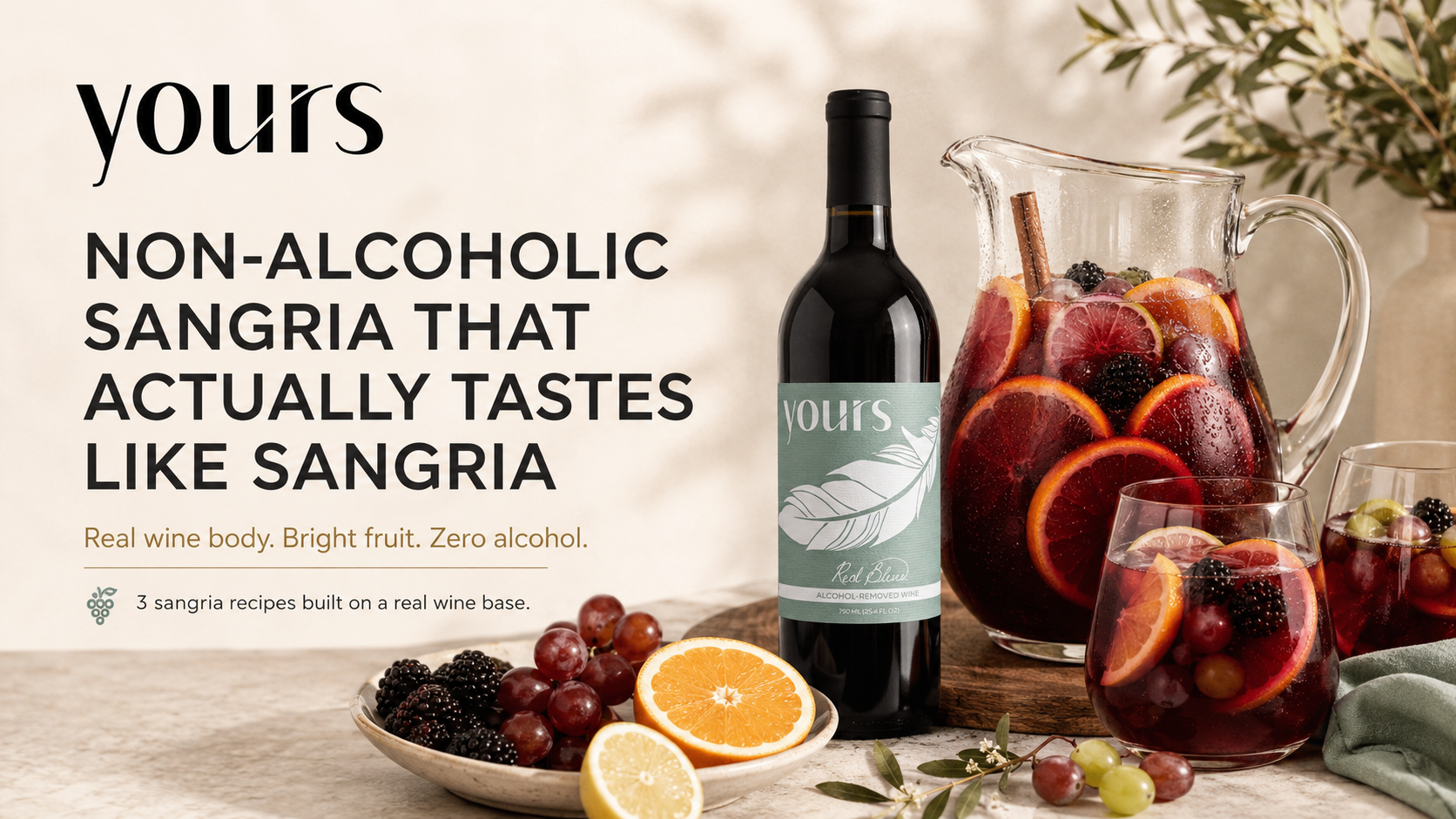
Picture the scene: a big glass pitcher on the table, sliced citrus floating at the top, a cinnamon stick barely visible through the deep red. Everyone fills their glass from the same pitcher. That shared pour is half of what makes sangria feel like a celebration.

The problem with most non-alcoholic sangria recipes is the base. They reach for grape juice. And grape juice, for all its good qualities, is not wine.
Sangria is built on wine. Dry, structured, tannic wine. The fruit and citrus are accents layered on top. When the base behaves like wine, the whole drink comes together. When it doesn't, you get fruit punch, no matter how many cinnamon sticks you throw in.
These three recipes use YOURS Non-Alcoholic Wine as the base -- the same way a traditional Spanish sangria is built. Red first. Everything else in support.

Why Sangria Requires a Real Wine Base
Sangria traces back to 18th-century Spain, where the standard template was dry Spanish red wine -- typically Rioja or Garnacha -- mixed with seasonal fruit, citrus, and a touch of brandy. The wine did the structural work. It provided tannin, acidity, and depth. Everything else was flavor layering on top of that foundation.
Grape juice reverses this structure entirely. It's high in sugar, flat in texture, and one-dimensional in flavor. When you add more fruit, citrus, and juice to something already sweet and still, you get something cloyingly sweet and still. It tastes like fruit punch because that's what it is.
The issue isn't sweetness alone. It's texture. Tannins in wine create a slightly grippy, refreshing quality that makes sangria so drinkable. They hold the drink together. Grape juice has no tannin, no acidity worth mentioning, and nothing to anchor the glass.
YOURS California Red Blend is dry. Zero added sugar. Under 20 calories per glass. It's sweetened only with a trace of monk fruit, and it retains actual tannin structure through the dealcoholization process. It behaves like a wine base because it is one.
That's the difference in these recipes. Not a workaround. Just sangria, made right.
For context on why most non-alcoholic wines trend sweet -- and why YOURS approaches it differently -- the guide to non-alcoholic wine and food pairing covers the structural reasoning in full.

Recipe 1: Classic YOURS Red Sangria
This is the recipe closest to what you'd order at a Spanish table. Deep red, fruity, lightly spiced, dry underneath all of it. The pomegranate juice adds a tart, jewel-toned edge without sweetening the base. The cinnamon stick is subtle -- warm rather than spiced.
The YOURS California Red Blend is the right foundation here. Its tannin holds up through the steeping window and the structure survives the ice and dilution at serving time. For a full breakdown of how this wine stacks up to other NA reds, see the best non-alcoholic red wine guide.
Ingredients
- 1 bottle YOURS California Red Blend (750ml)
- 1 orange, sliced into rounds
- 1 lemon, sliced into rounds
- 1 cup red grapes, halved
- 1 cup blackberries
- 1/4 cup unsweetened pomegranate juice
- 2 cups sparkling water
- 1 cinnamon stick
- Fresh mint sprigs, for serving
Serves: 4 to 6
Instructions
- Combine the Red Blend, pomegranate juice, orange slices, lemon slices, grapes, blackberries, and cinnamon stick in a large pitcher.
- Stir gently to combine. Cover and refrigerate for at least 4 hours. Overnight is better -- the fruit has more time to steep into the wine and the flavors knit together.
- Just before serving, add the sparkling water. Stir once. Do not add sparkling water to the steeping batch or it will go flat.
- Serve over large ice cubes or a frozen fruit block (see serving tips below). Garnish with fresh mint.
Make-ahead window: Steps 1 and 2 can be done up to 24 hours in advance. Add sparkling water and ice only at serving time.
Flavor note: The cinnamon stick is doing background work here -- removing it after 8 to 10 hours prevents the spice from becoming too forward. If you like a spicier sangria, leave it in.
Recipe 2: YOURS White Peach Sangria
White sangria -- sangria blanca -- is a more recent invention than the classic red, but it follows the same logic. You still need a dry, structured wine base. You just need one with different character: lighter, more herbal, with citrus-forward acidity.
YOURS Washington Sauvignon Blanc fits this role well. The wine has herbal and citrus notes that pair cleanly with stone fruit. Basil in the glass sounds unusual. It belongs here -- it picks up the herbaceous quality in the wine and ties the whole drink together without competing with the peaches.
Ingredients
- 1 bottle YOURS Washington Sauvignon Blanc (750ml)
- 2 ripe peaches, pitted and sliced
- 1 cup green grapes, halved
- 1 lime, sliced into rounds
- 1/4 cup 100% white grape juice, unsweetened
- 2 cups sparkling water
- Fresh basil leaves, for serving
Serves: 4 to 6
Instructions
- Combine the Sauvignon Blanc, white grape juice, peach slices, grapes, and lime rounds in a large pitcher.
- Cover and refrigerate for at least 4 hours.
- Add sparkling water just before serving. Stir once.
- Serve over large ice cubes. Add fresh basil leaves directly to each glass at pour time rather than into the pitcher -- basil wilts quickly and bruised basil tastes bitter.
Make-ahead window: If peaches are very ripe, don't steep longer than 10 to 12 hours. The fruit softens significantly past that point and the texture gets murky. Firm-ripe is the right stage for this recipe.
On the white grape juice: The 1/4 cup of white grape juice here is an accent, not a structural ingredient. It adds a small touch of sweetness to balance the lime. The Sauvignon Blanc is still doing the structural work. This is not a grape juice sangria with a splash of wine.
Recipe 3: YOURS Rosé Strawberry Sangria
Rosé sangria is the summer version. The YOURS Rosé is dry with a clean berry character -- it plays well with fresh strawberries and raspberries without becoming too berry-forward. Unsweetened cranberry juice is the right accent: tart, not sweet, and it deepens the pink color without overwhelming the wine base.
If you're comparing rosé options for this recipe, the best non-alcoholic rosé roundup covers what to look for in terms of dryness and structure.
Ingredients
- 1 bottle YOURS Rosé (750ml)
- 1 cup strawberries, hulled and quartered
- 1 cup raspberries
- 1 lemon, sliced into rounds
- 1/4 cup unsweetened cranberry juice
- 2 cups sparkling water
- Fresh mint, for serving
Serves: 4 to 6
Instructions
- Combine the Rosé, cranberry juice, strawberries, raspberries, and lemon slices in a large pitcher.
- Cover and refrigerate for at least 4 hours.
- Add sparkling water just before serving. Stir once.
- Serve over large ice cubes or ice made from frozen cranberry juice. Garnish with fresh mint.
Make-ahead window: Raspberries break down faster than strawberries. If you're making this more than 8 hours ahead, hold the raspberries back and add them 2 to 3 hours before serving so they keep their shape.

Make-Ahead, Scaling, and Serving
The Sweet Spot for Steeping
All three recipes improve with time up to about 12 to 16 hours. After that, the fruit starts to break down, the liquid gets murky, and the flavors flatten rather than intensify. The optimal window is 8 to 12 hours.
If you're serving at 6pm: start the evening before or by 8am the day of. If you're serving at noon: start the night before.
Scaling for a Party
All three recipes scale linearly. Each bottle of YOURS yields 4 to 6 servings when combined with the other ingredients.
| Guests | Bottles of YOURS | Juice accent (pomegranate / cranberry / white grape) | Sparkling water | Fruit |
|---|---|---|---|---|
| 8 | 2 bottles | 1/2 cup | 4 cups | 2x |
| 12 | 3 bottles | 3/4 cup | 6 cups | 3x |
| 20 | 5 bottles | 1 1/4 cups | 10 cups | 5x |
For groups of 12 or more, use a large glass beverage dispenser rather than a pitcher. It keeps the sangria cold longer and makes self-service smooth. Add the sparkling water directly to the dispenser at serving time, not to the steeping batch.
For more on presenting non-alcoholic wine at a gathering -- glassware, how to handle mixed-preference groups, table setup -- the guide to hosting with non-alcoholic wine covers the full picture.
Keeping It Cold Without Diluting It
Standard ice cubes melt quickly and water down the drink. Three better approaches:
Large cube molds: Two-inch cubes melt at roughly half the rate of standard cubes. A $12 mold is worth having if you're serving these regularly.
Frozen fruit block: Fill a shallow container with water and the same fruit used in the recipe. Freeze overnight. Float it in the pitcher as it melts -- it cools the sangria and adds color, not water.
Sangria ice cubes: Make a small extra batch of the base (wine plus juice, no sparkling water), pour into ice cube trays, freeze. These cubes dilute back into the same drink.
Glassware
Traditional sangria is served in wide-mouthed, stemmed glasses -- but these recipes work in any large glass. Wine glasses, stemless tumblers, mason jars. The wide mouth is what matters: you want the fruit visible in the drink. It's part of the presentation.
For outdoor serving, stemless glasses are practical. They're harder to knock over and don't shatter the same way.
Frequently Asked Questions
Can I use any non-alcoholic wine for sangria, or does it have to be YOURS?
You can use any dry NA wine with genuine structure. The problem with most NA wines is that they're sweet -- often significantly so, because dealcoholization strips flavor and producers compensate with added sugar. A sweet base makes a sweet sangria. For red sangria specifically, you need something dry and tannic, which narrows the options considerably. YOURS Red Blend works because it has zero added sugar and retains structure through the dealcoholization process. Check the sugar content of whatever you're using before committing to a recipe.
What makes sangria different from fruit punch?
Wine. Specifically: dry, structured wine with tannin and acidity. Fruit punch is built on juice -- sweet, flat, one-dimensional. Sangria is built on wine, with fruit and citrus as layered accents on top of that dry base. The tannin in wine gives sangria its slightly grippy texture and refreshing quality. Remove the wine base and you've removed what makes it sangria.
How far in advance can I make non-alcoholic sangria?
The optimal steeping window is 8 to 12 hours. You can start up to 24 hours ahead -- the flavors develop well -- but past the 16-hour mark the fruit begins to soften and break down. Always add sparkling water immediately before serving, never to the steeping batch.
How long does non-alcoholic sangria last in the fridge?
Without alcohol, sangria is best within 48 hours. The fruit continues to steep and eventually becomes too soft. Keep it covered in the fridge and don't add sparkling water to your storage batch -- only to what you're serving immediately.
Can I make this without sparkling water?
Yes. The sparkling water adds lift and lightens the texture at serving time, but still sangria is perfectly traditional. Without it, the drink will be slightly richer and more wine-forward. This works especially well for the red version.
What fruit works best in non-alcoholic sangria?
Citrus -- orange, lemon, lime -- is the backbone across all three recipes. It contributes acidity and brightness while steeping. Stone fruit (peaches, nectarines) works well in white sangria. Berries (blackberries, raspberries, strawberries) add color and a soft sweetness in red and rosé versions. Grapes add visual interest and a clean grape note without competing with the wine base. Avoid very soft fruit like ripe mango -- it breaks down too fast.
Is non-alcoholic sangria safe during pregnancy?
YOURS Non-Alcoholic Wine contains less than 0.5% ABV, which is the U.S. regulatory threshold for "non-alcoholic" -- less than most fruit juices and kombucha. That said, questions about what's appropriate during pregnancy belong with your doctor, not a recipe article. Individual circumstances vary. For the full breakdown of what the labels mean and what ACOG guidance says, see Is Non-Alcoholic Wine Safe During Pregnancy.
Can I add a sweetener to these recipes?
You can, but these recipes are designed without added sweetener intentionally. Traditional sangria is dry. The fruit steeping into the wine base adds natural sweetness over the chilling window, and the citrus and sparkling water keep it in balance. If you want a slightly sweeter finish, add a small amount of 100% fruit juice -- the same type used in each recipe -- rather than simple syrup. It adds sweetness without flattening the texture.
What's the best YOURS wine for sangria if I can only buy one bottle?
The Red Blend is the most versatile starting point. Classic red sangria is the most recognized version of the drink, the Red Blend holds up well through the steeping window, and the tannin structure gives the finished glass the most wine-like quality. For a warmer-weather crowd and something lighter, start with the Rosé.
YOURS Non-Alcoholic Wine is available at sipyours.com. The California Red Blend, Washington Sauvignon Blanc, and Rosé are the bases for the three recipes above. For a full overview of what to look for in the best non-alcoholic wine before you shop, that guide covers the category honestly. For other ways to use non-alcoholic wine beyond cocktails, including cooking applications in sauces and braises, see cooking with non-alcoholic wine.
Frequently Asked Questions
Can I use any non-alcoholic wine for sangria, or does it have to be YOURS?
You can use any dry NA wine with genuine structure. Most NA wines are sweet because dealcoholization strips flavor and producers compensate with added sugar. A sweet base makes a sweet sangria. For red sangria specifically, you need something dry and tannic. YOURS Red Blend works because it has zero added sugar and retains structure through the dealcoholization process.
What makes sangria different from fruit punch?
Wine -- specifically dry, structured wine with tannin and acidity. Fruit punch is built on juice: sweet, flat, one-dimensional. Sangria is built on wine, with fruit and citrus layered on top of that dry base. The tannins give sangria its slightly grippy, refreshing texture. Remove the wine base and you remove what makes it sangria.
How far in advance can I make non-alcoholic sangria?
The optimal steeping window is 8 to 12 hours. You can start up to 24 hours ahead, but past 16 hours the fruit begins to soften and break down. Always add sparkling water immediately before serving, never to the steeping batch.
How long does non-alcoholic sangria last in the fridge?
Without alcohol, sangria is best within 48 hours. Keep it covered in the fridge. Don't add sparkling water to your storage batch -- only to what you're serving immediately.
Can I make non-alcoholic sangria without sparkling water?
Yes. The sparkling water adds lift and lightens the texture, but still sangria is perfectly traditional. Without it, the drink will be slightly richer and more wine-forward -- which works well for the red version especially.
What fruit works best in non-alcoholic sangria?
Citrus -- orange, lemon, lime -- is the backbone across all three recipes. It contributes acidity and brightness while steeping. Stone fruit (peaches, nectarines) works well in white sangria. Berries add color and soft sweetness in red and rosé versions. Grapes add visual interest without competing with the wine base. Avoid very soft fruit like ripe mango -- it breaks down too fast.
Is non-alcoholic sangria safe during pregnancy?
YOURS Non-Alcoholic Wine contains less than 0.5% ABV, which is the U.S. regulatory threshold for non-alcoholic -- less than most fruit juices and kombucha. Questions about what's appropriate during pregnancy belong with your doctor, not a recipe article.
What's the best YOURS wine for sangria if I can only buy one bottle?
The Red Blend is the most versatile starting point. Classic red sangria is the most recognized version, the Red Blend holds up well through steeping, and the tannin structure gives the finished drink the most wine-like quality. For a lighter warm-weather option, start with the Rosé.
Can I add sweetener to non-alcoholic sangria?
You can, but these recipes are designed without added sweetener intentionally. Traditional sangria is dry. The fruit steeping into the wine base adds natural sweetness. If you want a slightly sweeter finish, add a small amount of 100% fruit juice rather than simple syrup -- it adds sweetness without flattening the texture.