Hosting With Non-Alcoholic Wine: An Inclusive Table Guide
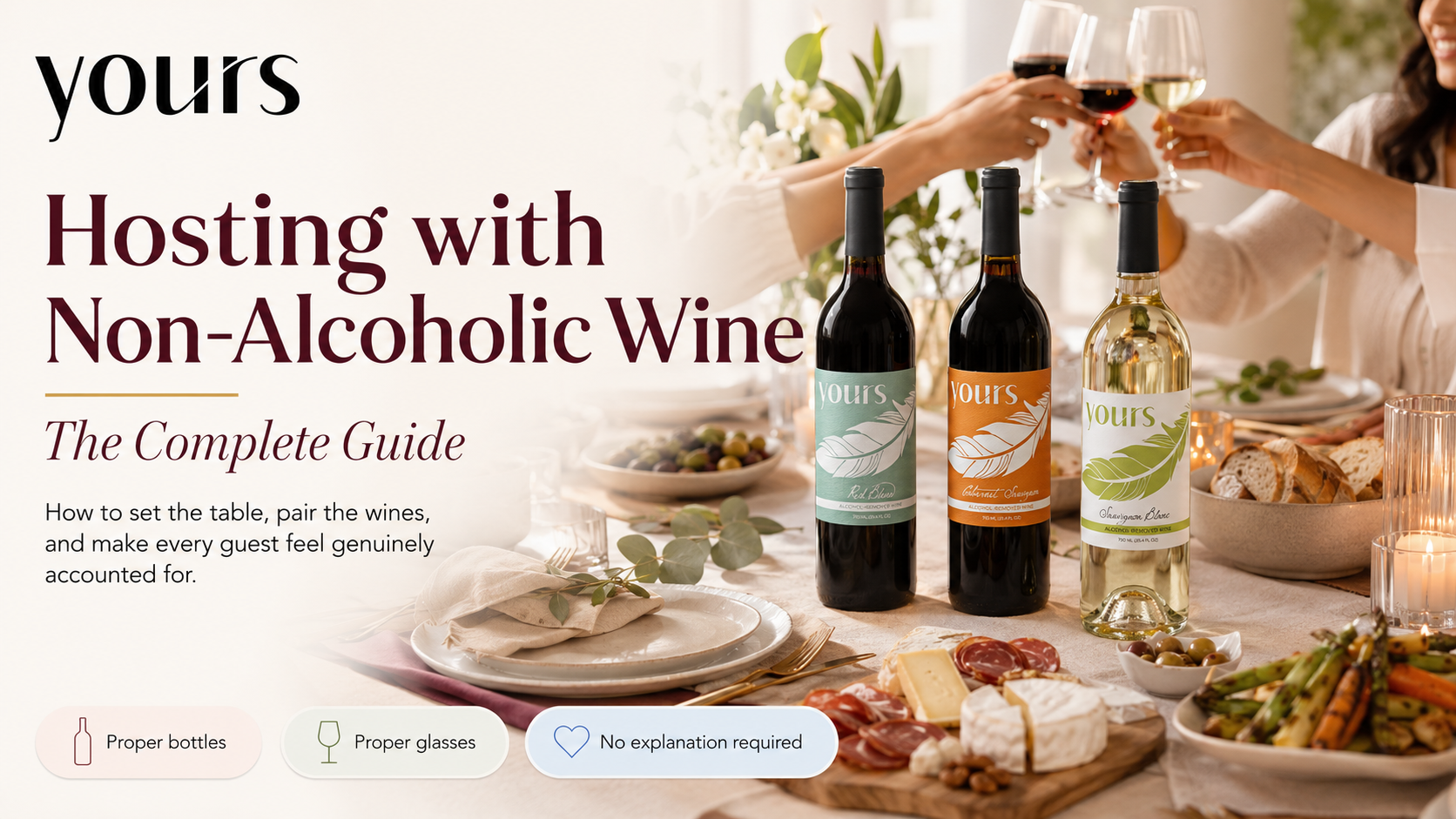
Good hosting comes down to one thing: making sure every person at your table feels genuinely accounted for. The food, the lighting, the music, the seating arrangement, all of it communicates care. What's in people's glasses communicates the same thing.
Someone at your table is almost always not drinking. Maybe they're pregnant, maybe they're driving, maybe they're on a break or on medication. Whatever the reason, they're still sitting down to the meal you spent time on, raising a glass at the toast, staying four hours at your table. What they hold during that time matters.
YOURS Non-Alcoholic Wine is built for exactly this moment. California Cabernet Sauvignon. California Red Blend. Washington Sauvignon Blanc. Rosé. Proper wine, in a proper bottle, at your table without explanation.
This is the complete guide to hosting with it.
Why This Matters More Than Hosts Realize
The non-drinker in the group often ends up with a glass of sparkling water, a ginger ale from the back of the fridge, or, best case, a grocery-store sparkling juice that belongs at a middle school birthday party. None of these belong at a table where you've spent two hours on the food.
This is not a niche situation. According to Circana 2025 data, 49% of Americans are actively trying to drink less. NIQ research from 2024 found that 92% of non-alcoholic wine buyers also purchase alcoholic wine, meaning most people buying and serving NA wine are moderators, not people taking a break. They're managing intake, hosting guests with different needs, or making sure everyone at the table has something worth drinking.
Alcohol-free events increased by 73% on Eventbrite in 2023 compared to the year prior. Gen Z drinks significantly less than previous generations, with nearly 40% of 18-25-year-olds identifying as non-drinkers. The math is simple: your dinner tables, your wedding receptions, your holiday gatherings, some percentage of the people at them are not drinking, and that percentage grows every year.
The afterthought drink signals to a guest that their presence was accommodated rather than considered. YOURS solves this the direct way: it looks like wine, it pours like wine, and it behaves like wine at the table. You open the bottle, pour it into a proper glass, set it down. Done. No announcement required.

Setting the Table: Glassware, Temperature, and Presentation
The way you serve something shapes how it lands. These are the details that turn a good bottle into a complete experience.
Glassware
Standard wine glasses. Same as everyone else. No separate treatment, no tumblers, no novelty glasses.
For casual settings, stemless works well. For dinner parties and formal occasions, stemmed reads correctly. The singular goal is that your non-drinking guest's glass matches the table. The pour, the clink, the swirl, these are what make a dinner a dinner. The glass is the entry point to all of it.
If you want to go one step further, choose a tulip-shaped or slightly tapered bowl rather than a wide-open Burgundy glass. The taper concentrates aroma, which matters more in NA wines than their alcoholic counterparts.
Serving Temperatures
Temperature is not a detail. A red wine served ten degrees too warm tastes flat. The same wine served right tastes structured and alive.
YOURS Reds (California Cabernet Sauvignon and California Red Blend): 60-65°F. Slightly cooler than standard room temperature. If you've been storing bottles at room temperature in a warm house, 20-30 minutes in the fridge before serving gets you there.
YOURS Whites and Rosé (Washington Sauvignon Blanc and Rosé): 45-50°F. Standard fridge temperature, around 35-38°F, is too cold and mutes the flavor. Pull these out 15-20 minutes before serving.
Quick chill option: an ice-water bath (not just ice) chills a bottle in about 10-15 minutes for whites and rosé, and 5-10 minutes for reds if they're warm.
Decanting
The California Red Blend benefits from 20 minutes of decanting before serving. It opens up. It's not a requirement, but if you're paying attention to the details of the table, it's the right move.
The Cabernet can be decanted, but it's not necessary. Whites and Rosé go straight from bottle to glass.
Serving Order
Pour YOURS when you pour everything else. Not before, not after. At a dinner party where you're opening multiple bottles, adding YOURS to that moment is completely natural. You are not drawing attention to the difference because the bottle looks like every other bottle on the table.

Pairing YOURS Wines with Food
The same pairing logic that applies to conventional wine applies here. These are not "alternatives" to wine, they're wines. Pair them accordingly.
California Cabernet Sauvignon
Full-bodied. Dark fruit. Structured tannins. This is your red meat bottle.
Serve with: ribeye, lamb chops, braised short ribs, roasted leg of lamb, venison, aged cheddar, roasted root vegetables, mushroom-forward dishes. The tannins cut through fat. The fruit plays against char and umami. If someone at your table is skipping the wine but eating the steak, this is what goes in their glass.
Avoid: light seafood, delicate salads, anything that would be overwhelmed by a full-bodied red.
California Red Blend
Softer tannins than the Cab. More approachable fruit. The table workhorse.
Serve with: charcuterie and cheese boards, roasted chicken, pasta with red sauce, pizza, grilled vegetables, pork tenderloin. This is the bottle to open when guests are eating different things. It also works when you want to offer YOURS to the full table alongside conventional wine, nobody's pairing suffers.
If you want to decant, 20 minutes does something here. Otherwise, pour freely.
Washington Sauvignon Blanc
Bright. Crisp. High acid. This is a serious food wine.
Serve with: salmon, halibut, oysters, shrimp, mussels, goat cheese, arugula salads, spring vegetable dishes, lemon-forward pastas. The acid cuts through fatty fish the same way a conventional Sauv Blanc does. At a table where you're opening Sancerre, you can pour YOURS Washington for a non-drinking guest and the pairing logic holds.
This is also the right call for lighter summer meals where a red would overwhelm the food.
Avoid: rich red meats, heavy cream sauces, anything that needs a red's structure.
Rosé
The most occasion-flexible bottle in the lineup. Dry, food-friendly, works as both aperitif and table wine.
Serve with: appetizers and mezze, charcuterie boards, light pasta, grilled fish, crudités, soft cheeses, summer spreads. This is the bottle to have open during cocktail hour when guests are grazing before sitting down. At outdoor events and warm-weather gatherings, it reads perfectly.
At under 20 calories per glass, zero grams of added sugar, guests watching their intake reach for this without giving anything up.
For a deeper look at pairings by course and dish, see the full non-alcoholic wine food pairing guide.

Occasion Guide: Which YOURS Bottle for Which Moment
| Occasion | Recommended Bottle(s) | Notes |
|---|---|---|
| Dinner party | Cab or Red Blend + Sauvignon Blanc | Cover the full menu; guests choose by what they're eating |
| Casual gathering | Red Blend + Rosé | Versatile, crowd-friendly, works across a spread |
| Holiday table | California Cabernet Sauvignon | Built for roasted meats and rich winter sauces |
| Wedding reception | Rosé (cocktail hour) + Red Blend (dinner) | Covers the full arc of a reception |
| Brunch | Rosé + Sauvignon Blanc | Both chilled, both light, both work with eggs and lighter fare |
| Outdoor summer event | Rosé + Sauvignon Blanc | Keep them cold; they hold in an ice bucket between pours |
| Thanksgiving | California Cabernet Sauvignon | See the Thanksgiving hosting guide |
Dinner Party
Open both a red and a white. The Cab or Red Blend alongside the Sauvignon Blanc covers whatever's on the menu. Non-drinking guests choose by the same logic as everyone else, what's on their plate.
Quantities: One bottle covers about five glasses. For two non-drinking guests at a dinner party of eight, two bottles is a solid starting point. If you're offering YOURS to the full table as an option, which is worth doing, since some of your drinking guests will choose it, plan for three to four bottles.
Wedding Reception
Rosé during cocktail hour. Red Blend at dinner. These two bottles handle the full arc of a reception, the lighter, celebratory pour before the meal and a food-friendly red at the table. For a complete planning guide covering quantities, toast logistics, and pairing by course, see non-alcoholic wine for weddings.
For the toast, see the next section.
Holiday Table
California Cabernet Sauvignon. Full stop. This is the bottle built for roasted meats and rich winter sauces. Set it out alongside your conventional reds and pour it without distinction.
For a complete holiday hosting breakdown, see the Thanksgiving non-alcoholic wine guide.
Casual Gathering
Red Blend and Rosé. Both accessible, both work across a spread. The Red Blend handles charcuterie and heavier bites; the Rosé covers lighter fare and appetizers. This pairing also works for sangria-style entertaining, see the non-alcoholic sangria guide for how to build it.
Brunch
Rosé or Sauvignon Blanc. Both chilled, both light. They pair with eggs, smoked salmon, avocado toast, and anything from a weekend spread. The Rosé is the obvious reach for a brunch table where other guests might be pouring a spritz.
The Toast Moment
The toast is the most visible 30 seconds of any gathering. Everyone raises a glass. At a wedding, a birthday dinner, or a New Year's table, the toast is also the moment when the gap between a non-drinking guest's experience and everyone else's is most visible. A glass of water held up at a wedding toast signals something. So does an empty hand.
YOURS in a wine glass at the toast signals nothing. That's the point.
The mechanics are simple: pour YOURS into a proper wine glass before the toast. The right color. The right shape. The right weight in the hand. Nobody announces what's in the glass. The guest raises it, clinks with everyone else, participates in the moment the same way everyone else does.
For events where you're managing logistics: if it's a sit-down dinner, the glass is already there. If it's a standing reception, have a few pre-poured glasses of YOURS Rosé on a tray near the champagne. Non-drinking guests find their glass naturally.
How to Introduce YOURS Without Making It a Thing
This is the question most hosts ask. The answer: you don't introduce it, you pour it.
When someone at your table isn't drinking, the instinct is often to explain. "I got this non-alcoholic wine, it's actually really good!" The moment you explain it, you've marked it as different. You've made it a thing.
The alternative: open the bottle, pour it alongside everything else, let it speak for itself. Guests who want to know what they're drinking will ask. Guests who don't want to discuss it don't have to.
A few practical notes:
Don't separate the bottle. Don't keep YOURS on a separate side table while the conventional wine stays on the main table. Everything on the same surface.
Pour in the same sequence. When you're pouring for guests, pour YOURS in the same motion as everything else. No pause, no explanation, no sidebar.
Let guests choose. If you're offering YOURS alongside conventional wine, mention both as options and let people reach. Some of your drinking guests will choose it. This happens more often than hosts expect.
Don't moralize. No guest at your table needs commentary on anyone else's choice. Everyone has a glass. The table moves forward.
Serving YOURS: Logistics and Planning
How Much to Buy
The planning math is the same as any wine.
- One bottle = approximately 5 glasses (standard 5oz pour)
- Two non-drinking guests at a dinner party of 8 = 2 bottles minimum
- Full table option alongside conventional wine = 3-4 bottles for 8 people
- Wedding reception (cocktail hour + dinner) = calculate 2-3 glasses per non-drinking guest across both portions
Order from sipyours.com directly. If you're ordering for an event, leave enough lead time, 3-5 business days for standard shipping.
Storage Before the Event
Store YOURS reds at room temperature or in a wine rack. Store whites and Rosé in the fridge. Open no more than a few hours before serving; NA wine, like conventional wine, is best consumed within a day or two of opening.
Leftover Bottles
Re-cork and refrigerate. YOURS holds well for 2-3 days after opening. The Sauvignon Blanc and Rosé are best consumed within 2 days; the reds can hold an extra day.
For more on sourcing and selection, see the best non-alcoholic wine guide. If you want a complete side-by-side of what YOURS looks like against the other brands guests are likely to know, read the YOURS non-alcoholic wine review.
Frequently Asked Questions
How much non-alcoholic wine should I buy for a dinner party?
Plan the same way you'd plan any wine: one bottle covers about five glasses. For two non-drinking guests at a dinner party, two bottles is a solid starting point. If you're offering YOURS to the full table, which some hosts do, plan for three to four bottles depending on the group size.
Can I serve non-alcoholic wine at the same table as regular wine?
Yes, and it's simpler than hosts expect. Open both, pour from both, set both on the same table. The bottles look similar; the glasses are identical. There is no moment where it becomes a thing unless you make it one.
What is the best non-alcoholic wine for a wedding reception?
YOURS Rosé for cocktail hour and the toast; YOURS California Red Blend at dinner. The Rosé is light, celebratory, and visually right for a reception. The Red Blend is food-friendly enough to handle whatever's at the table. Together they cover the full arc.
Should non-alcoholic wine be served in a wine glass?
Yes. A standard wine glass, the same as everyone else. This is the most important single thing you can do for a non-drinking guest at a formal occasion. The ritual, the pour, the clink, the swirl, is what makes the experience a full one. The glass is the vessel for all of it.
What food pairs best with YOURS non-alcoholic wine?
It depends on the varietal. California Cabernet with red meat and roasted vegetables. Red Blend with charcuterie, pasta, and roasted chicken. Washington Sauvignon Blanc with fish, shellfish, and lighter dishes. Rosé with appetizers and summer spreads. The same logic as conventional wine pairing applies.
Does YOURS non-alcoholic wine need to be chilled?
Reds (Cabernet and Red Blend) are best at 60-65°F, slightly below room temperature. If stored at room temp in a warm house, 20-30 minutes in the fridge before serving is the move. The Sauvignon Blanc and Rosé are best at 45-50°F, which means about 15-20 minutes out of the refrigerator before serving, not straight from the fridge.
Is non-alcoholic wine appropriate for guests who are pregnant or on medication?
YOURS contains less than 0.5% ABV, which is the standard FDA threshold for non-alcoholic beverages. Many guests who are pregnant or on alcohol-sensitive medications choose non-alcoholic wine. Individual medical situations vary, the guest and their doctor are the right people to make that call. Your job as the host is simply to have the option available.
Can I use non-alcoholic wine for sangria or punches?
Yes. YOURS Red Blend works particularly well as a sangria base. See the non-alcoholic sangria guide for a full build. For cooking with non-alcoholic wine in sauces, marinades, and braises, see the non-alcoholic wine cooking guide. For Valentine's Day hosting specifically, with pairing and presentation ideas for a two-person dinner, see non-alcoholic wine for Valentine's Day. For Father's Day hosting and gifting context, see non-alcoholic wine for Father's Day. For the serving temperature and glassware details specific to first-time pourers, see how to serve non-alcoholic wine.
What's the difference between YOURS and just buying sparkling grape juice?
Sparkling grape juice is sweet, one-dimensional, and immediately obvious as a non-wine. YOURS is made from actual wine grapes, dealcoholized to preserve varietal character, and sweetened with monk fruit, not sugar. The California Cab has tannin structure. The Sauvignon Blanc has the acid a Sauvignon Blanc is supposed to have. These behave like wine because they are wine, minus the alcohol. If your event calls for bubbles specifically, see The Best Non-Alcoholic Sparkling Wine for the ranked guide to dealcoholized sparkling options.
Frequently Asked Questions
How much non-alcoholic wine should I buy for a dinner party?
Plan the same way you'd plan any wine: one bottle covers about five glasses. For two non-drinking guests at a dinner party, two bottles is a solid starting point. If you're offering YOURS to the full table as an option, plan for three to four bottles depending on the group size.
Can I serve non-alcoholic wine at the same table as regular wine?
Yes. Open both, pour from both, set both on the same table. The bottles look similar; the glasses are identical. There is no moment where it becomes a thing unless you make it one.
What is the best non-alcoholic wine for a wedding reception?
YOURS Rosé for cocktail hour and the toast; YOURS California Red Blend at dinner. The Rosé is light, celebratory, and visually right for a reception. The Red Blend is food-friendly enough to handle whatever's at the table.
Should non-alcoholic wine be served in a wine glass?
Yes. A standard wine glass, the same as everyone else. The ritual — the pour, the clink, the swirl — is what makes the experience complete. The glass is the entry point to all of it.
What food pairs best with YOURS non-alcoholic wine?
It depends on the varietal. California Cabernet with red meat and roasted vegetables. Red Blend with charcuterie, pasta, and roasted chicken. Washington Sauvignon Blanc with fish, shellfish, and lighter dishes. Rosé with appetizers and summer spreads.
Does YOURS non-alcoholic wine need to be chilled?
Reds are best at 60-65°F — 20-30 minutes in the fridge before serving if stored at room temp. The Sauvignon Blanc and Rosé are best at 45-50°F, about 15-20 minutes out of the refrigerator before serving.
Is non-alcoholic wine appropriate for guests who are pregnant or on medication?
YOURS contains less than 0.5% ABV, the standard FDA threshold for non-alcoholic beverages. Many guests in these situations choose non-alcoholic wine. Individual medical situations vary — the guest and their doctor make that call.
Can I use non-alcoholic wine for sangria?
Yes. YOURS Red Blend works particularly well as a sangria base. The non-alcoholic sangria guide at sipyours.com covers a full build.
What is the difference between YOURS and sparkling grape juice?
Sparkling grape juice is sweet and one-dimensional. YOURS is made from actual wine grapes, dealcoholized to preserve varietal character, and sweetened with monk fruit. The California Cab has tannin structure. The Sauvignon Blanc has proper acid. These are wines, minus the alcohol.
A more thoughtful table
Hosting with non-alcoholic wine does not require a separate menu or an announcement. Give every bottle equal space, pour it in proper glassware, label choices clearly, and let guests decide for themselves. The goal is simple: a table where nobody has to explain what is in their glass.
YOURS begins as fermented wine and is then dealcoholized. That matters at the table because it belongs in the same rituals as wine: a bottle opened with dinner, a considered pour, a glass set beside the plate. It is not a consolation beverage and it does not need a different social script.
The guest room pour: make welcome feel effortless
A guest-room welcome should feel generous, not overproduced. Place a clean glass, water, and a small card explaining where chilled bottles are kept. If you know your guest enjoys wine but is not drinking alcohol, a bottle of alcohol-removed Chardonnay in the refrigerator is a thoughtful option. Do not leave an opened bottle sitting at room temperature or assume why someone is choosing it.
The card can be plain: “Chardonnay is chilled in the kitchen. Please help yourself.” That gives useful information without turning a beverage choice into a conversation. Add a small bowl of crackers or nuts only if you already know the guest’s dietary needs. Hospitality works best when it removes friction rather than adding assumptions.
A place card for every pour
At a seated dinner, identify what is being served by varietal first: Cabernet Sauvignon, Red Blend, Chardonnay, Sauvignon Blanc. Add “alcohol-removed” in smaller type. This order preserves the information wine drinkers use to choose while still making alcohol content clear.
If you serve alcoholic and non-alcoholic wine together, avoid separate “regular” and “non-drinker” zones. “Regular” implies that one guest’s choice is the default and another is an exception. A better system is two trays or two sections labeled with the bottle name and ABV information. Use different card colors or simple icons if the bottles may be moved, but keep the typography and visual weight equal.
Place cards can also carry a short flavor cue: “crisp and bright,” “round and softly oaked,” or “structured red.” Only use tasting language confirmed for the bottle. A useful cue helps guests choose. A sweeping promise does not.
Build an inclusive beverage station
A self-serve station is often the easiest hosting format because it lets guests choose privately. Set it near the gathering space, with enough room to read labels without blocking the kitchen. Put water at one end, wines in the center, and clean glassware within easy reach.
- Start with the bottle labels facing forward. Guests should not need to lift every bottle to understand the selection.
- Group by style, not by status. Reds together, chilled whites together, water nearby.
- Use one clear identifier. “Alcohol-removed, 0.5% ABV or less” is more useful than “safe,” “clean,” or “guilt-free.”
- Add a place for used glasses. A small tray prevents abandoned glassware from taking over the table.
- Keep backup bottles at the proper temperature. Refill the station as needed rather than crowding it.
If young guests are present, keep every wine bottle—alcoholic or not—within the adult service area. Non-alcoholic labeling does not make wine packaging appropriate for children.
How much non-alcoholic wine should you buy?
A 750 mL bottle contains about five standard 5-ounce pours. Use that as planning math, not a prediction. The right quantity depends on meal length, weather, whether other beverages are available, and how many guests want wine.
For a short dinner, begin with enough for two pours per guest who has said they want non-alcoholic wine, plus one extra bottle if the group is large or the event runs several hours. For mixed tables, ask discreetly before the event when possible. “Any beverage preferences?” is enough. Do not ask guests to justify the answer.
Choose bottles around the meal
Offer variety only when it helps. A crisp Sauvignon Blanc can carry salads, herbs, seafood, and lighter summer dishes. Chardonnay is useful with richer textures and roasted flavors. Cabernet Sauvignon or Red Blend can sit comfortably beside mushrooms, aged cheese, grilled vegetables, and hearty mains. Pairing is subjective, so treat these as starting points.
If you are serving one bottle for the whole table, choose the style that fits the dominant flavors rather than trying to satisfy every course. A well-served bottle with a clear reason for being there feels more considered than a crowded lineup.
Keep the language relaxed
The most inclusive hosting language is often no language at all. Open the bottles, explain the choices once, and move on. Avoid “Who is being good tonight?” or “This is for the sober people.” Both turn a private choice into a label.
If someone asks why you are serving YOURS, answer from the product: “It is fermented wine with the alcohol removed, and I wanted everyone to have a proper wine option.” Specific. Warm. Done.
Frequently asked questions
How do I host guests who drink and guests who do not?
Serve both choices with equal care, label them clearly, and let guests choose without explanation. Use comparable glassware and keep the non-alcoholic option visible and easy to reach.
Should alcoholic and non-alcoholic wine be served together?
They can share the same station if labels are unmistakable. Keep bottles grouped by style and identify alcohol content clearly so no one picks up the wrong bottle.
How much non-alcoholic wine do I need per guest?
A 750 mL bottle provides about five 5-ounce pours. Plan around two pours for each interested guest at a short dinner, then adjust for event length and other beverage choices.
What is the best non-alcoholic wine for a dinner party?
Choose by the meal. Sauvignon Blanc suits bright, herb-led dishes; Chardonnay handles richer textures; structured reds work with mushrooms, cheese, grilled vegetables, and hearty mains.
How should I label an inclusive drinks station?
Use the varietal name, producer, and alcohol information. Avoid value-laden labels such as “regular,” “healthy,” or “guilt-free.”
Ready to set the table? Choose the YOURS bottles that fit your menu, chill what needs chilling, and let every guest keep the glass, the pour, and the pause.
New-home and community welcomes
Inclusive hosting begins before a formal dinner. A moving night, a new set of keys, or the end of a volunteer workday can all use the same simple structure: water first, proper glasses, food people can identify, and more than one grown-up beverage choice.
Pack one first-night box
Mark one box OPEN FIRST. Put glasses, an opener, water, napkins, and a shelf-stable snack inside. Keep the sealed bottle separate and protected during the move. The point is not to stage a perfect housewarming while the lamps are still missing. It is to make ten quiet minutes possible before the next box.
Plan the first toast at a new address
Put the keys down. Unwrap the bottle. Choose one small surface that is not holding tools or paperwork. A first toast can be two glasses on a moving crate; the address is new even if the furniture is not.
Thank a volunteer crew at one shared table
After a community workday, keep the thank-you table practical. Offer water, clearly labeled food, and alcohol-removed wine at equal visual height with the other drinks. No special corner. No announcement. The most considerate setup lets everyone choose without explaining.
Label the cooler by choice
Use direct labels such as “with alcohol,” “alcohol-removed,” and “water.” Avoid labels that turn a drink into an identity. Separate the sections, keep labels visible after ice is added, and give every category equal space.