Cooking With Non-Alcoholic Wine: Substitutions and Flavor
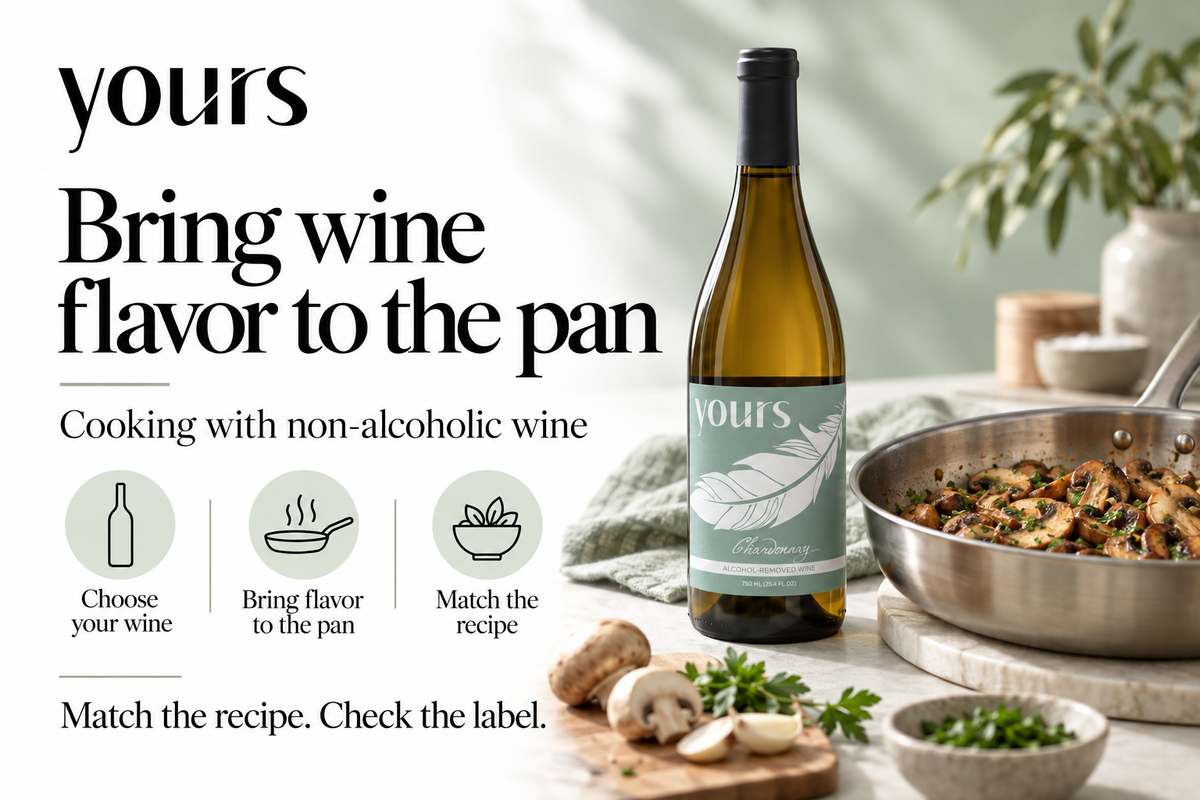
You can use non-alcoholic wine in cooking when its flavor suits the recipe. Choose a white for a light sauce or a red for a richer sauce, then adjust by taste. Alcohol-removed wine can still contain alcohol, and cooking does not guarantee that a finished dish contains none.
The useful question is what the wine does in the dish: add liquid, acidity, fruit flavor, or color. Those jobs help you choose a substitute. This guide is written by YOURS and offers cooking starting points, not a tested recipe or a promise that every wine will behave the same way. Product facts were checked on September 12, 2026.
Choose a wine for the recipe's flavor

A pale wine can fit a light pan sauce without changing its color much. A red can bring color and fruit flavor to tomato sauces, mushroom dishes, or a braise. Check sweetness as well as color. A wine you find sweet in the glass may also make a savory sauce taste sweet.
| Recipe need | Starting choice | Adjustment to consider |
|---|---|---|
| Light pan sauce | A non-alcoholic white | Use a small amount and taste with the other ingredients |
| Tomato or mushroom sauce | A non-alcoholic red | Check sweetness before a long reduction |
| A recipe needing more liquid than wine flavor | Broth, or wine mixed with broth | Add gradually to avoid a thin sauce |
| Complete alcohol avoidance | A suitable broth-based substitute | Check all ingredients rather than relying on cooking |
If you already enjoy YOURS Chardonnay, Sauvignon Blanc, or Red Blend, consider its flavor in the dish before opening another bottle. The current product pages show ingredients and nutrition. A “cooking wine” label is not necessary for a wine to contribute flavor to food.
Build a pan sauce in stages

For a savory mushroom dish, the basic sequence is brown, deglaze, simmer, taste. Deglazing means adding liquid to loosen the browned material on the bottom of a pan. It brings that flavor into the sauce.
- Brown the mushrooms using your recipe's method. Leave room in the pan so they can cook evenly.
- Add a small measured amount of non-alcoholic wine or a suitable broth. Stir to loosen the browned material.
- Simmer gently and watch the liquid level. Add broth if the sauce gets stronger or thicker than you want.
- Taste before the final seasoning. Finish according to the recipe, including any butter, herbs, or cream it calls for.
This is a general technique rather than a tested YOURS recipe with fixed timings. Pan size, ingredients, heat, and the wine all affect the result. Start with a recipe you trust and change one ingredient at a time, so you can understand what worked.
Choose the dinner wine separately from the cooking ingredient if needed. Our food-pairing guide can help with the glass served alongside the meal.
Watch sweetness and acidity during a reduction

Reducing a sauce removes liquid and concentrates flavor. That means a little sweetness or sharpness at the start may become more noticeable later. Taste before you pour in the rest of a bottle.
For a first attempt, use a small amount of wine and keep broth available. Add more wine only if the dish needs its flavor. This gives you more control than replacing every cup of liquid with wine by default.
The wine's nutrition label can help you compare bottles, but it does not tell you exactly how a finished sauce will taste. YOURS Red Blend lists 1 g total sugar per 5 oz, while Chardonnay lists 4 g per 5 oz. These are current product figures, not a nutrition calculation for your dish. Other ingredients and the number of portions change the meal's totals.
For the distinction between sugar and added sugar, see the nutrition guide. If you need a substitute for a particular dietary reason, review the complete ingredient list rather than choosing only by the calorie number.
Check alcohol requirements before cooking

YOURS wines contain less than 0.5% ABV. They should not be described as zero-alcohol cooking ingredients. The FDA guidance on dealcoholized wine explains the labeling distinction.
The USDA nutrient-retention reference includes alcohol retained after different preparation methods. It supports a simple point: a cooking step does not establish that all alcohol has gone. The result depends on the method and conditions; this guide does not calculate the final alcohol content of a recipe.
For a guest who needs complete avoidance, use a suitable alternative and check every ingredient. Ask about requirements before cooking. Keep any opened wine according to its own storage instructions; see our storage guide. A questionable bottle should not be treated as usable merely because it will go into a hot pan.
Frequently asked questions
Can I replace regular wine one-for-one with non-alcoholic wine?
It can be a starting point in some recipes, but flavor, sweetness, and body vary. For a first attempt, add gradually and keep suitable broth available to adjust the sauce.
Should I choose red or white non-alcoholic wine for cooking?
Use the original recipe and the desired color as guides. White can suit light sauces; red can suit tomato, mushroom, or richer dishes.
Will cooking make YOURS wine completely alcohol-free?
Cooking does not guarantee zero alcohol. YOURS starts at less than 0.5% ABV. Choose a suitable alternative when complete avoidance is required.
Can I use an opened bottle in a sauce?
Use it only if it remains within the producer's storage instructions and is in suitable condition. Cooking is not a fix for uncertain storage or a spoiled ingredient.
Do I need to buy a bottle labeled cooking wine?
Choose an ingredient that fits the recipe. Check the wine's taste, ingredients, and alcohol statement; the words “cooking wine” are not the deciding factor.