Where to Buy Non-Alcoholic Wine: Online, In Stores, and What to Look For
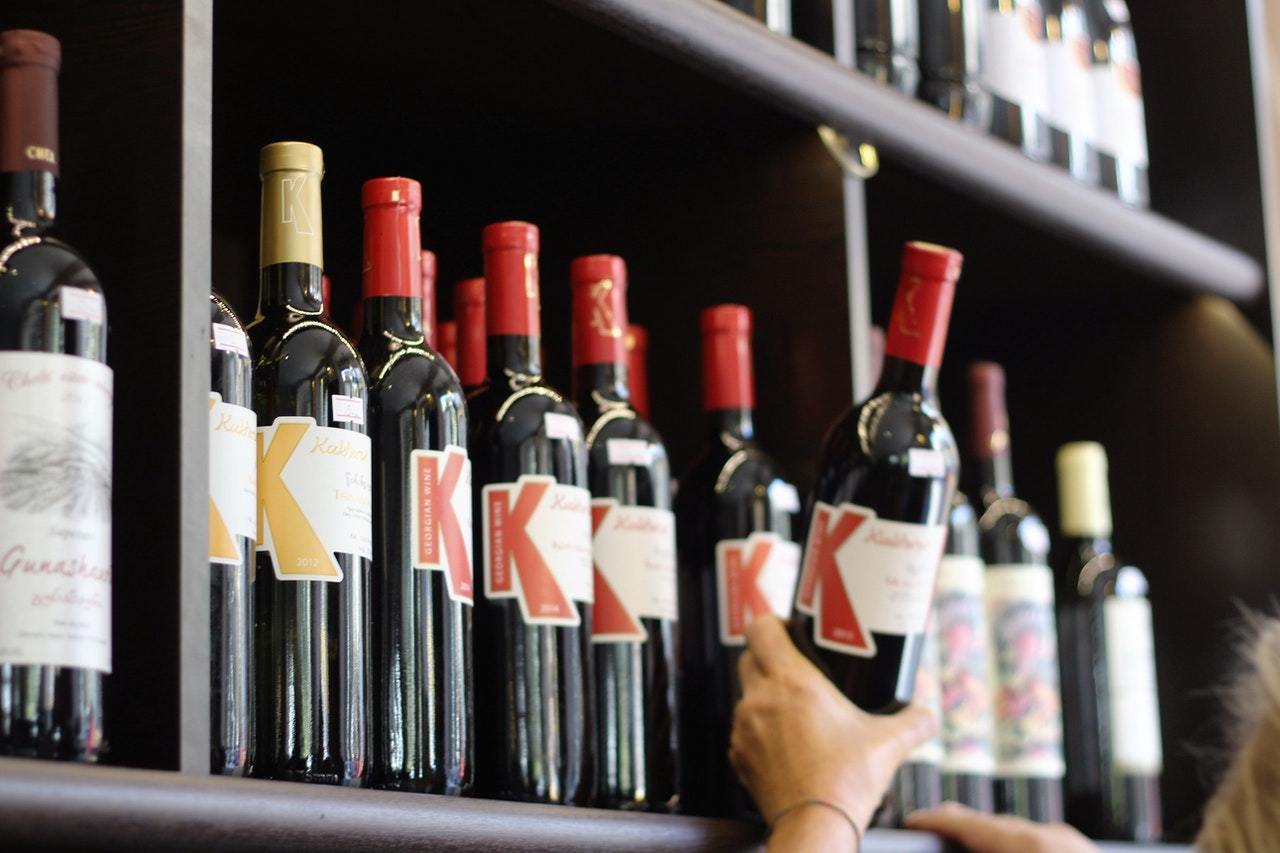
You went to the store expecting to find a few options. You walked the whole perimeter twice. Finally, wedged between the sparkling cider and the non-alcoholic beer, you found two bottles. One was a brand you'd tried before and didn't love. The other had a price tag smudged into illegibility and a thin film of dust on the shoulder that suggested it had been sitting there since the last administration.

That's the state of non-alcoholic wine in most retail environments. The selection isn't bad. It's nearly nonexistent.
The good news: the category has grown 22% year-over-year in the US (NIQ Off-Premise NA Beverage Report, 2024), and better options exist. They're just not at your local grocery store.
Here's where to actually find non-alcoholic wine, what makes online better than retail for this category specifically, and what to look for on the label before you buy anything.
Where to Buy Non-Alcoholic Wine In Stores
The honest answer is that in-store availability varies dramatically depending on where you live and which retailer you walk into. Here's the breakdown.
Total Wine and More is the single best brick-and-mortar option for non-alcoholic wine in the US. Most locations stock 15 to 30 non-alcoholic wine SKUs, compared to 3 to 5 options at a typical grocery chain (estimated from shopper-reported category data; individual store counts vary). The category has its own dedicated shelf section, staff can usually direct you to it, and you'll find specialty brands like Leitz Eins Zwei Zero and Giesen 0% alongside more widely distributed options. If you want to buy in person and actually have something to choose between, Total Wine is where to go.
Whole Foods Market has expanded its NA beverage section, but the experience is inconsistent. Larger urban flagship locations have been reported to carry 8 to 12 non-alcoholic wine options; smaller stores often carry two or fewer. Check availability on the Whole Foods website before making the trip, but note that shelf stock rotates often and does not always match what the site shows. Brands commonly found include Giesen 0%, Leitz, and occasionally Surely (based on reported retail observations; verify at your specific location).
Traditional grocery chains (Kroger, Safeway, Publix, HEB, Albertsons) mostly carry one to three options, almost always Ariel and Giesen, and sometimes one or two house-brand selections. The shelf placement is usually an afterthought, the selection doesn't change month to month, and the odds of finding something new are low. Fine if you just need something tonight. Not a destination for building a collection or finding your preferred style.
Target carries Giesen 0% in most locations, sold through the wine section or sometimes near the non-alcoholic beer. It's reliably stocked and reasonably priced. The selection stops there.
Specialty wine shops are hit or miss. An independent shop that's actively engaged with the NA category can be a genuinely good resource. The staff will know the products, the selection gets curated rather than just stocked, and you're more likely to find something worth trying. But most independent wine shops still treat NA as a courtesy section, not a category they've invested in. Call ahead.
The consistent pattern: the bigger and more wine-focused the retailer, the better the NA selection. And even at the best retail option available, the selection is still a fraction of what you can find online.
Where to Buy Non-Alcoholic Wine Online
Online is where the NA wine category actually lives right now. The selection is wider, the stock is fresher, and you can read actual product descriptions instead of squinting at a back label under fluorescent light.
Amazon carries a reasonable selection of non-alcoholic wine, including Ariel, Giesen 0%, and a rotating cast of imports. The convenience is real. The trade-off: alcohol-adjacent products on Amazon have variable freshness, mixed reviews for temperature-sensitive shipping, and you're often buying through third-party sellers with inconsistent storage practices. For a shelf-stable product it's fine. For something you care about, ordering direct from the brand gives you more control.
Amazon shipping for NA wine is also restricted in some states due to beverage shipping regulations, so confirm availability for your location before ordering.
Alcohol delivery platforms like Instacart, Gopuff, and DoorDash Alcohol can source NA wine inventory from local retailers for same-day delivery in major markets. Selection depends entirely on what your local partner stores carry, which circles back to the retail gap problem. (Note: Drizly, formerly the dominant alcohol delivery platform, shut down in March 2024 after its acquisition by Uber. Uber Eats now handles some alcohol delivery in select markets.)
DTC brands shipping direct is the best option for selection, freshness, and product range. Brands like Surely, Giesen, and YOURS ship direct to consumers, which means you're getting product straight from the producer rather than something that's been sitting on a distribution chain for four months.
YOURS ships direct at sipyours.com. That's where you'll find the full range: California Cabernet Sauvignon, Washington Sauvignon Blanc, Rosé, and California Red Blend. All four varieties in stock, all shipped directly, no retail markup, and the product gets to you in the same condition it left the facility. For a full tasting and brand breakdown before you order, read the YOURS Non-Alcoholic Wine review. For how the lineup stacks up against other brands on the market, the best non-alcoholic wine guide has the comparison.
Why YOURS Ships Direct (and Why That Matters)
Most DTC food and beverage brands will tell you that buying direct supports the brand. That's true. But for non-alcoholic wine specifically, direct shipping has a more practical benefit.
Non-alcoholic wine doesn't benefit from extended retail shelf time the way a shelf-stable condiment does. It's a real beverage with real flavor development. When product sits in a warehouse, then a distribution center, then a store backroom, then a shelf for 90 days, that's 90 days of exposure to light, temperature fluctuation, and handling. You notice the difference.
When you order from sipyours.com, the product ships from current inventory, directly to you. Best selection, freshest stock, and full access to all four varieties in the line. That's not a marketing pitch. It's just how direct-to-consumer logistics work.
YOURS currently ships to most US states. A small number of states have regulations that restrict non-alcoholic beverage shipping, so the checkout flow will flag any restrictions for your address automatically. If your state is restricted, Total Wine is the best retail fallback.
The full product range at sipyours.com:
- California Cabernet Sauvignon, dark fruit, structured tannins, dry finish. For a recommendation with more detail, see the best non-alcoholic Cabernet Sauvignon breakdown.
- Washington Sauvignon Blanc, crisp, citrus-forward, clean. Full varietal breakdown in the best non-alcoholic Sauvignon Blanc guide.
- Rosé, fruit-forward, not sweet. More detail in the best non-alcoholic rosé guide.
- California Red Blend, approachable, layered, designed for any occasion.
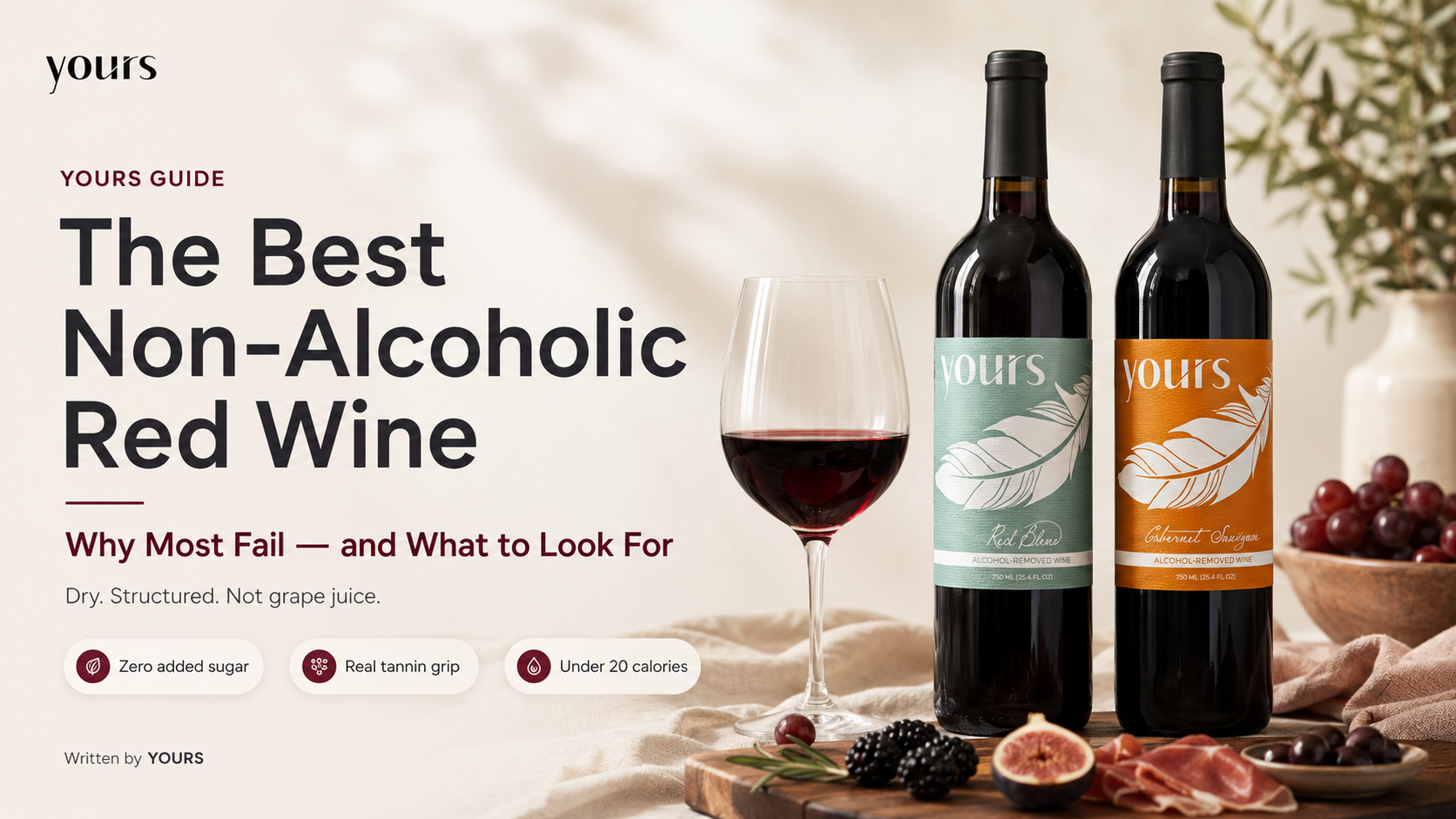
All four: 10-20 calories per 5oz glass, 4g carbs, 0g added sugar, 0.5% ABV or less, monk fruit sweetened, made by California winemakers.
Can Non-Alcoholic Wine Be Shipped to Your State?
The short answer: almost certainly yes, and here's why that's a different question than it is for regular wine.
In the US, state-level restrictions on direct-to-consumer beverage shipping are based on ABV thresholds. The TTB (Alcohol and Tobacco Tax and Trade Bureau) classifies beverages at 0.5% ABV or less as non-alcoholic. Dealcoholized wine that meets this threshold, including all YOURS products, is not classified as an alcoholic beverage under federal standards.
Because most state alcohol shipping laws regulate alcoholic beverages (typically defined as products above 0.5% ABV), they generally do not apply to NA wine. Non-alcoholic wine under the 0.5% threshold is typically treated as a standard consumer packaged good for shipping purposes, not as an alcohol product subject to DtC wine permit requirements.
This is one of the practical advantages of the NA wine category that most articles don't mention: if you live in a state that restricts DtC wine shipments for traditional wine, those restrictions generally do not apply to dealcoholized wine under 0.5% ABV.
What this means in practice:
| Scenario | What to Expect |
|---|---|
| Most US states | NA wine under 0.5% ABV ships as standard consumer goods. No alcohol permit required. |
| States with strict DtC wine laws (e.g., Utah, Mississippi, Alabama) | These laws typically target alcoholic beverages. NA wine at 0.5% ABV or under generally falls outside their scope. |
| States with broad beverage shipping restrictions | Some states restrict certain categories beyond alcohol. Verify at checkout. |
| APO/FPO addresses and US territories | Shipping eligibility varies by carrier policy, not by alcohol law. Confirm at checkout. |
Important caveats to know:
- Individual retailer and carrier policies vary independently of state law. A retailer may choose not to ship to certain states regardless of whether the product is alcoholic.
- Amazon applies its own shipping restrictions to alcohol-adjacent products, which may flag NA wine even when no state law requires it.
- When ordering from any retailer, the checkout process should reflect current shipping eligibility for your address. If a restriction is flagged, contact the retailer to confirm whether it applies to non-alcoholic products specifically.
At sipyours.com: The YOURS checkout flow automatically checks shipping eligibility for your address. The restrictions that exist are retailer-level policies, not typically state alcohol law. If you see a restriction flagged, contact YOURS directly, it's worth confirming whether it applies to a non-alcoholic product at 0.5% ABV.
As always: verify at checkout for the most current shipping status to your state. Policies change, and the retailer's checkout reflects live eligibility more accurately than any published table.
What the Label Tells You Before You Buy
Not every NA wine label tells you what you actually need to know. Here's what to check before you buy, wherever you're buying from.
Confirm the ABV. Non-alcoholic is defined as 0.5% ABV or less in the US. Most legitimate NA wines land well under this threshold. A few products marketed as "low alcohol" or "alcohol-reduced" sit at 1-3% ABV, which is not non-alcoholic by legal definition or by practical effect. Read the label, not just the front panel.
Check the sugar content. This is the one variable that separates a drinkable NA wine from what tastes like slightly fermented grape juice. Most non-alcoholic wines use sugar or grape juice concentrate to compensate for the mouthfeel and volume lost when alcohol is removed. That compensation shows up as added sugar on the nutrition panel. Ariel Cabernet Sauvignon carries approximately 8 grams of sugar per 5oz glass (per Ariel product label as of 2025; verify current packaging). Giesen 0% runs approximately 5 grams per 5oz serving (per Giesen product label as of 2025; verify current packaging). YOURS has 0 grams of added sugar, achieved through monk fruit sweetening (per YOURS product label). For a full calorie and sugar comparison across brands, the lowest calorie non-alcoholic wine breakdown has the actual numbers.
Look for the dealcoholization method. Spinning cone column and vacuum distillation are both legitimate methods that preserve flavor compounds while removing alcohol. Neither is inherently superior for every application. What matters is that the label or product description acknowledges real wine as the base material. For a full explanation of how both methods work and why the distinction matters, read how non-alcoholic wine is made. Some NA "wines" are actually fermented grape beverages that never had alcohol to begin with. They're not made from wine. The difference in flavor profile is significant. If the label says "dealcoholized wine" or "alcohol-removed wine," that's a meaningful signal. If it says "non-alcoholic wine beverage," read more carefully.
Understand that dry NA wine is the exception, not the rule. Most NA wines finish sweet because of how sugar is used to replace alcohol's body and structure. YOURS uses monk fruit and two years of mouthfeel development to achieve a dry finish without adding sugar. The category average is sweet. If you want dry, you need to select specifically for it. The guide to why NA wine tastes sweet explains the production reason behind this in detail.
Know what you're paying for. NA wine at retail typically runs $12-$18 per bottle for widely distributed brands; premium specialty imports such as Leitz Eins Zwei Zero can reach $25-$30 per bottle (price estimates based on common retail observations as of 2025; verify current pricing at retailer). Ordering direct from brands often delivers the same price point as retail without distribution markup. Do the math before assuming retail is cheaper.
Frequently Asked Questions
Where is non-alcoholic wine sold in stores?
Non-alcoholic wine is sold at Total Wine and More, Whole Foods Market, Target, and most major grocery chains including Kroger, Safeway, and Publix. Total Wine carries the largest in-store selection, typically 15 to 30 SKUs across brands and varietals. Grocery chains usually stock one to three options, with Ariel and Giesen 0% being the most commonly distributed.
Can I buy non-alcoholic wine on Amazon?
Yes, Amazon carries non-alcoholic wine from brands including Ariel, Giesen 0%, and various imports. Shipping restrictions apply in certain states due to beverage regulations, so availability varies by location. Ordering direct from brands like YOURS at sipyours.com often gives you fresher stock and the full product range that Amazon doesn't always carry.
Does Total Wine sell non-alcoholic wine?
Yes. Total Wine and More is the best brick-and-mortar retailer for non-alcoholic wine in the US, carrying 15 to 30 non-alcoholic wine SKUs in most locations. The category has dedicated shelf space, and staff can direct you to it. Selection includes brands like Leitz Eins Zwei Zero, Giesen, and Ariel, depending on location. Inventory varies by store.
Can non-alcoholic wine be shipped to all states?
Non-alcoholic wine ships to most US states, but not all. A small number of states have beverage shipping regulations that apply even to non-alcoholic products. When ordering from sipyours.com, the checkout process flags any shipping restrictions automatically based on your delivery address. If your state is restricted, Total Wine is the best retail fallback option.
What is the best non-alcoholic wine to buy online?
YOURS Non-Alcoholic Wine at sipyours.com is the best option for buying online, offering four varietals with 0g added sugar, 10-20 calories per glass, and a dry finish achieved through monk fruit sweetening rather than grape juice concentrate. For buyers comparing brands, the key variables are sugar content and whether the product starts from real dealcoholized wine versus a grape-based beverage. YOURS uses California-grown wine as the base, dealcoholized to 0.5% ABV or less.
Is non-alcoholic wine available at Whole Foods?
Yes, most Whole Foods locations carry non-alcoholic wine. Selection varies significantly by store, with larger urban locations stocking 8 to 12 options and smaller stores sometimes carrying only two. Brands commonly found at Whole Foods include Giesen 0% and Leitz. Checking inventory online before visiting is advisable, since shelf stock rotates and doesn't always match what the website shows.
The category is growing fast. But most of that growth is happening online and in specialty retail, not in the grocery aisle where the two dusty bottles are still waiting for you.
If you want selection, fresh stock, and the full range, sipyours.com is where to start. YOURS ships direct, the full product line is available, and every bottle starts from real California wine. For a guide to what California specifically produces in the NA wine category, see California Non-Alcoholic Wine. If you're buying as a gift or looking for occasion-specific guidance, see Non-Alcoholic Wine as a Gift for the full breakdown.
Shop the full YOURS range at sipyours.com.
Frequently Asked Questions
Where is non-alcoholic wine sold in stores?
Non-alcoholic wine is sold at Total Wine and More, Whole Foods Market, Target, and most major grocery chains including Kroger, Safeway, and Publix. Total Wine carries the largest in-store selection, typically 15 to 30 SKUs across brands and varietals. Grocery chains usually stock one to three options, with Ariel and Giesen 0% being the most commonly distributed.
Can I buy non-alcoholic wine on Amazon?
Yes, Amazon carries non-alcoholic wine from brands including Ariel, Giesen 0%, and various imports. Shipping restrictions apply in certain states due to beverage regulations, so availability varies by location. Ordering direct from brands like YOURS at sipyours.com often gives you fresher stock and the full product range that Amazon does not always carry.
Does Total Wine sell non-alcoholic wine?
Yes. Total Wine and More is the best brick-and-mortar retailer for non-alcoholic wine in the US, carrying 15 to 30 non-alcoholic wine SKUs in most locations. The category has dedicated shelf space, and staff can direct you to it. Selection includes brands like Leitz Eins Zwei Zero, Giesen, and Ariel, depending on location. Inventory varies by store.
Can non-alcoholic wine be shipped to all states?
Non-alcoholic wine ships to most US states, but not all. A small number of states have beverage shipping regulations that apply even to non-alcoholic products. When ordering from sipyours.com, the checkout process flags any shipping restrictions automatically based on your delivery address. If your state is restricted, Total Wine is the best retail fallback option.
What is the best non-alcoholic wine to buy online?
YOURS Non-Alcoholic Wine at sipyours.com is the best option for buying online, offering four varietals with 0g added sugar, 10 to 20 calories per glass, and a dry finish achieved through monk fruit sweetening rather than grape juice concentrate. For buyers comparing brands, the key variables are sugar content and whether the product starts from real dealcoholized wine versus a grape-based beverage. YOURS uses California-grown wine as the base, dealcoholized to 0.5% ABV or less.
Is non-alcoholic wine available at Whole Foods?
Yes, most Whole Foods locations carry non-alcoholic wine. Selection varies significantly by store, with larger urban locations stocking 8 to 12 options and smaller stores sometimes carrying only two. Brands commonly found at Whole Foods include Giesen 0% and Leitz. Checking inventory online before visiting is advisable, since shelf stock rotates and does not always match what the website shows.
Can non-alcoholic wine be shipped to restricted states?
Non-alcoholic wines with less than 0.5% ABV are classified as non-alcoholic beverages by the TTB and are not subject to state alcohol shipping restrictions in most jurisdictions. YOURS wines fall under this threshold. However, shipping regulations vary by state and retailer — always confirm at checkout. Amazon ships NA wine nationally with standard shipping restrictions.