How Non-Alcoholic Wine Is Actually Made (And Why Most of It Tastes Wrong)
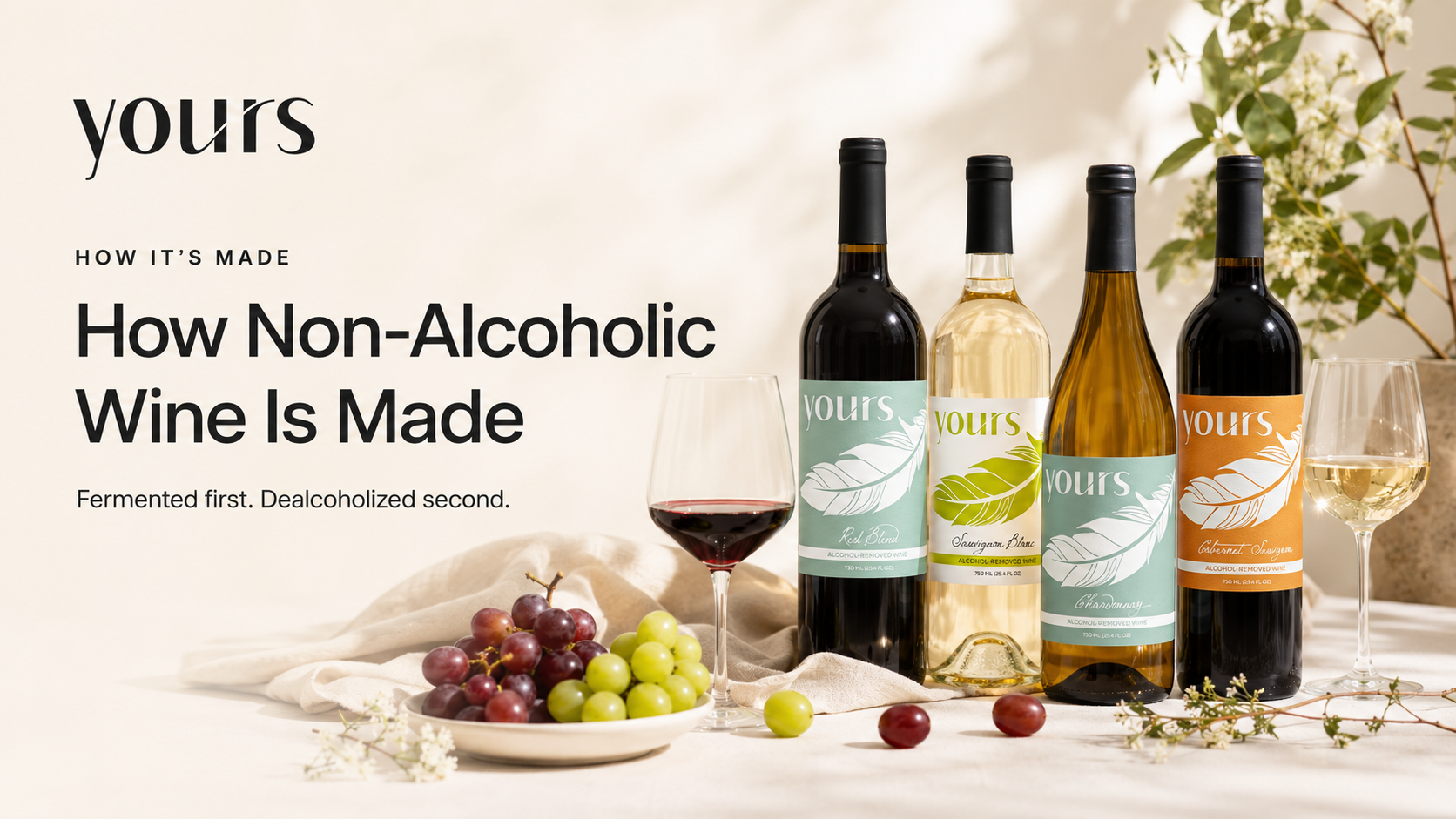
Most people assume non-alcoholic wine is grape juice with a fancy label. It's not. The process starts the same way every bottle of real wine starts: with grapes, fermentation, and time.

According to NCSolutions, a Circana company, nearly 49% of Americans planned to drink less alcohol in 2025, up 44% from 2023, a shift that has pushed non-alcoholic wine dollar sales up 41% in the same period (Circana/NCSolutions, January 2025). The demand is real. So is the question of what, exactly, is in these bottles and how it gets made.
The alcohol gets removed after the fact. That single distinction (fermented first, dealcoholized second) is what separates NA wine from anything you'd pour into a kid's cup at Thanksgiving. The fermentation process creates tannins, phenolic compounds, acids, and complexity. None of that requires alcohol to exist. It just requires wine to have existed first.
What actually determines whether that bottle tastes good has nothing to do with the grapes or the fermentation. It comes down to how the alcohol was removed, and what was used to fill the volume back in. That's the part nobody talks about. That's where most producers get it wrong.
Why Non-Alcoholic Wine Is Not Grape Juice (The Fermentation Difference)
Grape juice is never fermented. The sugars from the grapes stay exactly as they are: sweet, simple, one-dimensional. What you taste in grape juice is what was in the grape on the vine.
Dealcoholized wine takes a completely different path. The grapes go through full fermentation: yeast consumes the sugars and converts them into alcohol and carbon dioxide. That process fundamentally changes the liquid. Acids develop. Tannins emerge. Phenolic compounds form. The flavor structure that makes wine taste like wine (that layered, dry, complex character) is a product of fermentation, not of the alcohol itself.
When the alcohol is later removed, those compounds remain. The wine retains the structure fermentation built. A properly dealcoholized wine can be genuinely dry, because fermentation already consumed the sugars long before anyone touched the alcohol. Grape juice cannot be made dry. It starts sweet and stays sweet.
The difference is not cosmetic. Dealcoholized wine undergoes a complete biochemical transformation that grape juice never does. The result is a fundamentally different beverage. It starts its life as wine, gets finished as wine, and only then has the alcohol extracted.
The Three Methods Used to Remove Alcohol From Wine
There are three primary dealcoholization methods used by producers today. They vary significantly in how gentle they are on flavor, and not every producer uses the best one available.
Vacuum distillation applies heat to the wine, but does so under reduced pressure inside a sealed chamber. Ethanol has a standard boiling point of 78.37°C at atmospheric pressure, but reducing the ambient pressure lowers the evaporation temperature to approximately 25-30°C, according to principles of vacuum distillation documented in peer-reviewed winemaking research (PMC, "Dealcoholized wine: Techniques, sensory impacts, stability, and perspectives," 2025). This protects the delicate aromatic compounds that would be destroyed at full boiling temperature. Vacuum distillation is widely used, considered gentle relative to conventional heat methods, and is capable of producing solid results when paired with high-quality source wine.
Reverse osmosis (RO) works mechanically rather than thermally. Wine is forced through a semi-permeable membrane under high pressure. The membrane separates alcohol and water molecules from the larger aromatic molecules, which are too big to pass through. The alcohol is then stripped from the water-alcohol stream using distillation, and the water is recombined with the aromatic concentrate. Reverse osmosis is precise, operates at lower temperatures than vacuum distillation, and is used by premium producers who want maximum control over which compounds stay in the wine.
Spinning cone column (SCC) is the most technically sophisticated method and, done properly, the most flavor-preserving. Inside a tall sealed column, a series of spinning inverted cones creates a thin, rapidly spreading film of wine across their surfaces. Low-pressure steam passes through the column, volatilizing the aromatic compounds first, before the alcohol is touched. Those aromatics are captured, condensed, and set aside. The wine is then processed again to remove the alcohol. Finally, the captured aromatics are added back to the dealcoholized base. Because the flavor compounds are extracted, protected, and restored rather than simply surviving a thermal process, spinning cone column typically preserves more of the wine's original character than any other method.
In spinning cone column processing, wine makes two passes through the column: one to capture aromatics at very low temperatures (typically below 35°C), and a second to remove the alcohol. This means the aromatic profile is actively preserved rather than passively surviving the process.
The Volume Replacement Problem: Why This Step Determines Everything
Here is what almost no one explains: alcohol makes up 12-15% of a wine's total volume. Most table wines fall between 12% and 15% ABV, meaning alcohol constitutes a substantial physical fraction of the liquid, not just a chemical trace (Wine Institute; see also TTB regulations 27 CFR Part 4 governing wine labeling and ABV thresholds). When you remove it, that volume has to be replaced with something.
What producers choose to fill that gap with is the single biggest variable in how NA wine tastes.
The cheap, common approach is grape juice concentrate. It's widely used because it's inexpensive and easy. The problem: it makes the wine sweet, heavy, and simple. You've just taken wine, removed what made it wine, and replaced it with juice. The result tastes nothing like what went in.
The second approach is water or simple dilution. This doesn't add sweetness, but it adds nothing else either. The wine becomes thin and flat. Structure disappears. Any remaining tannin or acid just hangs there with nothing around it.
The third approach, and the one that actually works, is restoring mouthfeel and balance through natural ingredient blending without adding sugar. This is harder. It requires understanding what the wine had structurally, and rebuilding those properties without defaulting to sweetness as the solution.
YOURS uses zero added sugar in volume replacement. Sweetness calibration, where needed, is done with monk fruit, which has a glycemic index of zero and doesn't read as a sugar substitute in the glass. The goal is restoring the dry, structured character the wine had before dealcoholization, not sweetening it into something else.
The volume replacement method is why two bottles of NA wine made from similar grapes with similar dealcoholization can taste completely different. The method after the method is what you're actually tasting.
How YOURS Is Made: California Winemakers, Two Years of Development
YOURS starts with real grapes, harvested at peak ripeness in California. The wine goes through standard fermentation, same as any conventional wine. It's aged and finished. At that point, it is wine.
Then the alcohol is removed using a gentle dealcoholization process designed to protect the aromatic compounds that make the wine worth drinking. The volume is restored without sugar. The result is what goes in the bottle.
The reason this took two years of development is that getting the mouthfeel right without sugar is not simple. Alcohol contributes body. It carries flavor compounds across the palate. When it's gone, the wine feels different. Rebuilding that structural quality without defaulting to sweetness or dilution required work: reformulation, tasting, adjustment, repeat.
The California winemakers behind YOURS have experience in both conventional winemaking and dealcoholized production. That crossover matters. You can't make good NA wine by hiring a dealcoholization technician to process commodity wine. You have to make good wine first, then protect it through the removal process.
For the Red Blend and Cabernet Sauvignon, the flavor compounds preserved through dealcoholization include black currant, cedar, vanilla, and oak. The Rosé retains its floral and berry notes. These aren't added flavors. They're what survived because the process was designed to preserve them.
For more on how YOURS approaches the sweetness problem specifically, see why NA wine tastes sweet and why YOURS doesn't. For what California's non-alcoholic wine scene looks like more broadly, the producers, the regions, and the production standards the state has set, see California Non-Alcoholic Wine.
What Gets Preserved and What Gets Lost in Dealcoholization
Dealcoholization preserves more than most people expect. The compounds that fermentation creates (tannins, phenolics, organic acids, aromatic esters) are largely retained if the process is handled correctly. These are the compounds responsible for mouthfeel, structure, and the layered flavor development that makes wine interesting.
What changes is texture. Alcohol provides body and viscosity. A dealcoholized wine processed without attention to volume replacement will feel thinner than its conventional counterpart. The flavor compounds are there; the structural weight that carried them has been altered. This is the challenge that most NA wine producers either ignore or solve with sugar.
Fermentation-derived tannins, which are responsible for the drying sensation on the back palate in red wines, survive dealcoholization well. This is why a properly made NA red can finish dry and structured. The tannin is doing its job even without alcohol present. For the full explanation of what tannins are, why most NA reds lose them after dealcoholization, and how to identify them in the glass, see Tannins in Non-Alcoholic Wine.
Aromatic compounds are the most sensitive. High-temperature processes destroy them. This is why the method matters: spinning cone column, which actively captures and restores aromatics, outperforms methods that simply try to avoid destroying them. Reverse osmosis preserves more than vacuum distillation for the same reason: lower temperatures, more targeted separation.
What you cannot replicate through dealcoholization is the sensation of ethanol warming the back of the throat. That's a physical property of the molecule itself. Good NA wine doesn't pretend that feeling is there. It does everything else correctly and doesn't apologize for the one thing that's genuinely absent.
If you're looking for a starting point, the YOURS Cabernet Sauvignon is a good benchmark for what dealcoholized red wine can do when the process is taken seriously. For a comparison across styles, see our guide to the best non-alcoholic Cabernet Sauvignon options. For rosé, where the aromatic challenge is significantly harder, see The Best Non-Alcoholic Rosé.
Frequently Asked Questions
How do they make non-alcoholic wine? Non-alcoholic wine is made by first producing conventional wine through full fermentation, then removing the alcohol using one of three methods: vacuum distillation (low-pressure heat), reverse osmosis (membrane filtration), or spinning cone column (aromatic capture and alcohol separation). The removed alcohol volume is then replaced with water, juice concentrate, or a sugar-free blend depending on the producer. The wine starts as real wine. The alcohol is removed as a final step.
Is non-alcoholic wine just grape juice? No. Grape juice is never fermented. It retains all its original sugars and has no tannins, phenolic structure, or fermentation-derived complexity. Non-alcoholic wine goes through full fermentation, which converts sugars to alcohol and creates tannins, acids, and aromatic compounds. The alcohol is then removed. The result is chemically and structurally different from grape juice, and can be genuinely dry if the producer avoids sweetening the volume replacement. For a detailed comparison of what separates the two, including the concentrate problem that makes many NA wines taste like juice anyway, see Non-Alcoholic Wine vs Grape Juice.
How is alcohol removed from wine without ruining it? The key is temperature control. Alcohol boils at 78°C. Processing wine at that temperature destroys delicate aromatics. Methods like vacuum distillation lower the evaporation point to around 25-30°C by reducing pressure. Reverse osmosis uses mechanical membrane filtration at ambient temperatures. Spinning cone column captures aromatics before the alcohol is removed, then adds them back afterward. Each method is designed to extract the alcohol without destroying what fermentation built.
What is reverse osmosis wine? Reverse osmosis is a dealcoholization method in which wine is pushed through a semi-permeable membrane under high pressure. The membrane allows small molecules (alcohol and water) to pass through, while the larger aromatic and flavor compounds are retained. The alcohol is then removed from the water-alcohol permeate using distillation, and the clean water is recombined with the aromatic concentrate to reconstitute the wine. It is one of the more precise dealcoholization methods and is used by premium producers who want tight control over the final flavor profile.
Is non-alcoholic wine fermented? Yes. Non-alcoholic wine goes through the same fermentation process as conventional wine. Yeast is introduced to the grape must, and it converts the sugars into alcohol and carbon dioxide over a period of days to weeks. The wine is then finished and aged. The alcohol is removed after fermentation is complete. Fermentation is what gives NA wine its tannins, dry finish, and structural complexity. None of that requires the alcohol to remain in the bottle.
Does non-alcoholic wine contain any alcohol? Most dealcoholized wines contain trace amounts of alcohol, typically under 0.5% ABV, which is the legal threshold for "non-alcoholic" designation in most markets. This trace level is comparable to what occurs naturally in ripe fruit, fermented kombucha, or fruit juice. The residual amount is a function of how completely the dealcoholization process removes the ethanol. Premium processes like reverse osmosis and spinning cone column achieve the lowest residual levels.
What is the difference between non-alcoholic wine and grape juice? The core difference is fermentation. Grape juice bypasses fermentation entirely. Non-alcoholic wine goes through full fermentation before the alcohol is extracted. Fermentation changes the chemical composition of the liquid: sugars are consumed, tannins develop, acids evolve, and complex aromatic compounds form. A dealcoholized wine retains these fermentation-derived properties. Grape juice does not have them. The result is that NA wine can be dry, structured, and complex in ways that grape juice cannot be.
Is dealcoholized wine the same as alcohol-free wine? The terms are used interchangeably in most markets, though technically they describe the same product: wine that started as conventionally fermented wine and had its alcohol removed. "Dealcoholized" refers to the process; "alcohol-free" or "non-alcoholic" refers to the outcome. Both typically contain less than 0.5% ABV. The distinction that actually matters is not the label. What matters is whether the source wine was quality wine to begin with, and whether the dealcoholization and volume replacement were done with care.
For the full breakdown of what happens to polyphenols, resveratrol, and antioxidants during dealcoholization, and why the method determines how much survives, see Polyphenols in Non-Alcoholic Wine. For how these production principles apply to a specific white varietal, see The Best Non-Alcoholic Sauvignon Blanc: A Varietal Guide. For the full category comparison on which bottle to buy, read The Best Non-Alcoholic Wine: An Honest Buyer's Guide. For a guide to finding genuinely dry bottles and reading labels before you buy, see Best Dry Non-Alcoholic Wine. Understanding how the production process affects shelf life matters once the bottle is open, see does non-alcoholic wine expire for storage and freshness guidance. Non-alcoholic wine's structural properties also make it useful in the kitchen, see cooking with non-alcoholic wine for a substitution guide.
Frequently Asked Questions
How do they make non-alcoholic wine?
Non-alcoholic wine is made by first producing conventional wine through full fermentation, then removing the alcohol using vacuum distillation, reverse osmosis, or spinning cone column methods. The removed alcohol volume is then replaced with water, juice concentrate, or a sugar-free blend depending on the producer.
Is non-alcoholic wine just grape juice?
No. Grape juice is never fermented and retains all its original sugars with no tannins or fermentation-derived complexity. Non-alcoholic wine goes through full fermentation before the alcohol is removed, retaining the tannins, acids, and structural compounds that fermentation creates. A properly made NA wine can be dry in a way grape juice cannot.
How is alcohol removed from wine without ruining it?
The key is temperature control. Vacuum distillation lowers the evaporation point to around 25-30°C by reducing pressure, protecting delicate aromatics. Reverse osmosis uses mechanical membrane filtration at ambient temperatures. Spinning cone column captures aromatics before the alcohol is removed, then adds them back afterward.
What is reverse osmosis wine?
Reverse osmosis is a dealcoholization method where wine is pushed through a semi-permeable membrane under high pressure. The membrane separates small molecules (alcohol and water) from larger aromatic compounds. The alcohol is then removed from the water-alcohol stream, and the water is recombined with the aromatic concentrate.
Is non-alcoholic wine fermented?
Yes. Non-alcoholic wine goes through the same fermentation process as conventional wine. Yeast converts sugars into alcohol and carbon dioxide. The wine is finished and aged. The alcohol is then removed afterward. Fermentation is what gives NA wine its tannins, dry finish, and structural complexity.
Does non-alcoholic wine contain any alcohol?
Most dealcoholized wines contain trace amounts of alcohol, typically under 0.5% ABV, which is the legal threshold for the non-alcoholic designation in most markets. This trace level is comparable to what occurs naturally in ripe fruit or fermented kombucha.
What is the difference between non-alcoholic wine and grape juice?
The core difference is fermentation. Grape juice bypasses fermentation entirely and retains all original sugars. Non-alcoholic wine goes through full fermentation before the alcohol is extracted, developing tannins, acids, and aromatic compounds in the process. NA wine can be dry and structured in ways grape juice cannot be.
Is dealcoholized wine the same as alcohol-free wine?
Yes, the terms describe the same product: wine that went through conventional fermentation and had its alcohol removed. Dealcoholized refers to the process; alcohol-free or non-alcoholic refers to the outcome. Both typically contain less than 0.5% ABV. The distinction that matters is the quality of the source wine and the care taken in dealcoholization.