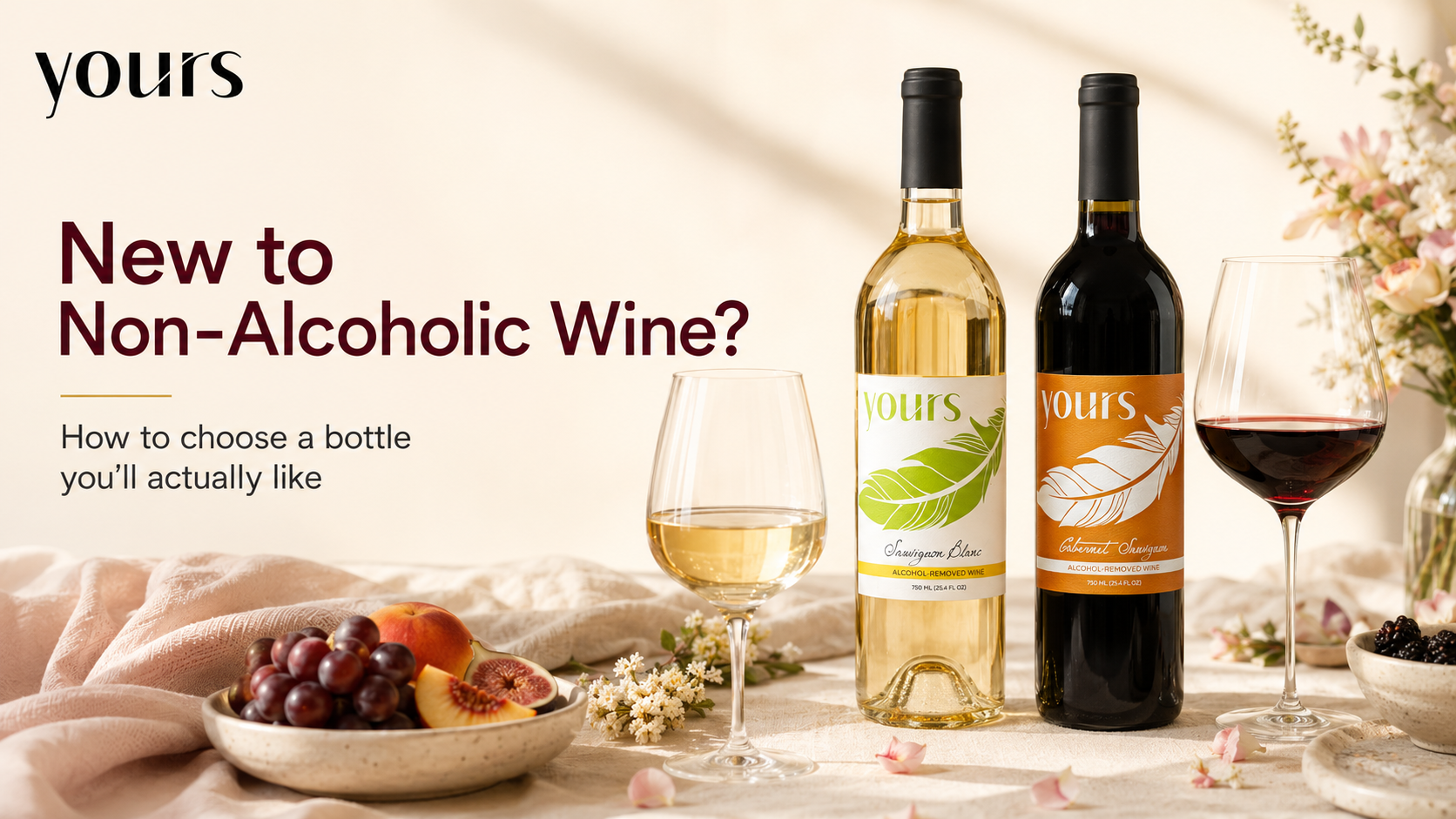
How to Choose Non-Alcoholic Wine by Taste, Menu, and Mood
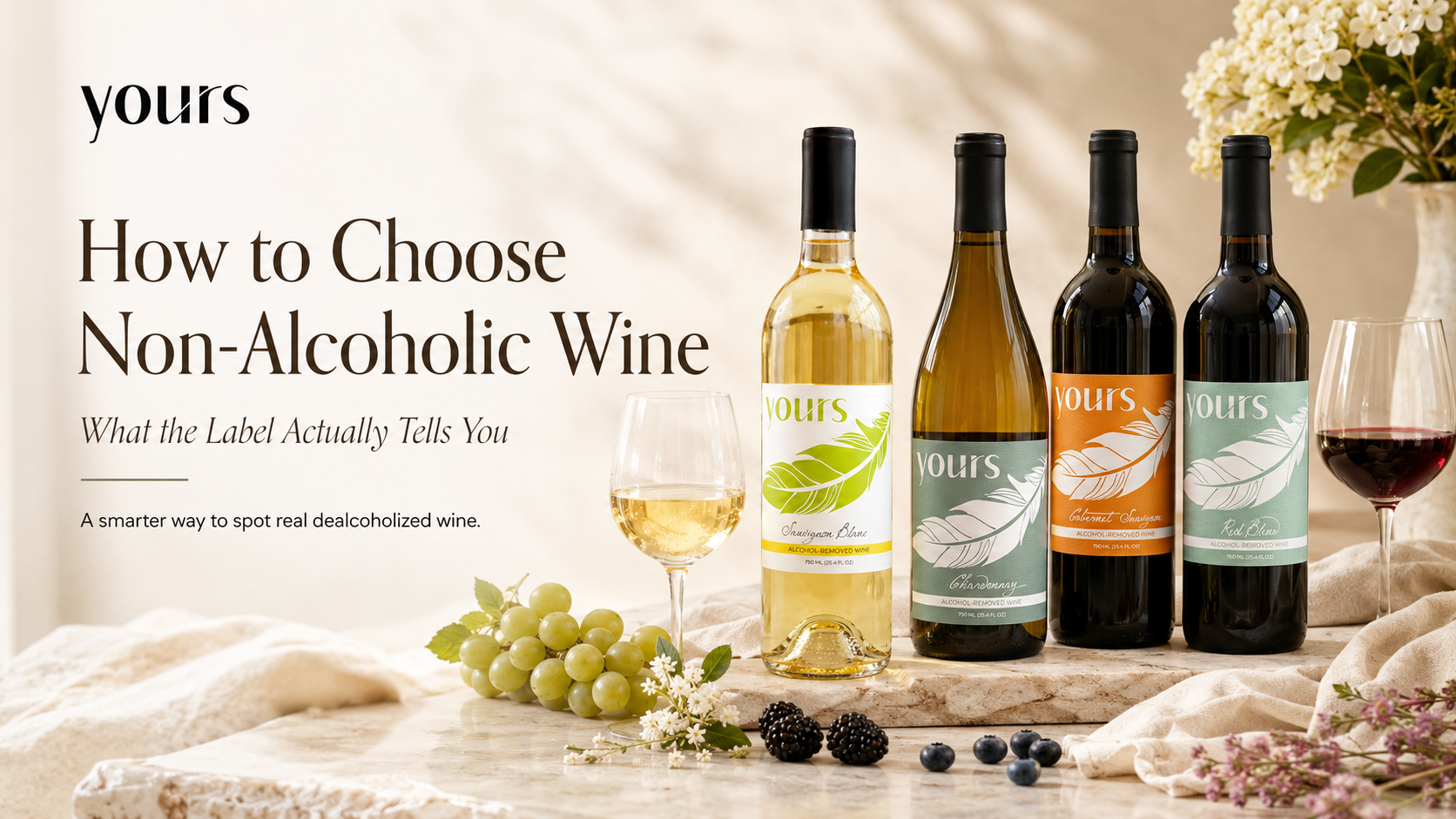
The non-alcoholic wine category has a transparency problem that most people don't find out about until after they've already been disappointed.

Wine labeling laws in the US don't require ingredient lists. They require ABV disclosure and allergen information. That's it. Which means a product can be 90% grape juice concentrate, sweetened with added sugar, carrying an implied wine identity. No label element would tell a first-time buyer what they're actually purchasing.
The result: most people who try non-alcoholic wine once, find it cloyingly sweet, and write off the category are making a rational judgment about a specific product type: concentrate-based beverages. They've mistakenly generalized that conclusion to the entire category.
Real dealcoholized wine exists. The trick is knowing how to find it when the label isn't written to help you.
Why Most Non-Alcoholic Wine Disappoints
Two different types of products are sold under the "non-alcoholic wine" label, and they taste nothing alike.
Type 1: Dealcoholized wine. Starts as real wine, fermented from actual grapes, then has the alcohol removed using low-temperature methods. This preserves the tannin structure, acidity, and aromatic compounds built during winemaking. For a full breakdown of how the process works, see how non-alcoholic wine is made.
Type 2: Concentrate-based beverage. Built from grape juice concentrate, sweetened with added sugar, sometimes enhanced with oak extract or botanicals. Never went through fermentation. Has no real tannin structure, no developed acidity, no wine character in any structural sense. Tastes sweet and thin because it was built that way.
Type 2 is the majority of the category at most price points. Type 1 is what the category is supposed to be. The label, as it currently works, does not have to tell you which type you're buying.
Understanding why most non-alcoholic wine tastes sweet gets into the specific mechanism: how concentrate enters the product and why it makes the taste profile so different from real wine.
This is the data nobody talks about. According to NIQ (2024), 92% of non-alcoholic wine buyers also still buy alcoholic products. The people swapping in NA wine are not abstaining. They are moderating. They want the ritual without every glass adding up.
 The 6-Point Label Reading Framework
These six signals are all visible on labels that comply with US wine labeling requirements. None of them require an ingredient list. Together, they let you distinguish real dealcoholized wine from concentrate-based alternatives with reasonable confidence.
Signal 1: Calorie Count Per Serving
What to look for: Under 25 calories per 5oz glass.
This is the single most reliable proxy available on any US wine label, and it works because of simple arithmetic.
Grape juice concentrate is calorie-dense sugar syrup. If a product has been built using concentrate, those calories show up in the nutrition panel. Real dealcoholized wine, with no concentrate added back in after the alcohol is removed, comes in dramatically lower.
Real dealcoholized wine: under 25 calories per 5oz glass. Many genuine ones come in under 20.
Concentrate-based products: typically 60-120 calories per glass. This range is wider because some brands add more concentrate than others, but none of them are getting to under 30 calories with concentrate present.
Alcoholic wine runs 120-130 calories per glass. Almost all of that is from alcohol, which is calorie-dense (7 cal/gram). Remove the alcohol cleanly and the number drops to under 20. Add concentrate back in and it climbs again.
The calorie count is not a health metric here. It is a product integrity signal.
YOURS Non-Alcoholic Wine: under 20 calories per glass. That number reflects zero added concentrate and zero added sugar. Real dealcoholized wine with monk fruit for texture, not sweetness recovery.
For more on calorie ranges across the category and what they signal, see lowest calorie non-alcoholic wine.
Signal 2: Grams of Sugar Per Serving
What to look for: 0g added sugar.
The nutrition panel distinguishes "total sugars" from "added sugars" on products that comply with updated FDA labeling requirements. Zero grams of added sugar means no concentrate was added after dealcoholization.
Five grams or more of sugar per serving is a strong signal of concentrate presence. The "added sugar" line is where this shows most clearly. Concentrate is, functionally, added sugar even if it's derived from grapes.
Some natural residual sugar exists in any wine. A dry dealcoholized wine may show 1-2g of total sugar on the panel, which is the natural fructose and glucose present in finished wine. That's expected and fine. The added sugar line, the one labeled as such, is the one to check.
YOURS: 0g added sugar, 4g carbs per glass. The monk fruit used in YOURS is for texture restoration, not sugar addition. Monk fruit is a non-caloric sweetener with no effect on the sugar count on the nutrition panel.
Signal 3: ABV
What to look for: 0.5% ABV or less.
The Alcohol and Tobacco Tax and Trade Bureau (TTB) defines "non-alcoholic" as under 0.5% ABV. Products at 0.5% to 1.2% ABV are technically classified as "low-alcohol" under federal definitions, even if the packaging uses "non-alcoholic" language informally.
This distinction matters for anyone choosing NA wine for reasons tied to alcohol avoidance entirely: pregnancy, medication, personal sobriety, or athletic performance. The regulatory standard is 0.5%.
For context: 0.5% ABV is also the standard for many fruit juices and bread. Orange juice typically comes in around 0.1-0.2% ABV due to natural fermentation. The non-alcoholic standard for wine is the same regulatory category. For a full technical breakdown of what 0.5% ABV means in terms of actual ethanol content and physiological effect, see how much alcohol is in non-alcoholic wine.
Signal 4: Ingredient List (When Present)
What to look for: The absence of "grape juice concentrate" in the ingredient list.
US wine labeling does not require an ingredient list. However, some brands include one voluntarily, and when they do, it's a useful signal in both directions.
If you see "grape juice concentrate" in the ingredients, the product is concentrate-based. That is not a dealcoholized wine. Full stop, regardless of how the product is described on the front label.
If a brand includes a voluntary ingredient list and it reads: "dealcoholized wine, monk fruit extract" (or similar minimal list), that signals product integrity. Brands that know their product would hold up to scrutiny tend to disclose it. Brands that wouldn't, don't.
The presence of a voluntary ingredient list is itself a signal. The transparency signals something about what the brand believes about its product.
Signal 5: Winemaker and Origin Claims
What to look for: Named winemakers, specific appellation origin, or described dealcoholization process.
Real dealcoholized wine brands talk about how their product is made because the process is the differentiator. "Made by California winemakers using real fermented wine, then dealcoholized" is a claim that implies a lot about what's in the bottle, and it's a claim that requires the product to actually be that.
Concentrate brands rarely describe their production process in consumer copy. The answer to "how is it made?" isn't flattering, so it doesn't appear on the label or the website's hero copy.
Questions to ask about any brand: - Do they name winemakers or a winemaking facility? - Do they describe the dealcoholization method (spinning cone, membrane filtration, reverse osmosis)? - Do they mention an appellation or growing region? - Do they explain why their product tastes the way it does?
YOURS: California winemakers, two years of development, specific nutrition claims (under 20 cal, 0g added sugar, 0.5% ABV). The mechanism explanation is part of the brand story because the mechanism is what separates YOURS from the concentrate majority.
Signal 6: Price
What to look for: This is not determinative, but price is a useful contextual signal.
Genuine dealcoholized wine from California grapes using spinning cone or membrane filtration technology costs more to produce than concentrate-based alternatives. Under $15 retail in the still wine category is almost always concentrate at some scale.
This doesn't mean expensive products are automatically good. Premium pricing can exist on products that are still concentrate-based. But it does mean that very low prices are worth investigating further using the other signals.
Real dealcoholized wine at a quality level worth drinking typically runs $18-30 for a 750ml bottle in the current market. Zeronimo Leonis, the Wine Enthusiast #1 pick for 2026, retails at $72.40. YOURS is in the accessible premium range.

Varietal Guide: What to Expect from Each Type
Non-alcoholic wine doesn't behave identically across varietals, even within the dealcoholized category. Here's what to expect:
Reds (Cabernet Sauvignon, Red Blends): The hardest to get right. Tannin structure and phenolic complexity come from grape skin contact during fermentation. These survive dealcoholization in real dealcoholized reds but are absent in concentrate products. If a red wine tastes flat, thin, and sweet, it's almost certainly concentrate. A real dealcoholized red has grip and a finish.
Whites (Chardonnay, Sauvignon Blanc, Pinot Grigio): Whites are more forgiving of the dealcoholization process because their aromatic character is somewhat more stable. A concentrate-based white still tastes wrong: sweet and flat. The gap between a good NA white and a bad one is slightly less dramatic than in reds.
Rosé: Tends to work reasonably well in the NA category because rosé's appeal is partly in its fruit-forward, lighter-bodied profile, which survives dealcoholization more intact than a complex red. Still applies the same concentrate test: over 60 calories is a red flag.
Sparkling: CO2 re-carbonation is standard in NA sparkling production and doesn't affect quality the way it affects still wines. The main variable is still: is this real dealcoholized wine with carbonation, or a sweet grape juice beverage with bubbles?
For variety-specific comparisons, best non-alcoholic wine covers the full landscape. For the white wine category specifically, best non-alcoholic sauvignon blanc applies the same framework to the most popular white varietal in the NA category.
Red Flags in Product Descriptions
Some language patterns in marketing copy reliably signal a concentrate-based product:
"Crisp and refreshing" on a red wine: Red wine isn't crisp. Crispness is a white wine descriptor. When a red wine is marketed as "crisp," the brand is describing a flavor profile that doesn't match what real red wine delivers. They don't have real red wine. Concentrate-based reds often taste more like grape juice than red wine, and "crisp" is the closest accurate descriptor.
"Made with real grapes": True of grape juice, grape juice concentrate, and wine alike. This phrase sounds reassuring but says nothing about whether fermentation happened, which is the whole question.
No mechanism language anywhere: If a brand can't tell you how the alcohol was removed, ask yourself why. Low-temperature dealcoholization is a competitive advantage. Brands that use it talk about it.
"Enjoy the taste of wine without...": This phrase construction frames the product as an approximation. Real dealcoholized wine brands frame their product as wine, because it is. "Enjoy the taste of wine without..." is concentrate brand language.
Very low price + "non-alcoholic wine": Not impossible to be good, but under $12 is worth additional scrutiny on every other signal.
How to Interpret "Contains Sulfites"
Sulfites are a natural byproduct of fermentation. They are also added to wine in small amounts as a preservative. The "contains sulfites" disclosure is required on US wine labels when sulfite levels exceed 10 parts per million.
Finding "contains sulfites" on a non-alcoholic wine label is a positive signal, not a negative one. It means the product went through fermentation, where sulfites are produced naturally. Concentrate-based products may or may not carry this disclosure depending on production method.
If you see "no added sulfites" on a dealcoholized wine, that means no sulfites were added as a preservative beyond what fermentation produced naturally. It does not mean sulfite-free. Trace amounts from fermentation are typically still present.
For a full breakdown of sulfites in NA wine and what the label disclosure actually means, see does non-alcoholic wine have sulfites.
Is Non-Alcoholic Wine Just Grape Juice?
Some of it is, yes. That's the honest answer, and it's the one worth stating clearly before someone spends money and gets burned.
Concentrate-based products are, functionally, premium grape juice. They taste like grape juice because they are grape juice: sweetened, possibly with oak extract added, in a wine bottle. The category's reputation for tasting sweet and thin comes from these products.
Real dealcoholized wine is not grape juice. It went through fermentation (which transforms grape sugar into alcohol and develops complexity). It has tannin structure, developed acidity, and phenolic compounds that grape juice doesn't have. Then the alcohol was removed, leaving the wine character largely intact.
The two products use the same raw material but are built entirely differently. The tasting experience reflects that difference.
For a complete side-by-side comparison, non-alcoholic wine vs grape juice covers the production, taste, and nutritional differences in full.
 How to Know If Non-Alcoholic Wine Is Good Before You Buy
Apply the six signals above in this order of priority:
- Calories per glass: Under 25? Proceed. Over 60? Concentrate almost certain.
- Added sugar: 0g? Strong positive. 5g+? High concentrate probability.
- ABV: 0.5% or under? Regulatory non-alcoholic standard met.
- Ingredient list (if present): No grape juice concentrate? Positive signal.
- Winemaker claims: Named winemakers, process explanation, appellation? Positive.
- Price: Under $15 still wine? Apply extra scrutiny to signals 1-5.
A product that passes all six is almost certainly a real dealcoholized wine. A product that fails signals 1 and 2 is concentrate-based regardless of what the marketing says.
For a broader starting point on what's worth trying in the category right now, YOURS non-alcoholic wine review covers the product from a buyer perspective. And if you're ready to purchase and want to know where to find genuine dealcoholized options, where to buy non-alcoholic wine covers the current retail and direct-to-consumer landscape. Once you've chosen a bottle, how to store non-alcoholic wine covers temperature and light conditions to maximize shelf life, and how to serve non-alcoholic wine covers glassware and temperature for best results in the glass.
How Do I Pick a Non-Alcoholic Wine I'll Actually Like?
Start with varietal preference from your alcoholic wine experience.
If you drink red wine, start with a dealcoholized red (Cabernet Sauvignon or a red blend) and apply the calorie and sugar tests. If you drink white wine, a dealcoholized sauvignon blanc or chardonnay is the right starting point.
Then apply the framework above to whatever you're considering. Under 25 cal, 0g added sugar, 0.5% ABV: these three numbers together give you a reasonable filter before you read a single review.
The final test is always the glass. A genuine dealcoholized wine should have a finish. Something should happen after you swallow. If it tastes flat, sweet, and then nothing, that's concentrate.
Frequently Asked Questions
How do I know if non-alcoholic wine is good?
Check the calorie count per 5oz glass. Under 25 calories signals real dealcoholized wine with no added concentrate. Over 60 calories signals concentrate presence. Then check added sugar: 0g means no concentrate was added. These two numbers together filter out the majority of poor-quality options without having to open the bottle.
What should I look for on a non-alcoholic wine label?
Six signals: calorie count per serving (under 25 cal), added sugar (0g), ABV (0.5% or less), ingredient list if present (no grape juice concentrate), winemaker claims (named winemakers, described production process), and price as a contextual check. The calorie count is the most reliable single signal when others are absent.
Is non-alcoholic wine just grape juice?
Concentrate-based non-alcoholic wine is functionally grape juice: built from concentrate without fermentation, typically sweetened with added sugar. Real dealcoholized wine went through fermentation (developing tannins, acidity, and complexity) and then had the alcohol removed. The two products are built entirely differently and taste entirely different. The calorie count per serving is the fastest way to tell them apart.
How do I pick a non-alcoholic wine I'll actually like?
Start with your varietal preference from regular wine. Then check: under 25 cal per glass, 0g added sugar, 0.5% ABV or less. A product that passes all three is almost certainly real dealcoholized wine. Within that filtered set, look for brands that explain their production process. That transparency usually signals the quality they're confident in. If you are entirely new to the category, non-alcoholic wine for beginners covers first-bottle expectations, serving tips, and common mistakes alongside this label-reading framework.
For white wine drinkers choosing between Sauvignon Blanc, Chardonnay, and Pinot Grigio, the best non-alcoholic white wine guide compares the category across those styles. For Pinot Grigio specifically, which is lighter and more mineral than Chardonnay, see non-alcoholic Pinot Grigio.
Frequently Asked Questions
How do I know if non-alcoholic wine is good?
Check the calorie count per 5oz glass. Under 25 calories signals real dealcoholized wine with no added concentrate. Over 60 calories signals concentrate presence. Then check added sugar: 0g means no concentrate was added. These two numbers together filter out the majority of poor-quality options without having to open the bottle.
What should I look for on a non-alcoholic wine label?
Six signals: calorie count per serving (under 25 cal), added sugar (0g), ABV (0.5% or less), ingredient list if present (no grape juice concentrate), winemaker claims (named winemakers, described production process), and price as a contextual check. The calorie count is the most reliable single signal when others are absent.
Is non-alcoholic wine just grape juice?
Concentrate-based non-alcoholic wine is functionally grape juice: built from concentrate without fermentation, typically sweetened with added sugar. Real dealcoholized wine went through fermentation and then had the alcohol removed. The calorie count per serving (under 25 cal per glass vs. 60-120 cal) is the fastest way to tell them apart.
How do I pick a non-alcoholic wine I'll actually like?
Start with your varietal preference from regular wine. Then check three numbers: under 25 cal per glass, 0g added sugar, 0.5% ABV or less. A product that passes all three is almost certainly real dealcoholized wine. Within that filtered set, look for brands that explain their production process. That transparency usually signals confidence in the quality.