Non-Alcoholic Wine for Beginners: What to Expect and How to Pick Your First Bottle
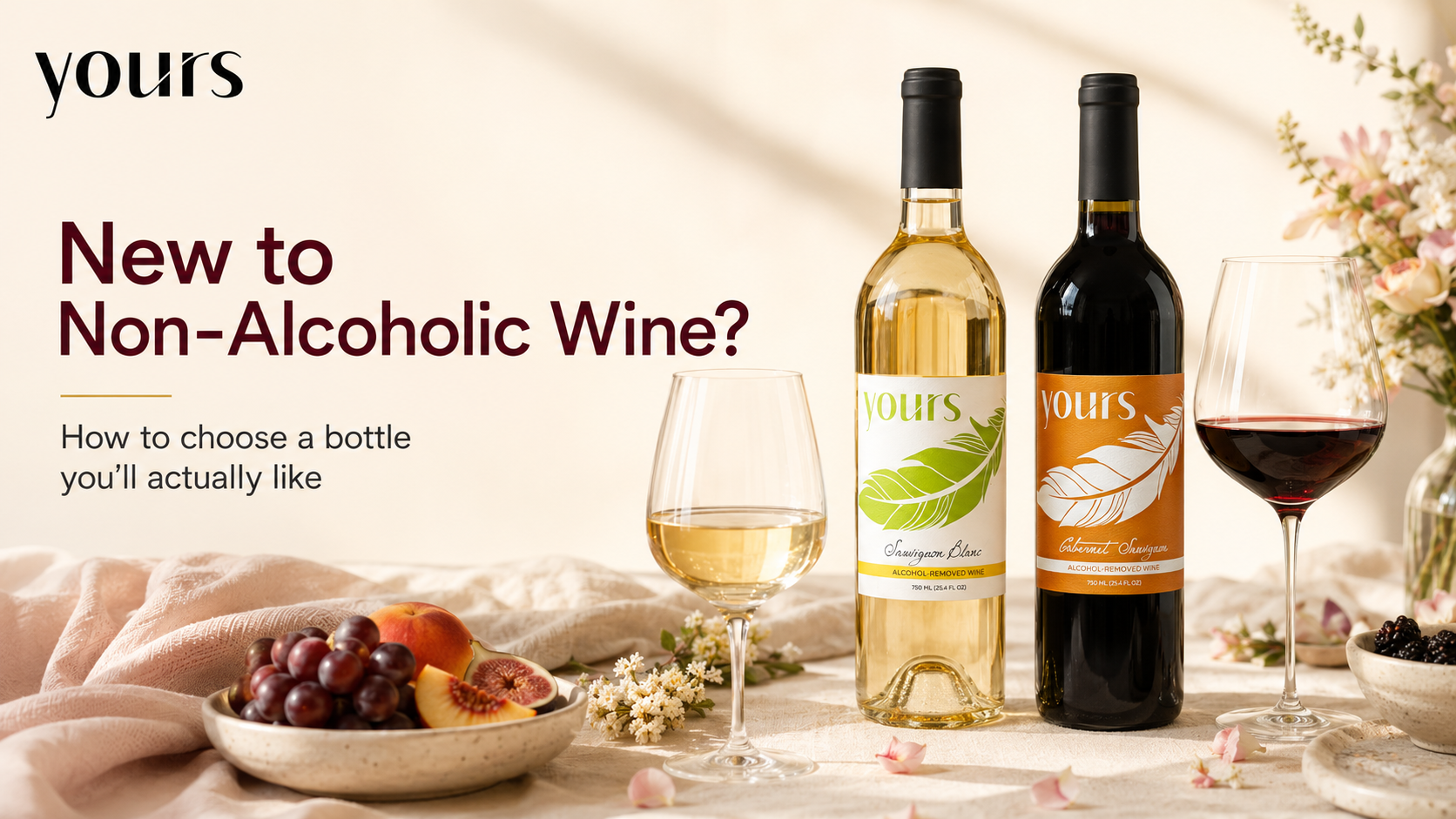
If you've never tried non-alcoholic wine, you've probably made one of two assumptions. Either it's grape juice in a fancy bottle. Or it's a product for people who've made a Very Serious Decision about their relationship with alcohol.

Both assumptions are understandable. And for most of the category, the first one is actually correct.
But there's a different kind of product that most first-timers never find. This guide exists to help you find it.
 What Most People Get Wrong About NA Wine
The non-alcoholic wine category has two entirely different types of product sitting side by side on the same shelf. They look similar. They're priced similarly. One of them is wine. The other is not.
The first type is concentrate-based. The winemaking process is abbreviated or skipped. What ends up in the bottle is a mixture of grape juice concentrate, water, added sugar, and sometimes oak extract or other additives to approximate wine flavor. These products are often sweet, thin, and missing the tannin structure that gives wine its texture. This is the category that earns the "grape juice in a wine bottle" complaint. And that complaint is accurate.
The second type is dealcoholized wine. Real wine is made first, from real grapes, the same way conventional wine is made. Then the alcohol is removed through a controlled process, typically vacuum distillation or spinning cone technology, which allows removal at low temperatures to preserve as much of the wine character as possible. The result is still wine in its structural sense: real phenolic compounds, real tannins, real acid profile, just without the ethanol.
The problem is that both products use the same words on the label. "Non-alcoholic wine." You can't tell from the name alone.
To understand the full technical difference, the how non-alcoholic wine is made guide covers the dealcoholization process in detail. It's worth reading before you make a purchase decision.
This is the data nobody talks about. According to NIQ (2024), 92% of non-alcoholic wine buyers also still buy alcoholic products. The people swapping in NA wine are not abstaining. They are moderating. They want the ritual without every glass adding up.
What Does Non-Alcoholic Wine Taste Like?
Honest answer: it depends entirely on which type you're drinking.
Concentrate-based products tend to taste sweet, thin, and somewhat artificial. The finish is short. There's no tannin structure. The grape flavor is there but it reads as fruit juice rather than wine. If this is your only experience with non-alcoholic wine, that experience is representative of most of the category.
Real dealcoholized wine tastes different. The aromatics are lighter than conventional wine because some aromatic esters are lost during dealcoholization (this is unavoidable and worth knowing). The color is right. The acid is there. Good dealcoholized reds have tannin structure because tannins are polyphenolic compounds that don't evaporate with alcohol. The finish is drier. It is not identical to conventional wine, but it is wine in every meaningful structural sense.
There will be a gap between dealcoholized wine and the conventional equivalent. It's honest to say that. The gap is smaller than most people expect if they've only ever tried the concentrate-based products. The gap is larger than some brands suggest if you're comparing it to a $45 Napa Cabernet.
The non-alcoholic wine vs. grape juice comparison goes into this distinction in more detail, including what specifically makes the two products different in the glass.
 How to Read a Label: The 3-Number Test
Before you pick a bottle, check three numbers. They'll tell you most of what you need to know.
1. Calories per serving. Under 25 calories per 5oz serving indicates a dealcoholized product with low sugar content. If you see 60, 80, or 100+ calories, you're looking at a product with significant residual sugar or added grape concentrate. Conventional wine has 120 to 150 calories. If the non-alcoholic version is close to that, the calories are coming from somewhere, and that somewhere is sugar.
2. Added sugar. Zero grams of added sugar is the clearest signal that the product isn't compensating for flavor loss with sweetness. Some added sugar doesn't automatically disqualify a product, but it's a flag. The reason most NA wine is sweet is that sugar is used to mask the flatness left by removing alcohol. Products that don't need to add sugar are products that preserved enough wine character to stand on their own.
3. ABV. 0.5% ABV is the regulatory standard in the United States for a product to be labeled non-alcoholic. It's a trace amount, roughly equivalent to what's found in some fruit juices and ripe bananas. Products labeled "alcohol-free" often aim for 0.0%, though this is harder to guarantee in a product made from fermented grapes. The 0.5% standard is the one that matters for regulatory purposes.
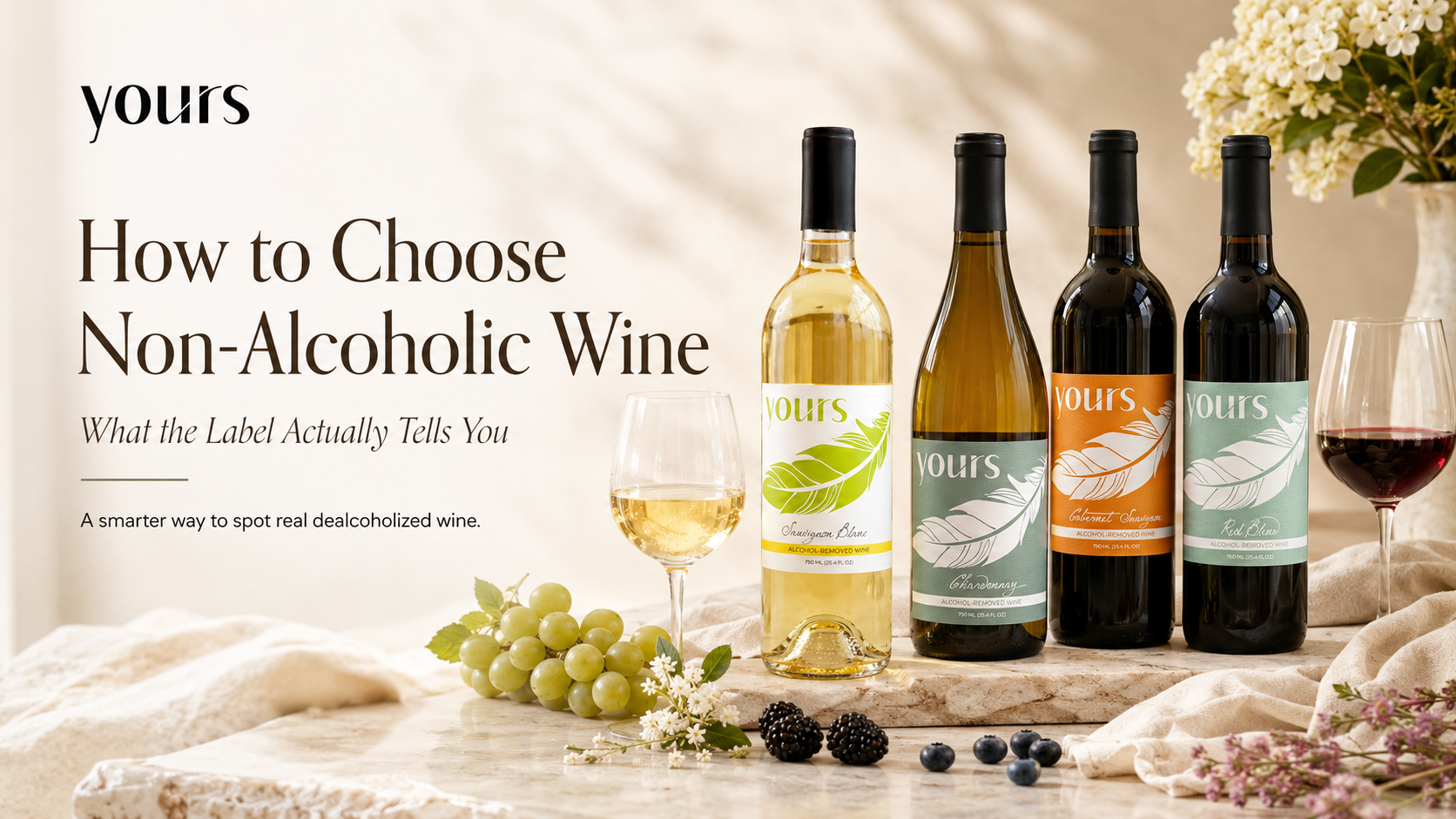
For YOURS specifically: under 20 calories per glass, 0g added sugar, 4g carbs, 0.5% ABV. Those numbers together describe a dealcoholized product made with real wine as the base.
You can see how YOURS compares to the rest of the category in the how to choose non-alcoholic wine guide and the best non-alcoholic wine roundup.
Which Varietal to Start With
The right starting point depends on what you normally drink.
If you drink red wine: Start with a cabernet sauvignon or merlot. Tannins are one of the wine characteristics most resistant to dealcoholization. A good dealcoholized Cab will have grip, structure, and a dry finish. The tannins are real because they're not volatile compounds. Start here and your first impression of dealcoholized wine is most likely to resemble actual wine.
If you drink white wine: Start with a sauvignon blanc. The high-acid, herbal, citrus profile of sauvignon blanc survives dealcoholization better than the more delicate floral notes in something like a pinot grigio. You'll get the bright, grassy character with the acid that makes white wine feel like white wine rather than juice.
If you drink rosé: A good dealcoholized rosé is the closest thing to its conventional counterpart in the category. The light body, the fresh fruit notes, the lower tannin load. Rosé is often a good entry point because the expectations aren't as demanding as they are for a structured red.
If you don't normally drink wine but are curious: Start with whatever sounds most appealing from a flavor standpoint, then compare it to the label. If you're drawn to fruity, light drinks, rosé or a sauvignon blanc. If you prefer something with more structure, a red.
Is Non-Alcoholic Wine Worth Trying?
That depends on what you're looking for.
If you're hoping for a drink that is indistinguishable from the conventional wine you love, you'll probably notice a gap. The aromatics are lighter. There's no alcohol warmth. The finish behaves differently.
If you're looking for the ritual of wine, the glass, the pour, the swirl, a proper drink at a dinner table, something dry and structured to have with food, a dealcoholized wine does that job well. The gap between a well-made dealcoholized wine and a concentrate-based product is larger than most people expect. The gap between a well-made dealcoholized wine and a conventional equivalent is real but smaller than most people fear.
Whether it's worth it is a personal calculation. But the category deserves to be evaluated on its best products, not its worst.
When to Drink It and What to Pair It With
Treat it like wine. That's the shortest possible advice.
Temperature: Red dealcoholized wines should be served at room temperature or slightly below, 60 to 65 degrees Fahrenheit. Whites and rosés at 50 to 55 degrees. Most first-timers make the mistake of serving everything refrigerator-cold, which flattens flavor and makes the absence of alcohol warmth more noticeable.
Glass: Use a proper wine glass. The surface area and the narrowing rim concentrate aroma. Drinking dealcoholized wine from a tumbler or a small juice glass removes a meaningful layer of the experience.
Food pairing: Dealcoholized wine pairs with food the same way conventional wine does. The tannins in a red cut through fat and protein. The acid in a white brightens rich dishes. The light body of a rosé works with everything from cheese to light fish.
The non-alcoholic wine food pairing guide has specific pairing suggestions by varietal if you want the details. The short version: pair it the way you'd pair a conventional wine of the same type.
What Makes YOURS Different
YOURS was two years in development, made with California winemakers who applied the same standards they use for conventional wine. The winemaking step is real. The dealcoholization removes only the ethanol. Monk fruit restores texture without adding sugar.
That's why the numbers look different from the rest of the category: under 20 calories per glass, 0g added sugar, 4g carbs. Not because of a proprietary formula. Because they started with real wine and didn't compensate for what the dealcoholization removed.
If you want to understand the full context of why most non-alcoholic wine is sweet and why YOURS isn't, the article why most NA wine tastes sweet covers the mechanism directly.
For an honest product review, the YOURS non-alcoholic wine review includes verified customer feedback.
Common First-Timer Mistakes
Serving it too cold. Refrigerator-cold suppresses aroma and makes the wine feel thinner than it is. Fifteen minutes at room temperature before pouring makes a meaningful difference for reds.
Comparing it directly to a $40 conventional wine. This is a category at a different price point with an additional production step. The right comparison is a $20 conventional wine, not the best bottle in your rack.
Buying a concentrate-based product first and writing off the category. This is the most common reason people decide NA wine "isn't for them." They tried the wrong product. The concentrate-based products represent the majority of the shelf. Finding a genuinely dealcoholized product, one with under 25 calories and 0g added sugar, takes one extra label check.
Expecting it to feel like alcohol. Dealcoholized wine doesn't produce the warmth, the slight lightheadedness, or the relaxation effect of ethanol. Those effects come from the ethanol. What a good dealcoholized wine delivers is the ritual: the sensory experience, the flavor, the texture, the occasion. If you're looking for something to replace the alcohol effect, that's a different category of product.
How Do You Pick a Non-Alcoholic Wine?
The three-number test from earlier in this article is the fastest filter: calories under 25, 0g added sugar, 0.5% ABV. Any bottle that passes those three checkpoints is likely dealcoholized rather than concentrate-based.
Beyond that, varietal selection matters. Start with the type you normally drink. Reds for red drinkers, whites for white drinkers. Within reds, cabernet and merlot are more beginner-friendly because their tannin structure survives dealcoholization better.
Occasion matters too. NA wine at a dinner table, in a proper glass, with food, performs better than NA wine alone on a couch. The ritual context does real work.
What Is the Best Non-Alcoholic Wine for Someone Who Has Never Tried It?
Start with a properly dealcoholized red from a California winemaker. The tannin structure is most likely to deliver a recognizable wine experience, the label math (calories, sugar) makes it easy to confirm you're buying the real thing, and the food-pairing flexibility gives you a range of contexts to try it in.
YOURS Cabernet and YOURS Red Blend are both built this way. Two years of development, real California winemaking, under 20 calories, 0g added sugar.
If you're more of a white or rosé drinker, the same filtering logic applies. Check the numbers first. Then pick the varietal you know.
Frequently Asked Questions
What does non-alcoholic wine taste like? It depends on the type. Concentrate-based products tend to taste sweet and thin, similar to flavored grape juice. Properly dealcoholized wine from a California winemaker has tannin structure, dry finish, and real acid profile. The aromatics are lighter than conventional wine, but the structural character is preserved. Most first-timers are surprised by how much of the wine experience remains.
Is non-alcoholic wine worth trying? Yes, if you buy a properly dealcoholized product rather than a concentrate-based one. The label test: under 25 cal, 0g added sugar, 0.5% ABV. The category has a wide quality range and the worst products represent the majority of the shelf. The best products are genuinely different.
How do you pick a non-alcoholic wine? Use the three-number test: calories under 25 per serving, zero grams of added sugar, 0.5% ABV. Those three numbers together identify a dealcoholized product rather than a concentrate-based one. Then choose the varietal you normally drink. For reds, start with Cabernet or Merlot. For whites, start with Sauvignon Blanc. For rosé drinkers, a good dealcoholized rosé is a natural fit.
What is the best non-alcoholic wine for someone who has never tried it? A properly dealcoholized Cabernet Sauvignon from a California winemaker. The tannin structure in Cabernet survives dealcoholization better than almost any other varietal, making it the closest to a conventional wine experience for a first-time buyer. Check the label for under 25 calories and 0g added sugar before buying.
Is non-alcoholic wine a good gift for Father's Day? Yes. A dry, properly dealcoholized wine is a thoughtful Father's Day gift for a dad who drinks wine but also values sleep quality, training performance, or simply a clean morning after. The full guide to gifting YOURS for this occasion is at non-alcoholic wine for Father's Day. For other gift occasions and how to frame a non-alcoholic wine gift, see non-alcoholic wine gifts. For storage advice after gifting, see how to store non-alcoholic wine. For serving once the bottle is opened, see how to serve non-alcoholic wine.
Frequently Asked Questions
What does non-alcoholic wine taste like?
It depends on the type. Concentrate-based products tend to taste sweet and thin, similar to flavored grape juice. Properly dealcoholized wine from a California winemaker has tannin structure, dry finish, and real acid profile. The aromatics are lighter than conventional wine, but the structural character is preserved.
Is non-alcoholic wine worth trying?
Yes, if you buy a properly dealcoholized product rather than a concentrate-based one. Use the label test: under 25 calories, 0g added sugar, 0.5% ABV. The category has a wide quality range and the worst products represent the majority of the shelf. The best products are genuinely different.
How do you pick a non-alcoholic wine?
Use the three-number test: calories under 25 per serving, zero grams of added sugar, 0.5% ABV. Those three numbers together identify a dealcoholized product. Then choose the varietal you normally drink: Cabernet or Merlot for red wine drinkers, Sauvignon Blanc for white wine drinkers.
What is the best non-alcoholic wine for someone who has never tried it?
A properly dealcoholized Cabernet Sauvignon from a California winemaker. The tannin structure in Cabernet survives dealcoholization better than almost any other varietal, making it the closest to a conventional wine experience for a first-time buyer. Check the label for under 25 calories and 0g added sugar before buying.