Non-Alcoholic Wine for Summer: Picnics, Cabins, and Outdoor Tables
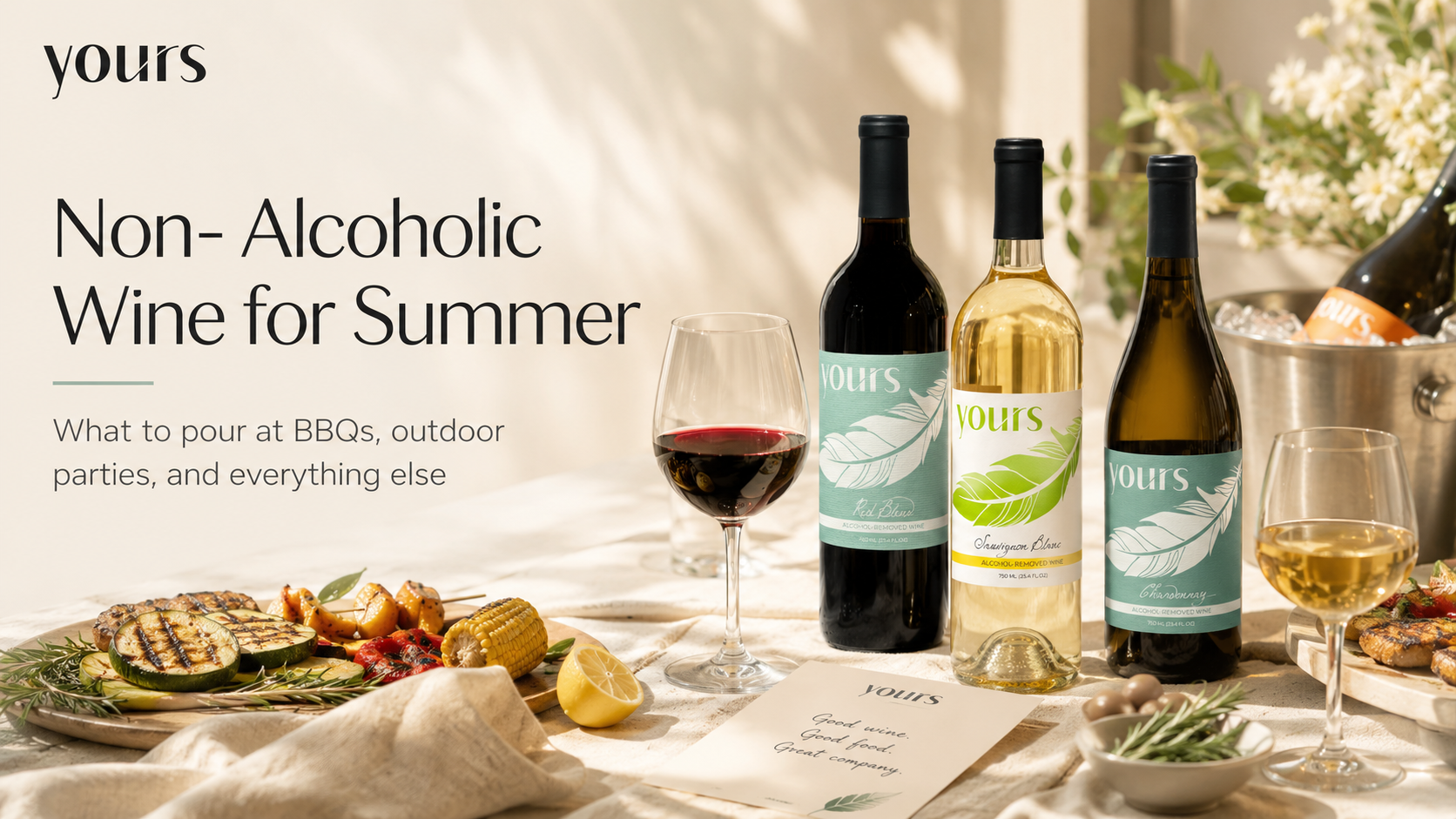
Summer wine occasions are structurally different from indoor winter ones, and non-alcoholic wine has to work harder to meet them.

The food is different. Outdoor cooking produces smoke, char, and fat, the kind of food that punishes sweet wines and rewards dry ones with structure. The setting is different. A patio at 88 degrees is not a dining room in January. Serving temperature is not a minor variable; it is half the experience. The social context is different. Summer gatherings tend to be looser, longer, and more mixed, people moving between the pool and the grill, half the guests drinking and half not.
None of this makes non-alcoholic wine a worse choice for summer. In some ways it is a better one. No afternoon heat exhaustion compounded by alcohol. No driving decisions at the end of a long day outside. The practical benefits of NA wine are more tangible in summer than almost any other season.
But you have to pick the right bottle for the occasion.
The BBQ Problem: What Grilled Meat Actually Needs
BBQ food is the hardest environment for sweet wine. Grilled beef, pork ribs, lamb chops, and smoked proteins have three things working against a sweet, low-acid wine: heavy fat content, char from the grill, and concentrated protein. A wine with 8 grams of added sugar per glass does not pair with this food, it competes with it. The sugar amplifies the sweetness of the caramelized surface, collapses the contrast, and leaves you with a flat, cloying glass that makes the food worse.
What BBQ food needs is the same thing it needs from any good pairing: tannins to cut the fat, dry finish to clean the palate, and enough acid to create contrast with the richness.
YOURS California Cabernet Sauvignon does this correctly. Dark fruit, cedar, genuine tannin grip, dry finish. Under 20 calories per 5oz glass. Zero added sugar. Made by California winemakers as a Cabernet, then dealcoolized after the wine was fully developed, so the structural elements that do the work at the table are still there.
Pour it at 60-65°F. If you are bringing it to an outdoor setting, keep it in a cooler until 15-20 minutes before you pour. A warm red loses its tannin grip, the structure goes soft, and the wine starts tasting like grape juice. One of the most common failures with outdoor red wine is letting it sit in the sun.
For a wider range of grilling, sausages, pork ribs, pulled chicken, anything with a BBQ sauce, YOURS Red Blend covers more ground. It has slightly softer tannins and a more approachable profile, which means it works better when the sauce is sweet or the protein is lighter.
For the full breakdown on wine pairing with specific grilled dishes, read Non-Alcoholic Wine Food Pairing.
This is the data nobody talks about. According to NIQ (2024), 92% of non-alcoholic wine buyers also still buy alcoholic products. The people swapping in NA wine are not abstaining. They are moderating. They want the ritual without every glass adding up.
Lighter Summer Fare: Fish, Salads, Grilled Chicken
Not every summer meal is a ribeye. When the menu shifts toward grilled fish, chicken skewers, herb-forward salads, or anything citrus-dressed, the Cabernet becomes too heavy.
YOURS Washington Sauvignon Blanc is the right bottle for this end of the summer menu. Crisp, dry, with the mineral character that Washington fruit produces. It works as well alongside grilled halibut as it does with a fennel salad. Under 20 calories, zero added sugar, dry finish, the same specs as the reds, applied to a white.
Serve it cold: 46-50°F. Take it directly from the cooler to the glass. White wine warms fast outdoors; it is better to start too cold and let it come up slightly than to start at room temperature and watch it go flat in the glass over ten minutes.
The Sauvignon Blanc also works as the default pour for guests who do not typically drink red. At a summer gathering with mixed preferences, having both the Cab and the Sauvignon Blanc open means you can match the glass to the food and the person, without forcing anyone into the wrong varietal.
For the full guide on what to expect from YOURS Washington Sauvignon Blanc, read Best Non-Alcoholic Sauvignon Blanc.
Rosé: The Summer Default
Rosé exists because summer exists. The format, light body, broad pairing range, serves cold, visually approachable, was made for exactly the kind of occasion where the food is casual, the setting is outdoor, and the guest list is mixed.
YOURS Rosé works for the general summer gathering the same way any well-made rosé does. It pairs with charcuterie, lighter appetizers, grilled vegetables, fish tacos, anything at the lighter-to-medium end of the meal spectrum. It is also the bottle you bring when you do not know exactly what will be served. The Rosé covers more situations than either the Cab or the Sauvignon Blanc alone.
Serve at 48-52°F. Keep it in the cooler between pours.
One specific use case for YOURS Rosé: summer events where a significant portion of the group is pregnant, not drinking, or simply heat-averse. At a July baby shower, a brunch, or any gathering where the default drink is more likely to be rosé than Cab, YOURS Rosé handles the room without requiring an explanation. Father's Day also falls in June, and YOURS makes a particularly apt gift for the wine-loving dad; the full guide is at non-alcoholic wine for Father's Day.
For more on YOURS Rosé and how to pair it across warm-weather occasions, read Best Non-Alcoholic Rosé.
Heat, Serving Temperature, and Why It Matters More Outside
Wine temperature has consequences that get amplified outdoors.
A red wine served too warm loses its tannin structure. The tannins go soft, the finish broadens, and the wine stops doing the work it is supposed to do alongside food. At 78°F a Cabernet tastes like a different wine than it does at 63°F. Outdoors in summer, your wine can go from cellar temperature to warm in under 30 minutes without direct sunlight.
Practical solution: keep a small cooler with ice packs at the table or serving area. Red wine goes in the cooler 20 minutes before you pour it; white wine goes in until it is time to pour. Do not leave bottles sitting in the sun. A metal wine insulator sleeve, the kind that costs about $10, keeps a chilled bottle cold for 30-40 minutes in outdoor heat.
This matters more with non-alcoholic wine than with conventional wine. Alcohol acts as a preservative and a texture element. Remove it, and the wine's structure is more sensitive to temperature changes. YOURS is built to behave like wine, but you have to treat it like wine, including keeping it cold.

Outdoor Parties: The Mixed Group Setup
Summer is peak season for the mixed-drinking table, events where half the people are drinking alcohol and the other half are not, for reasons ranging from pregnancy to driving to designated driver to simply not wanting to in the heat.
The clearest approach: have both options open simultaneously and treat them identically. One bottle of YOURS open on the table alongside the conventional wine. No announcement, no separate cooler, no different glass. Both options present, both poured the same way.
This removes the social friction entirely. The person not drinking does not have to announce their choice. The host does not have to manage it. The table looks like a normal summer gathering with multiple open bottles.
For the full guide to running this kind of multi-option setup through a longer outdoor meal, read Hosting with Non-Alcoholic Wine.
What to Skip in Summer
Sweet NA wine with BBQ food. This is the most common mistake. A non-alcoholic red with 8-10g of added sugar does not pair with grilled meat. The sweetness overwhelms the char, collapses the contrast, and makes the pairing worse than drinking sparkling water. Check the ingredients list before you buy, grape juice concentrate as the second or third ingredient is the tell.
Red wine served warm. If you are opening a red outside and it sits for 30 minutes in July, it will taste flat. Either keep it cold and pour from the cooler, or switch to a white or rosé that is meant to be cold.
Trying to use everyday still wine for a poolside toast or outdoor occasion. Summer social moments sometimes call for bubbles, a July Fourth toast, a backyard anniversary dinner. For those moments, non-alcoholic sparkling wine is the right call, not a warm glass of still red. See The Best Non-Alcoholic Sparkling Wine for the ranked options.
Anything that hasn't been tested before the party. Open a bottle the week before any significant gathering. Non-alcoholic wine varies significantly by brand. A bottle that tastes like sweetened grape juice on the 15th is still going to taste that way at your July 4th party.
Quick Reference: Summer Pairings
| Occasion | Best Bottle | Serve At |
|---|---|---|
| Grilled red meat, ribs, lamb | YOURS California Cab | 60-65°F, keep in cooler |
| BBQ sauce / pulled pork / sausage | YOURS Red Blend | 60-65°F, keep in cooler |
| Grilled fish, chicken, salad | YOURS Washington Sauvignon Blanc | 46-50°F, direct from cooler |
| General outdoor party / mixed group | YOURS Rosé | 48-52°F, direct from cooler |
| Poolside toast / celebration | Non-alcoholic sparkling | Chilled in ice bucket |
| Charcuterie / appetizers | YOURS Rosé or Sauvignon Blanc | Cold |
Frequently Asked Questions
What is the best non-alcoholic wine for summer?
YOURS Washington Sauvignon Blanc for white occasions (fish, salads, lighter food), YOURS California Cabernet Sauvignon for grilled red meat and BBQ, and YOURS Rosé as the general outdoor default. All three are under 20 calories per 5oz glass, zero added sugar, and dry. Serving temperature matters more outdoors than indoors, keep all three cold until you pour.
What non-alcoholic wine pairs with BBQ?
YOURS California Cabernet Sauvignon is the best pairing for grilled beef, lamb, and smoked proteins. It has tannin structure and a dry finish, the two things that make a red wine work alongside fat-rich BBQ food. For barbecue sauce-glazed proteins or lighter grilled options, YOURS Red Blend is slightly more forgiving. Avoid sweet NA wines at the BBQ table, the added sugar fights the food instead of complementing it.
Does heat affect non-alcoholic wine?
Yes. Non-alcoholic wine is more sensitive to temperature than conventional wine because alcohol acts as a structural buffer. A warm red loses its tannin grip; a warm white goes flat. Keep red wine at 60-65°F and white at 46-50°F. Outdoors in summer this means using a small cooler or wine insulator sleeve to maintain temperature between pours.
Does non-alcoholic wine need to be refrigerated?
Unopened YOURS bottles do not require refrigeration for storage, but they should be served cold. For outdoor summer occasions, chill red wine before serving and keep it in a cooler; serve white and rosé directly from the cooler. Once opened, store the remainder in the refrigerator and use within 3 days.
What is the best alcohol-free drink for a summer BBQ?
For wine drinkers, YOURS California Cabernet Sauvignon is the best BBQ pairing, dry, tannic, and built to work alongside grilled meat. For guests who want bubbles at a summer gathering, non-alcoholic sparkling wine (Leitz Eins Zwei Zero Sparkling Riesling or Surely Blanc de Blancs) handles the visual and social requirements of a toast or celebration moment.
Can you bring non-alcoholic wine to a summer party?
Yes, and it is one of the cleaner solutions for mixed-drinking groups. YOURS is packaged and presented identically to conventional wine. Bring it the same way you would bring any bottle, in a wine bag, opened at the table the same way. Nobody needs to know it's non-alcoholic unless you mention it. For outdoor parties, bring it pre-chilled.
Related: Non-Alcoholic Wine Food Pairing | Best Non-Alcoholic Rosé | Best Non-Alcoholic Sauvignon Blanc | Hosting with Non-Alcoholic Wine | The Best Non-Alcoholic Sparkling Wine | Best Non-Alcoholic Red Wine | Non-Alcoholic Wine for Father's Day
Non-Alcoholic Wine for Summer Weekends
Summer wine plans are easier when the bottle fits the whole outing—not only the first pour. For a cabin game night, ferry picnic, or road-trip weekend, start with three practical questions: how will the bottle stay protected, how will it stay cool, and what does the next morning already have on the calendar?
Cabin game night: make the table easy to return to
A good cabin game-night setup is deliberately simple. Put water and snacks on the same table as the wine. Use stable glassware that suits the room. Keep the bottle visible instead of sending one person back to the kitchen whenever a glass runs low.
For a darker, slower evening, Cabernet Sauvignon can give the table a familiar red-wine shape. If the cabin is warm, cool the bottle gently before serving rather than putting ice in the glass. Temperature preference varies, so treat this as a tasting choice rather than a rule.
- Set out water before the first round begins.
- Choose glasses that are steady on a card table.
- Keep the bottle away from a fireplace or sunny window.
- Reseal and refrigerate what remains after the game.
How to wrap a wine bottle for a road trip
For a weekend drive, cushion the bottle before it goes into the bag. Lay a thick towel flat, place the sealed bottle near one edge, roll it fully, then nest the wrapped bottle upright between soft items. Keep it out of direct sun and never leave it in a hot parked vehicle.
- Center: place the sealed bottle on a folded towel.
- Roll: cover the bottle completely, including the base.
- Nest: keep it upright and separated from hard objects.
This is packing guidance for a private vehicle, not a statement about airline, rail, ferry, park, or open-container rules. Check the rules for the exact place you are visiting.
Plan the evening before a trail day
The cleanest weekend plan puts tonight and tomorrow in the same frame. Set the trail map, filled water bottles, shoes, and departure time before the cabin evening begins. Then the alcohol-removed pour is one part of the plan—not a promise about sleep, recovery, or athletic performance.
That distinction matters. YOURS can provide a familiar wine occasion without conventional wine alcohol, but no beverage can guarantee how someone will feel the next morning. Keep the claim honest. Keep the plan visible.
Summer Weekend FAQ
Can non-alcoholic wine travel in a car?
A sealed bottle can generally be packed for a private road trip, but storage and transport laws vary. Protect it from breakage and heat, and check local rules for your destination.
How do I keep non-alcoholic wine cool outdoors?
Use an insulated carrier with cold packs or an ice-and-water bucket at the destination. Keep the bottle shaded and avoid leaving it in a hot vehicle.
Should I put ice cubes in non-alcoholic wine?
You can serve wine however you enjoy it, but ice cubes dilute flavor as they melt. Chilling the bottle or glass first keeps the pour cold without adding water.