Alcohol and Cholesterol: What Your HDL Number Isn't Telling You
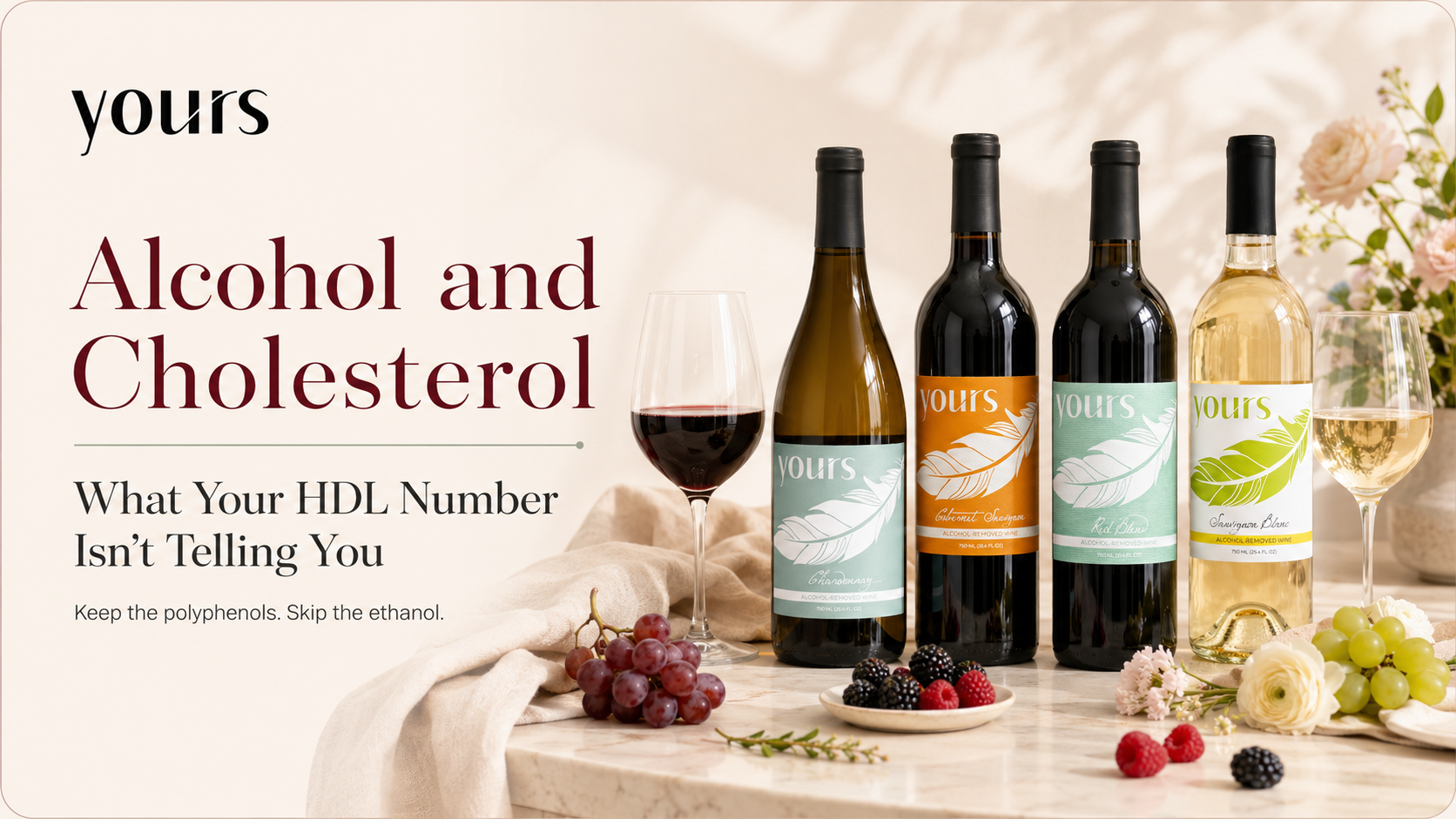
Most doctors will tell you the HDL story. "Moderate drinking raises your good cholesterol." It's been standard guidance for decades. It shows up in Harvard Health articles, cardiology pamphlets, dinner party conversations. Your HDL number goes up. That sounds protective.

The problem: a rising HDL number and a functioning HDL particle are not the same thing. And the alcohol-raised version is increasingly understood to be the kind that looks good on paper but doesn't actually do the work.
That distinction changes everything about how we should read the relationship between alcohol and cardiovascular health.

The Quick Answer Most Articles Give: And Why It's Incomplete
Alcohol does raise HDL cholesterol. That part is accurate. Ethanol metabolism triggers the production of ApoA-I, the protein scaffold of HDL particles. More ApoA-I means more HDL-C on your lab panel. This is a real and measurable effect.
Where the logic breaks down is the assumption that higher HDL always means better cardiovascular protection.
HDL's protective job is called reverse cholesterol transport. It's the process by which HDL particles collect cholesterol from arterial walls and carry it back to the liver for disposal. That's what makes HDL "good": not the number itself, but the action.
Alcohol-raised HDL appears to perform this function less effectively than HDL raised through exercise or diet. The particle is present. The cholesterol efflux capacity (the ability to extract cholesterol from arterial plaque) is impaired.
You've raised a number. You haven't improved the mechanism.
This is the data nobody talks about. According to NIQ (2024), 92% of non-alcoholic wine buyers also still buy alcoholic products. The people swapping in NA wine are not abstaining. They are moderating. They want the ritual without every glass adding up.
What Alcohol Actually Does to Your Lipid Panel
Your lipid panel has four main measurements: total cholesterol, LDL, HDL, and triglycerides. Alcohol affects all four.
LDL (the number most people watch)
Heavy and chronic drinking raises LDL and VLDL (very low density lipoprotein). VLDL is the precursor that gets converted to LDL in circulation. Alcohol increases hepatic VLDL secretion, which downstream raises LDL-C. At moderate levels, this effect is smaller. At heavy or binge drinking levels, LDL and VLDL elevation is consistent across studies.
Triglycerides (the underreported story)
This is where alcohol has its clearest and most underappreciated effect.
When ethanol enters the liver, it becomes the metabolic priority. The liver processes alcohol before everything else, including fat metabolism. The byproduct of this process is acetaldehyde, which triggers a cascade: de novo lipogenesis accelerates, triglyceride synthesis increases, and VLDL output from the liver rises.
Triglycerides don't get the same cultural attention as LDL. But cardiovascular research has increasingly shifted to treating elevated triglycerides as a major risk marker on their own. A large meta-analysis found that non-fasting triglyceride levels predict cardiovascular events independently of LDL. [VERIFY: triglyceride cardiovascular risk meta-analysis, approximate year 2019-2022, likely JAMA or Circulation]
One night of heavy drinking can spike triglyceride levels measurably for 24 to 48 hours. Regular moderate drinking creates a sustained baseline elevation.
HDL (the complicated one)
The HDL elevation from alcohol is real. ApoA-I increases. HDL-C on your panel goes up. But emerging evidence suggests that the functional quality of this HDL is different from HDL raised through exercise or dietary changes.
The distinction matters because cardiovascular protection comes from HDL function, not HDL count.
The Dysfunctional HDL Problem
The clearest challenge to the "alcohol raises good cholesterol" narrative comes from Mendelian randomization studies.
Mendelian randomization uses genetic variants as natural experiments. If certain genetic variants reliably raise HDL cholesterol, and if high HDL were inherently protective, then people with those variants should have lower rates of heart disease. They don't.
A major Mendelian randomization study found that genetic variants associated with elevated HDL-C did not reduce the risk of myocardial infarction the way you'd expect if the number itself were the protective agent. [VERIFY: Mendelian randomization HDL study, approximately 2012-2014, Lancet or NEJM, Voight et al. likely author]
This doesn't mean HDL is irrelevant. It means HDL quantity and HDL function are separable. The number can go up while the protective mechanism stays flat or decreases.
Alcohol specifically has been implicated in producing "dysfunctional HDL": particles with altered lipid composition and reduced capacity for reverse cholesterol transport. The mechanism involves ethanol's effects on the proteins that enable HDL to pull cholesterol from arterial tissue. [VERIFY: dysfunctional HDL and alcohol, ethanol effect on cholesterol efflux capacity, PMC study preferred]
The practical implication: using alcohol to raise your HDL number is not the same as using exercise to raise your HDL number. One produces functional particles. The other raises the count.
Triglycerides: The Underreported Risk
Triglycerides were treated as a secondary concern in cardiovascular medicine for most of the twentieth century. LDL got the drugs, the clinical guidelines, and the public awareness campaigns.
That weighting is shifting.
Studies now consistently link elevated non-fasting triglycerides to cardiovascular risk independent of LDL levels. Hypertriglyceridemia (triglycerides above 150 mg/dL fasting) is now treated as a standalone cardiovascular risk factor by major cardiology organizations. [VERIFY: AHA/ACC triglyceride guidance, confirm current threshold and year]
Alcohol is one of the most reliable triggers of elevated triglycerides. The mechanism is direct:
- Ethanol enters the liver and gets metabolic priority over fat oxidation
- Normal fat metabolism is suppressed while the liver processes alcohol
- Acetaldehyde triggers de novo lipogenesis (new fat synthesis)
- VLDL secretion increases to transport newly synthesized triglycerides
- Plasma triglyceride levels rise
This effect occurs at all drinking levels, with dose-dependent severity. Even moderate, regular drinking produces a chronic upward baseline for triglycerides.
For someone whose total lipid panel looks acceptable on paper, elevated triglycerides can be the hidden risk their LDL number doesn't capture.
What Switching to Non-Alcoholic Wine Changes
The cholesterol equation changes when you remove ethanol from the picture.
Triglyceride synthesis, turned off
The entire hepatic triglyceride cascade described above is ethanol-dependent. No ethanol means no metabolic priority override, no acetaldehyde, no de novo lipogenesis trigger. YOURS at 0.5% ABV delivers approximately 0.6 grams of ethanol per glass. At that level, there is no meaningful hepatic TG synthesis effect. The triglyceride mechanism simply doesn't fire.
HDL distortion, removed
If the dysfunctional HDL effect is driven by ethanol's interaction with HDL particle composition and efflux proteins, then removing ethanol removes that interaction. The HDL your body produces without alcohol in the picture is HDL of its natural quality profile.
Polyphenols, intact
This is where dealcoholized wine creates a distinct advantage over just choosing not to drink wine at all.
Resveratrol, the polyphenol found in grape skins and wine, has documented effects on LDL oxidation. Oxidized LDL is the form most associated with arterial plaque formation. Resveratrol appears to inhibit LDL oxidation through its antioxidant activity and through activation of SIRT1 (sirtuin 1), a cellular stress regulator. [VERIFY: resveratrol LDL oxidation studies, PMC preferred, Baur & Sinclair or subsequent review]
Quercetin and other flavonoids present in wine have complementary anti-inflammatory effects in the vascular system.
The dealcoholization process used for YOURS uses vacuum distillation, which removes ethanol at low temperatures to preserve the polyphenol profile. The compounds that were doing the cardiovascular work in red wine remain. The ethanol that was disrupting your triglycerides and HDL function does not. [VERIFY: polyphenol preservation through vacuum distillation, Akhtar et al. PMC12004437, 2025, confirm resveratrol specifically]
YOURS contains under 20 calories per glass, 4 grams of carbs, and zero added sugar. The profile that affects cholesterol and triglycerides is fundamentally different from alcoholic wine, not just similar with less alcohol.
The Full Picture
Here's what the evidence actually shows:
| Effect | Moderate Drinking | Heavy Drinking | YOURS (0.5% ABV) |
|---|---|---|---|
| HDL-C (quantity) | Increases | Variable | No alcohol-driven effect |
| HDL function (efflux) | Likely impaired | Likely impaired | No alcohol-driven effect |
| LDL | Modest increase possible | Increases | No alcohol-driven effect |
| Triglycerides | Increases (dose-dependent) | Significantly increases | No alcohol-driven effect |
| Polyphenol intake | Present | Present | Present (preserved through dealcoholization) |
The people who told you red wine was good for your heart weren't entirely wrong. Wine does contain polyphenols with documented cardiovascular effects. But the argument that alcohol itself is protective has not held up under the more rigorous testing of Mendelian randomization and mechanistic HDL research.
What wine was doing that was worth keeping can be kept without ethanol.
FAQ: Alcohol and Cholesterol
Does cutting out alcohol lower cholesterol?
Yes, in most people. The effect is most pronounced for triglycerides, which can drop significantly within weeks of stopping alcohol. LDL typically decreases modestly. The HDL number often drops as well, but as described above, the quality profile of that remaining HDL is likely better than the alcohol-inflated version. Most cardiologists consider the overall lipid panel improvement from stopping alcohol to be favorable.
How quickly does alcohol affect cholesterol?
Triglycerides respond fastest. A single heavy drinking session can raise triglyceride levels within hours and keep them elevated for 24 to 48 hours. With regular moderate drinking, the cumulative effect shows up as a persistently elevated fasting triglyceride baseline. LDL changes more slowly, reflecting weeks to months of drinking patterns.
Is wine better for cholesterol than beer?
The polyphenol content in red wine is higher than in beer, which is the basis for the "red wine is heart-healthy" claim. But from a strict triglyceride and HDL function standpoint, the ethanol in both produces similar metabolic effects. What differentiates wine is what survives when the ethanol is removed.
Does non-alcoholic wine affect cholesterol levels?
At 0.5% ABV, the ethanol content of non-alcoholic wine (including YOURS) is too low to trigger the hepatic triglyceride synthesis mechanism in any meaningful way. The polyphenols that may support LDL oxidation resistance remain. The net effect on your lipid panel is categorically different from alcoholic wine.
What should I drink if I have high cholesterol?
No single beverage addresses elevated cholesterol. Diet, exercise, and for many people, medication are the primary tools. That said: removing regular alcohol intake removes one of the consistent triggers of elevated triglycerides. Dealcoholized wine allows you to keep the polyphenol intake that has shown some favorable effects on LDL oxidation, without the lipid-disrupting mechanism.
Does red wine lower cholesterol?
Red wine does not reliably lower LDL cholesterol. The studies suggesting cardiovascular benefit from moderate wine consumption were largely observational, and Mendelian randomization research has challenged the causal interpretation. What red wine contains, specifically resveratrol, quercetin, and other polyphenols, shows effects on LDL oxidation (a different measure than LDL quantity). The polyphenols may be doing something useful. The alcohol is doing something harmful. They are separable.
How much alcohol raises cholesterol?
For triglycerides, the dose-response is clear: more alcohol, higher triglycerides. Even moderate regular consumption (1-2 drinks daily) produces measurable triglyceride elevation compared to non-drinkers. For LDL, the effect is more pronounced at heavy drinking levels. For HDL, quantity rises with even moderate intake, but the functional quality concerns apply across the drinking spectrum.
Removing Ethanol, Keeping the Good Part
The conversation about alcohol and heart health has been distorted by one number: HDL-C. A higher number felt like evidence of benefit. It was evidence of a metabolic response, not necessarily a protective one.
The triglyceride story, which gets less press, is clearer and more consequential for most people managing their cardiovascular risk. Regular alcohol intake is one of the most reliable ways to keep triglycerides elevated. Removing it is one of the most reliable ways to bring them down.
YOURS gives you the polyphenols that wine contains: the resveratrol, the quercetin, the flavonoids that have shown actual effects on LDL oxidation and vascular health. It removes the ethanol that was triggering triglyceride synthesis and compromising HDL function.
You're not giving something up. You're keeping the part that was doing the work.
Try YOURS and see what your next panel shows.
Related reading: - How non-alcoholic wine is made - Alcohol and liver health: what's actually happening - Alcohol and blood pressure: the connection explained - Alcohol and inflammation: the mechanism behind the damage - Non-alcoholic wine and polyphenols: what survives dealcoholization - Drinking less without making it a thing - Alcohol and bone health: how the cortisol and calcium mechanisms intersect with cardiovascular risk
Frequently Asked Questions
Does cutting out alcohol lower cholesterol?
Yes, in most people. The effect is most pronounced for triglycerides, which can drop significantly within weeks of stopping alcohol. LDL typically decreases modestly. The HDL number often drops as well, but the quality profile of that remaining HDL is likely better than the alcohol-inflated version. Most cardiologists consider the overall lipid panel improvement from stopping alcohol to be favorable.
How quickly does alcohol affect cholesterol?
Triglycerides respond fastest. A single heavy drinking session can raise triglyceride levels within hours and keep them elevated for 24 to 48 hours. With regular moderate drinking, the cumulative effect shows up as a persistently elevated fasting triglyceride baseline. LDL changes more slowly, reflecting weeks to months of drinking patterns.
Is wine better for cholesterol than beer?
The polyphenol content in red wine is higher than in beer, which is the basis for the 'red wine is heart-healthy' claim. But from a strict triglyceride and HDL function standpoint, the ethanol in both produces similar metabolic effects. What differentiates wine is what survives when the ethanol is removed.
Does non-alcoholic wine affect cholesterol levels?
At 0.5% ABV, the ethanol content of non-alcoholic wine is too low to trigger the hepatic triglyceride synthesis mechanism in any meaningful way. The polyphenols that may support LDL oxidation resistance remain. The net effect on your lipid panel is categorically different from alcoholic wine.
Does red wine lower cholesterol?
Red wine does not reliably lower LDL cholesterol. The studies suggesting cardiovascular benefit from moderate wine consumption were largely observational, and Mendelian randomization research has challenged the causal interpretation. What red wine contains, specifically resveratrol, quercetin, and other polyphenols, shows effects on LDL oxidation. The polyphenols may be doing something useful. The alcohol is doing something harmful. They are separable.
How much alcohol raises cholesterol?
For triglycerides, the dose-response is clear: more alcohol, higher triglycerides. Even moderate regular consumption (1-2 drinks daily) produces measurable triglyceride elevation compared to non-drinkers. For LDL, the effect is more pronounced at heavy drinking levels. For HDL, quantity rises with even moderate intake, but the functional quality concerns apply across the drinking spectrum.
What should I drink if I have high cholesterol?
No single beverage addresses elevated cholesterol. Diet, exercise, and for many people medication are the primary tools. That said, removing regular alcohol intake removes one of the consistent triggers of elevated triglycerides. Dealcoholized wine allows you to keep the polyphenol intake that has shown some favorable effects on LDL oxidation, without the lipid-disrupting mechanism.
Related in this topic
- Non-Alcoholic Wine Health Guide (topic guide)
- Non-Alcoholic Wine for Weight Management: How a Glass a Day Can Help You Lose Weight
- What Alcohol Does to Your Sleep (And Why Non-Alcoholic Wine Doesn't)
- The Lowest Calorie Non-Alcoholic Wine (With Real Numbers)
- Non-Alcoholic Wine for Dry January: A Guide for People Who Actually Like Wine