Alcohol and Inflammation: How Ethanol Triggers Systemic Inflammation and What Changes Without It
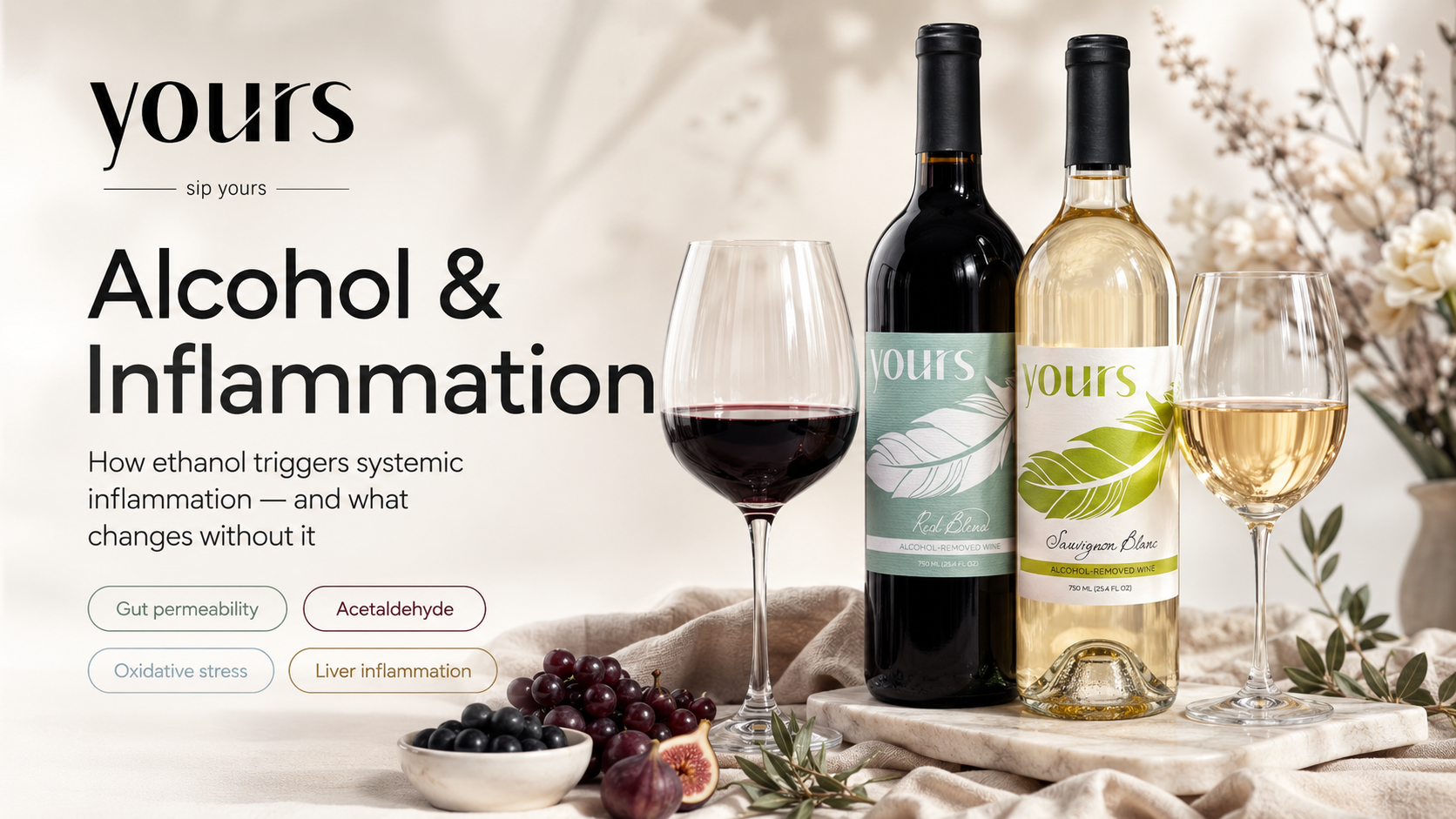
Regular alcohol consumption triggers systemic inflammation through four distinct pathways: gut permeability allowing bacterial LPS into the bloodstream, acetaldehyde-driven cytokine release, CYP2E1-generated reactive oxygen species activating NF-kB, and hepatic steatosis activating liver Kupffer cells. All four mechanisms operate at moderate consumption levels, not only in heavy drinkers.

Inflammation is how the body responds to threat. Infection, injury, toxin, foreign invader: the immune system detects the signal and mounts a response. In acute situations, this is useful. The swelling around a cut is inflammation doing its job.
Chronic low-grade inflammation is different. It is the same system running at a lower level, sustained over time, without a specific threat to resolve. Chronic inflammation is the underlying process in cardiovascular disease, type 2 diabetes, certain cancers, metabolic syndrome, and neurodegenerative conditions. The connection between chronic inflammation and almost every major disease category that kills people at scale is one of the most consistently replicated findings in modern medicine. Acetaldehyde, the primary metabolite produced when alcohol is processed, is also a documented carcinogen; the alcohol and cancer risk article covers how that inflammatory pathway connects to malignancy.
Regular alcohol consumption feeds chronic inflammation through four distinct pathways. None of them require heavy drinking to operate. The mechanisms are active at moderate consumption levels.
This article explains each pathway specifically: what happens, why it happens, and what the connection to disease looks like at the population level. The section on wine polyphenols addresses the frequently cited counterargument directly. This is not medical advice. For any health concerns related to alcohol consumption, speak with a healthcare provider.
Pathway 1: Gut Permeability and LPS Leakage
The connection between alcohol and systemic inflammation begins in the gut.
Ethanol and its primary metabolite, acetaldehyde, damage the proteins that form tight junctions between intestinal epithelial cells. Tight junctions are the seals between cells in the intestinal lining. Their function is selective barrier maintenance: nutrients and water cross in; bacteria, bacterial fragments, and large molecules do not.
When tight junctions are disrupted, the barrier becomes permeable. The gut "leaks." The mechanism is detailed in the related alcohol and gut health article, but the consequence most directly relevant to inflammation is the release of lipopolysaccharides (LPS) into the bloodstream.
LPS are fragments of gram-negative bacterial cell walls. They are present in the gut lumen in abundance. Under normal conditions, the intact intestinal barrier prevents them from crossing into systemic circulation. When intestinal permeability increases, LPS can cross.
LPS triggers toll-like receptor 4 (TLR4), a pattern recognition receptor on immune cells including macrophages, monocytes, and Kupffer cells in the liver. TLR4 evolved to detect bacterial invasion, and LPS is one of its primary signals. When TLR4 is activated by LPS, it initiates a systemic inflammatory response: pro-inflammatory cytokines are released (TNF-alpha, IL-6, IL-1beta), white blood cell activity increases, and the body enters a state of immune activation.
Elevated serum LPS levels are consistently documented in people with alcohol use disorder. They have also been found at lower consumption levels in research examining regular moderate drinkers. The pathway is not unique to heavy drinking. The mechanism is active whenever gut permeability is increased, and alcohol increases gut permeability at doses that fall within standard moderate drinking definitions.
This pathway connects a single glass to the gut to circulating immune activation. Not because one glass causes severe permeability damage, but because the mechanism is continuous rather than threshold-based.
Pathway 2: Acetaldehyde and Cytokine Release
Acetaldehyde is the primary metabolite of ethanol, produced in the liver via alcohol dehydrogenase, and also produced locally in the gut by intestinal bacteria.
Acetaldehyde is directly toxic to cells. It reacts with proteins and DNA to form adducts, which are modified molecules that the immune system recognizes as damaged or foreign. The formation of acetaldehyde adducts on hepatocyte proteins triggers inflammatory signaling in liver tissue. It also stimulates hepatic stellate cells, which play a role in liver fibrosis progression.
Beyond the liver, acetaldehyde directly stimulates immune cells to release pro-inflammatory cytokines: TNF-alpha, IL-6, and IL-1beta. These are the same cytokines triggered by the LPS-TLR4 pathway described above. The two pathways amplify each other.
TNF-alpha (tumor necrosis factor alpha) is a central mediator of systemic inflammation. Elevated TNF-alpha is found in inflammatory conditions ranging from rheumatoid arthritis to atherosclerosis. It promotes inflammation through multiple downstream cascades and is a target of several pharmaceutical anti-inflammatory drugs, which indicates the importance of TNF-alpha to chronic inflammatory disease.
IL-6 (interleukin-6) is a cytokine that drives the acute phase response, stimulates C-reactive protein (CRP) production in the liver, and promotes systemic immune activation. Elevated IL-6 is associated with cardiovascular disease risk, metabolic inflammation, and immune system suppression at higher doses.
The practical implication: acetaldehyde, which is produced every time ethanol is metabolized, is a direct inflammatory trigger at the cellular level, independent of the LPS pathway.
Pathway 3: Oxidative Stress and NF-kB Activation
Alcohol metabolism generates reactive oxygen species (ROS). The primary pathway: a significant portion of ethanol is metabolized not by alcohol dehydrogenase but by the microsomal ethanol oxidizing system (MEOS), specifically the enzyme CYP2E1 (cytochrome P450 2E1). CYP2E1 activity increases with regular alcohol consumption.
The CYP2E1 pathway is oxidatively expensive. It generates substantial quantities of reactive oxygen species as a byproduct of ethanol metabolism. ROS are chemically reactive molecules that damage cell membranes, proteins, and DNA, and they serve as signaling molecules for cellular stress pathways.
One of the primary stress-response pathways activated by ROS is NF-kB, nuclear factor kappa B. NF-kB is a transcription factor often described as a master switch for inflammatory gene expression. When NF-kB is activated, it enters the cell nucleus and initiates transcription of a range of inflammatory genes: cytokines, adhesion molecules, and enzymes that sustain and amplify the inflammatory response.
The NF-kB pathway is a central mechanism in chronic inflammatory disease. It is activated in atherosclerosis, inflammatory bowel disease, neurodegenerative conditions, and by many environmental stressors, of which alcohol-generated oxidative stress is one.
Regular alcohol consumption, by increasing CYP2E1 activity and ROS production, maintains a degree of NF-kB activation beyond what would occur without ethanol metabolism. This is chronic, low-grade, molecular-level inflammatory signaling that does not require obvious symptoms to be producing effects.
Pathway 4: Liver Steatosis and Kupffer Cell Activation
The liver is the primary site of alcohol metabolism, and it bears the highest exposure to ethanol's metabolic byproducts.
Even at moderate consumption levels, regular alcohol use promotes hepatic fat accumulation, a condition called steatosis or "fatty liver." Steatosis develops because alcohol metabolism disrupts the balance of fat oxidation and fat synthesis in hepatocytes: alcohol metabolism regenerates NADH at a high rate, and elevated NADH shifts the liver's metabolism away from fat burning and toward fat storage.
Fatty liver is not cirrhosis. It is a relatively early stage of alcohol-related liver change, and it is largely reversible with abstinence. But it matters in the context of inflammation because hepatic fat accumulation activates Kupffer cells.
Kupffer cells are the liver's resident macrophages. Their function is immune surveillance and response. When they are activated by fatty acids and cellular stress signals from fat-laden hepatocytes, they release pro-inflammatory cytokines into both the portal circulation and systemic circulation. Activated Kupffer cells amplify the inflammatory signal from the LPS-TLR4 pathway: LPS arriving via the portal vein from a permeabilized gut hits Kupffer cells that are already in an activated state due to hepatic steatosis.
These two pathways, gut permeability feeding LPS to liver Kupffer cells that are primed for activation by steatosis, are why the liver is the convergence point of alcohol-induced inflammation.
Pathway 5: Adiponectin, Adipose Tissue, and Chronic Inflammation
There is a fifth mechanism worth understanding for the systemic picture.
Adiponectin is a hormone secreted by adipose tissue (fat cells). Its role is anti-inflammatory: adiponectin suppresses macrophage activation, reduces NF-kB signaling, and inhibits pro-inflammatory cytokine production. Higher adiponectin levels are associated with reduced cardiovascular disease risk and lower systemic inflammation.
Regular alcohol consumption suppresses adiponectin secretion from adipose tissue, shifting the systemic balance away from anti-inflammatory regulation. Research at the population level has documented reduced adiponectin levels in regular drinkers compared to non-drinkers. The mechanism involves alcohol's effects on adipocyte gene expression and on the post-translational processing of adiponectin.
Reduced adiponectin means less anti-inflammatory brake on the same cytokine pathways described above. More net pro-inflammatory signaling, sustained over time.
This is why the inflammatory effect of alcohol is not limited to drinkers with obvious liver or gut problems. The adiponectin mechanism operates in peripheral tissue and contributes to chronic low-grade systemic inflammation even in people who would describe their drinking as moderate and their health as normal. Chronic elevation of inflammatory cytokines also suppresses osteoblast activity; the relationship between alcohol-driven inflammation and bone density loss is covered separately.
 The Population-Level Evidence: CRP
C-reactive protein (CRP) is a protein produced by the liver in response to inflammation. It is one of the most widely used clinical biomarkers of systemic inflammation. Elevated CRP is associated with cardiovascular disease risk, metabolic dysfunction, and chronic inflammatory conditions.
The relationship between alcohol consumption and CRP is dose-dependent across multiple large cohort studies.
Regular drinkers show elevated CRP compared to non-drinkers at the population level. The elevation is dose-dependent: heavier consumption shows higher CRP, and lighter consumption shows smaller but measurable elevation above the non-drinking baseline. This population-level pattern is consistent with the mechanistic picture described above: four converging pathways, all producing pro-inflammatory signaling.
The important caveat: at very low consumption levels (one drink or fewer per week), some studies have found CRP levels similar to non-drinkers or marginally lower. The J-shaped curve discussion in epidemiology is complex and confounded. But the "moderate drinking is anti-inflammatory" claim does not hold up at the consumption levels most people mean when they say they drink moderately.
The Wine Polyphenol Question
Red wine contains resveratrol, quercetin, and other polyphenols that have documented anti-inflammatory properties in cell culture and animal studies. This is real biology, not marketing.
The question is whether the polyphenol dose in a standard glass of red wine is sufficient to counteract the pro-inflammatory effects of the ethanol in that same glass.
The evidence on this is specific, and it does not favor the wine-as-anti-inflammatory argument at typical consumption levels.
Resveratrol's anti-inflammatory effects in vitro are demonstrated at concentrations that require consumption of far more wine than anyone drinks to achieve in human plasma. The oral bioavailability of resveratrol is poor: it is rapidly metabolized by the gut and liver, and blood concentrations after a glass of wine are far below the doses used in studies that show anti-inflammatory effects.
At moderate drinking levels, the evidence consistently shows that ethanol's pro-inflammatory mechanisms (LPS leakage, acetaldehyde, oxidative stress, CRP elevation) dominate over any polyphenol-mediated anti-inflammatory effect.
A 2004 meta-analysis published in Arteriosclerosis, Thrombosis, and Vascular Biology examined studies on alcohol and CRP and found consistent CRP elevation in regular drinkers including wine drinkers. The polyphenol content of wine did not produce a CRP-protective effect sufficient to offset the ethanol effect.
This does not mean polyphenols have no value. It means the polyphenol dose in a glass of alcoholic wine is delivered with a mechanism that produces more inflammation than the polyphenols reduce.
In dealcoholized wine, the polyphenols from fermentation remain. The phenolic compounds that survive dealcoholization, including tannins covered in detail in the tannins in non-alcoholic wine article, are the same compounds produced during fermentation. The LPS leakage, acetaldehyde cytokine signaling, CYP2E1 oxidative stress, and steatosis mechanisms are not present because there is no meaningful ethanol to metabolize.
What YOURS Provides Here
YOURS is real California wine with the alcohol removed. The fermentation process that produces polyphenols, tannins, and phenolic compounds is identical to the process used for alcoholic wine. Those compounds remain after dealcoholization.
What is absent: ethanol in quantities sufficient to produce the four inflammation pathways described above. At 0.5% ABV, a standard pour does not produce meaningful blood alcohol concentration, does not trigger the CYP2E1 pathway at volume, does not produce LPS-driving gut permeability changes, and does not generate acetaldehyde at inflammatory concentrations.
This is not a claim that YOURS reduces inflammation. The claim is more specific: YOURS does not deliver the mechanisms that create it.
For people who drink wine and care about systemic inflammation, the polyphenol-to-ethanol ratio in dealcoholized wine is more favorable than in alcoholic wine. The polyphenols are present. The ethanol-driven inflammation pathways are not.
That is a mechanism-based distinction, not a marketing claim. Whether that matters to any individual's health depends on factors well beyond the scope of what YOURS can speak to.
See also: how YOURS is made, alcohol and gut health, polyphenols and antioxidants in non-alcoholic wine, what alcohol does to your skin, alcohol and blood pressure, alcohol and weight loss, alcohol and cancer risk, alcohol and immune system, alcohol and bone health, and alcohol and cholesterol.
Frequently Asked Questions
Does alcohol cause inflammation? Yes. Regular alcohol consumption triggers systemic inflammation through four distinct mechanisms: increased gut permeability allowing bacterial LPS into the bloodstream, direct acetaldehyde-driven cytokine release, CYP2E1-generated reactive oxygen species activating NF-kB, and hepatic steatosis activating liver Kupffer cells. Population-level data shows dose-dependent CRP elevation in regular drinkers compared to non-drinkers.
Does moderate drinking cause inflammation? At moderate consumption levels, the mechanisms described above are active at lower magnitude than in heavy drinkers. Gut permeability changes, acetaldehyde formation, and CYP2E1 activity all occur when alcohol is metabolized, regardless of dose, though severity scales with consumption. Population studies show CRP elevation in regular moderate drinkers compared to non-drinkers.
Does red wine reduce inflammation because of resveratrol? Resveratrol has documented anti-inflammatory properties in vitro. However, the bioavailable dose from a glass of red wine is far below the concentrations shown to produce anti-inflammatory effects in cell and animal studies. At typical wine consumption levels, the ethanol-driven inflammatory mechanisms appear to dominate over any polyphenol-mediated benefit. Research on CRP levels in wine drinkers does not show a protective effect from polyphenol content.
What is LPS and why does alcohol release it? LPS (lipopolysaccharides) are fragments of gram-negative bacterial cell walls present in the gut lumen. Normally, the intact intestinal barrier prevents them from entering the bloodstream. Alcohol disrupts intestinal tight junctions, increasing gut permeability and allowing LPS to cross into systemic circulation. LPS activates toll-like receptor 4 (TLR4) on immune cells, triggering a systemic inflammatory response including TNF-alpha, IL-6, and IL-1beta cytokine release.
How does alcohol affect CRP levels? CRP (C-reactive protein) is a standard clinical marker of systemic inflammation. Regular alcohol consumption is associated with dose-dependent CRP elevation in population-level studies. Heavier drinkers show higher CRP levels; even moderate regular drinkers show measurable CRP elevation above the non-drinking baseline.
Does non-alcoholic wine cause inflammation? At 0.5% ABV, YOURS Non-Alcoholic Wine does not produce blood alcohol concentrations sufficient to trigger the gut permeability, acetaldehyde, CYP2E1, or hepatic steatosis pathways that drive alcohol-related inflammation. The polyphenols from wine fermentation remain after dealcoholization. This does not mean non-alcoholic wine reduces inflammation. It means it does not deliver the mechanisms that create the ethanol-driven inflammatory response.
Frequently Asked Questions
Does alcohol cause inflammation?
Yes. Regular alcohol consumption triggers systemic inflammation through four distinct mechanisms: increased gut permeability allowing bacterial LPS into the bloodstream, direct acetaldehyde-driven cytokine release, CYP2E1-generated reactive oxygen species activating NF-kB, and hepatic steatosis activating liver Kupffer cells. Population-level data shows dose-dependent CRP elevation in regular drinkers compared to non-drinkers.
Does moderate drinking cause inflammation?
At moderate consumption levels, the mechanisms that drive alcohol-related inflammation are active at lower magnitude than in heavy drinkers. Gut permeability changes, acetaldehyde formation, and CYP2E1 activity all occur when alcohol is metabolized regardless of dose, though severity scales with consumption. Population studies show CRP elevation in regular moderate drinkers compared to non-drinkers.
Does red wine reduce inflammation because of resveratrol?
Resveratrol has documented anti-inflammatory properties in vitro, but the bioavailable dose from a glass of red wine is far below concentrations shown to produce anti-inflammatory effects in research. At typical wine consumption levels, the ethanol-driven inflammatory mechanisms appear to dominate over any polyphenol-mediated benefit. Research on CRP levels in wine drinkers does not show a protective effect from polyphenol content.
What is LPS and why does alcohol release it?
LPS (lipopolysaccharides) are fragments of gram-negative bacterial cell walls present in the gut lumen. Normally, the intact intestinal barrier prevents them from entering the bloodstream. Alcohol disrupts intestinal tight junctions, increasing gut permeability and allowing LPS to cross into systemic circulation, where it activates toll-like receptor 4 (TLR4) on immune cells, triggering pro-inflammatory cytokine release.
How does alcohol affect CRP levels?
CRP (C-reactive protein) is a standard clinical marker of systemic inflammation. Regular alcohol consumption is associated with dose-dependent CRP elevation in population-level studies. Heavier drinkers show higher CRP; even moderate regular drinkers show measurable CRP elevation above the non-drinking baseline.
Does non-alcoholic wine cause inflammation?
At 0.5% ABV, YOURS Non-Alcoholic Wine does not produce blood alcohol concentrations sufficient to trigger the gut permeability, acetaldehyde, CYP2E1, or hepatic steatosis pathways that drive alcohol-related inflammation. The polyphenols from wine fermentation remain after dealcoholization. This does not claim non-alcoholic wine reduces inflammation. It means it does not deliver the ethanol-driven inflammatory mechanisms.
Related in this topic
- Non-Alcoholic Wine Health Guide (topic guide)
- Non-Alcoholic Wine for Weight Management: How a Glass a Day Can Help You Lose Weight
- What Alcohol Does to Your Sleep (And Why Non-Alcoholic Wine Doesn't)
- The Lowest Calorie Non-Alcoholic Wine (With Real Numbers)
- Non-Alcoholic Wine for Dry January: A Guide for People Who Actually Like Wine