Alcohol and Weight Loss: What's Actually Happening in Your Body
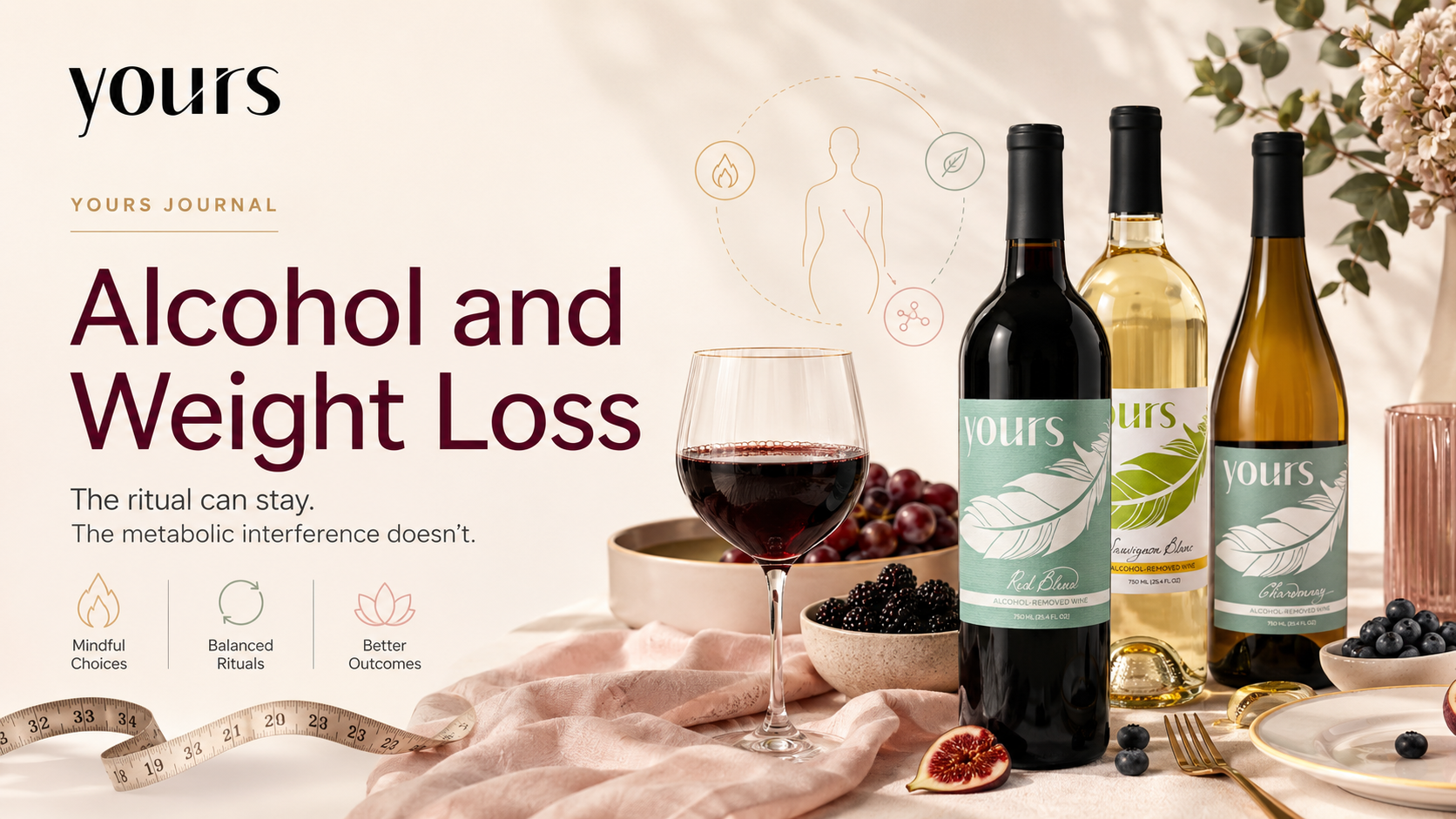
You've probably heard that wine has calories. That part is true. But the calorie count on the label is the least interesting thing about what alcohol does when you're trying to lose weight.

The real story is metabolic. And it starts the moment your liver gets involved.
 Why the Calories Are Just the Beginning
A standard 5oz glass of wine at 13% ABV delivers roughly 120 to 150 calories. Most of those calories come from ethanol itself, not from the wine. Ethanol carries 7 calories per gram, which puts it between fat (9 cal/g) and carbohydrates (4 cal/g) on the energy density scale.
That's a lot for a liquid that registers as "just a glass of wine."
But the calorie count, while real, isn't the most important mechanism. What matters more is what your body prioritizes once alcohol enters the system.
This is the data nobody talks about. According to NIQ (2024), 92% of non-alcoholic wine buyers also still buy alcoholic products. The people swapping in NA wine are not abstaining. They are moderating. They want the ritual without every glass adding up.
The Liver Problem: Fat Burning Pauses
Your liver is the primary site of fat oxidation. It's also where alcohol metabolism happens. The problem is that it cannot do both at the same time with equal priority.
When you drink, the liver immediately shifts its focus to metabolizing the alcohol. Ethanol converts to acetaldehyde, then to acetate. The body treats acetate as a preferred fuel source and burns it first. Everything else, including fat oxidation, gets deprioritized.
This isn't a small shift. Fat burning is effectively paused for the duration of alcohol metabolism. Depending on how much you drank, that window can extend 12 to 24 hours.
One drink doesn't eliminate all fat-burning capacity for a day. But it does interrupt the process. And for anyone running a calorie deficit or counting on their body to oxidize stored fat, that interruption adds up over time.
The liver also generates acetaldehyde during alcohol processing. Acetaldehyde is a toxic byproduct. The body works to clear it before addressing anything else. This is part of why even moderate drinking the night before can affect how your body functions the next morning, not just through sleep disruption, but through the actual biochemical cleanup process still running in the background.
Think of it as a metabolic queue. Alcohol goes to the front. Fat stays in line. The queue doesn't reset until the alcohol is fully metabolized.
Does Alcohol Slow Down Weight Loss?
Yes. The mechanism above explains why.
Even if you drink within your calorie budget for the day, the metabolic pause from alcohol can slow progress. You're not just adding calories, you're changing which fuel your body burns first. Fat sits in the queue while your liver handles the acetate.
There's also a timing effect. If you drink in the evening, a significant portion of your overnight metabolic window, when the body would otherwise be in fat-burning mode, gets redirected to alcohol metabolism instead.
How Many Calories Are in Wine?
Here's a practical breakdown:
- 5oz glass of wine at 12-13% ABV: 120 to 150 calories
- 5oz glass of wine at 14-15% ABV: 150 to 180 calories (higher alcohol = more ethanol = more calories)
- Dessert wines and fortified wines: 200+ calories per serving
The caloric variation comes almost entirely from alcohol content, not from the sugar or grapes. A drier wine with higher ABV can actually be more caloric than a sweeter wine with lower ABV.
For context, 150 calories from wine is roughly equivalent to a medium banana. But the banana doesn't interrupt your liver's ability to burn fat for the next several hours.
Does Drinking Wine Cause Belly Fat?
The visceral fat question is real, and it connects to cortisol.
Regular alcohol consumption elevates cortisol, the body's primary stress hormone. Cortisol promotes fat storage, and it does so preferentially in the abdominal region. This is the mechanism behind the documented association between regular drinking and increased visceral fat, even in people whose total caloric intake is controlled.
It's a separate pathway from the liver priority issue. The calorie problem is one mechanism. The cortisol-visceral fat pathway is another. They run simultaneously.
If you drink regularly (multiple nights per week), both mechanisms are likely active.
The Sleep Disruption Multiplier
Here's where it gets compounding.
Alcohol suppresses REM sleep. Even moderate amounts, one or two drinks, reduce REM duration and quality in the second half of the night. Poor sleep from alcohol disrupts the hormones that regulate hunger. Ghrelin (the hunger hormone) rises. Leptin (the satiety signal) drops.
The result: you wake up hungrier than you would have otherwise, with diminished capacity to regulate food choices. And because alcohol also lowers inhibition, the decision quality around food tends to decline in the hours immediately after drinking.
The sleep disruption runs on a specific timeline. Alcohol may help you fall asleep faster, which is why some people describe it as a sleep aid. But it fragments the second half of the night, the period when REM sleep is most concentrated. REM suppression means the restorative phases of sleep are cut short. Waking groggy and hungry after drinking is not coincidence. It's the hormonal consequence of disrupted architecture.
You can read the full sleep disruption mechanism in the alcohol and sleep article. The weight connection is worth understanding on its own: poor sleep from alcohol doesn't just affect your recovery. It directly alters appetite regulation the next day.
The Appetite Stimulation Effect
Alcohol activates appetite signaling in the hypothalamus. It increases ghrelin release and interacts with the reward circuitry in ways that make food more appealing in the immediate term. This is before the inhibition effects on decision-making even register.
The practical result: you eat more around drinking occasions than you would without alcohol, independent of the calories in the drink itself. If you are managing appetite with a GLP-1 medication, we cover whether you can drink wine on Ozempic in a dedicated guide.
This is sometimes called the "aperitif effect." It's been observed consistently enough to be considered a reliable mechanism, not an individual quirk.
Can I Drink Wine and Still Lose Weight?
Some people do. The metabolic effects described here don't make weight loss impossible for someone who drinks moderately. But they do make it harder, and they create specific obstacles that calorie counting alone doesn't account for.
The honest answer: if you're in an active weight-loss phase, alcohol is working against you through at least four separate mechanisms: the calories themselves, the fat oxidation pause, the cortisol pathway, and the sleep-appetite disruption loop.
Removing or substantially reducing alcohol addresses all four simultaneously. That's why people who stop drinking often see weight changes that exceed what their calorie reduction alone would predict.
The frequency and timing matter too. Drinking every night compounds the cortisol and sleep effects into a chronic pattern. Drinking twice a week with recovery days between means the disruptions are acute and temporary. Neither is identical in impact. But the mechanisms are active every time alcohol is present in the system, regardless of frequency.
For people who aren't trying to eliminate alcohol entirely, the practical question becomes: where does alcohol fit within the context of your specific goals, and what does the metabolic cost actually look like across a week, not just in a single evening? If intermittent fasting is part of your routine, it helps to know does non-alcoholic wine break a fast before you pour.
Is Non-Alcoholic Wine Better for Weight Loss?
Non-alcoholic wine addresses the mechanisms, not just the calories.
A glass of YOURS contains under 20 calories, 4g carbs, and 0g added sugar. Compare that to 120 to 150 calories in a conventional glass of wine.
But the calorie gap is actually the smaller part of the story. At 0.5% ABV, a dealcoholized wine like YOURS doesn't trigger the acetaldehyde pathway. There is no acetate for the liver to prioritize. Fat oxidation continues normally.
The cortisol spike associated with ethanol metabolism doesn't occur. Sleep architecture isn't disrupted by alcohol. The hormonal cascade that elevates ghrelin the next morning doesn't happen.
The ritual is intact: the glass, the pour, the smell, the tannin structure. What doesn't transfer is the metabolic interference.
This is not a weight-loss product. YOURS won't cause weight loss on its own. But for someone navigating a period where they're focused on body composition, removing the metabolic disruption while keeping the ritual is a meaningful trade.
You can see the full calorie comparison in the lowest calorie non-alcoholic wine guide, and the keto-specific breakdown in the non-alcoholic wine keto article.
What About Athletic Performance?
The weight and body composition conversation connects directly to training. The same mechanisms that interrupt fat oxidation also affect recovery: cortisol elevation, sleep disruption, and the inflammatory response that alcohol generates.
The alcohol and athletic performance article covers the performance side specifically. The overlap with weight and body composition is significant because most people optimizing for body composition are also training. The interference runs through the same pathways.
The Gut Layer
There's one more mechanism worth naming. Alcohol disrupts gut microbiome composition, increases intestinal permeability, and affects the gut-brain axis. The gut microbiome plays a role in metabolism and weight regulation. Chronic alcohol use degrades the gut environment in ways that compound the other mechanisms over time.
The alcohol and gut health article covers this more fully. For someone focused on weight loss, gut health is not a peripheral concern. It's part of the metabolic picture.
 How YOURS Is Made (and Why It Matters Here)
YOURS starts as real California wine, made by California winemakers. The alcohol is then removed through a controlled dealcoholization process. Monk fruit restores texture without adding sugar.
Understanding how that process works matters here because it explains why the metabolic effects don't transfer. The ethanol is gone. The pathways that ethanol triggers, the liver prioritization, the cortisol signal, the sleep suppression, don't activate at 0.5% ABV.
The how non-alcoholic wine is made guide walks through the full dealcoholization process if you want the technical detail.
The Practical Summary
Alcohol interferes with weight loss through several distinct mechanisms, each operating independently:
- Caloric density: 7 cal/g, 120 to 150 calories per glass
- Fat oxidation pause: liver prioritizes alcohol metabolism; fat burning suppressed for 12 to 24 hours
- Cortisol elevation: promotes visceral fat storage around the midsection
- Sleep disruption: suppresses REM, raises ghrelin, lowers leptin, increases next-day hunger
- Appetite stimulation: increases hunger signaling via hypothalamic pathways
Reducing or removing alcohol addresses all five. Switching to a properly dealcoholized non-alcoholic wine at 0.5% ABV removes the ethanol-triggered mechanisms while preserving the experience.
The ritual stays. The metabolic interference doesn't.
If you're trying to drink less without announcing it at every social occasion, the drinking less without making it a thing guide is worth reading.
Frequently Asked Questions
Does alcohol slow down weight loss? Yes. Alcohol interrupts fat oxidation at the liver level, elevates cortisol, disrupts sleep hormones, and stimulates appetite. These mechanisms operate independently of the calories in the drink itself.
How many calories are in wine? A standard 5oz glass of wine at 12-13% ABV contains approximately 120 to 150 calories, primarily from ethanol. Higher-ABV wines carry more calories. Dessert wines and fortified wines can exceed 200 calories per serving.
Does drinking wine cause belly fat? Regular alcohol consumption elevates cortisol, which promotes fat storage preferentially in the abdominal region. The association between regular drinking and visceral fat accumulation runs through this hormonal pathway, independent of total caloric intake.
Can I drink wine and still lose weight? Some people lose weight while drinking moderately. But alcohol creates at least four separate metabolic obstacles to fat loss: the calories themselves, the fat oxidation pause, the cortisol pathway, and the sleep-appetite disruption loop. Removing alcohol addresses all four simultaneously.
Is non-alcoholic wine better for weight loss? A dealcoholized wine at 0.5% ABV doesn't trigger the ethanol-dependent pathways: no fat oxidation pause, no cortisol spike from alcohol metabolism, no sleep suppression. The calorie reduction is real (under 20 cal vs. 120 to 150), but the mechanism removal is the more significant change for anyone focused on body composition.
The cortisol and systemic inflammation pathways described here also connect to broader alcohol health effects. For the anxiety side of the cortisol picture, see alcohol and anxiety. For how alcohol triggers systemic inflammation through the LPS/TLR4 pathway, see alcohol and inflammation. The same hepatic disruption that pauses fat oxidation also affects how the liver processes LDL and HDL; see alcohol and cholesterol for the lipid picture.
Frequently Asked Questions
Does alcohol slow down weight loss?
Yes. Alcohol interrupts fat oxidation at the liver level, elevates cortisol, disrupts sleep hormones, and stimulates appetite. These mechanisms operate independently of the calories in the drink itself.
How many calories are in wine?
A standard 5oz glass of wine at 12-13% ABV contains approximately 120 to 150 calories, primarily from ethanol. Higher-ABV wines carry more calories. Dessert wines and fortified wines can exceed 200 calories per serving.
Does drinking wine cause belly fat?
Regular alcohol consumption elevates cortisol, which promotes fat storage preferentially in the abdominal region. The association between regular drinking and visceral fat accumulation runs through this hormonal pathway, independent of total caloric intake.
Can I drink wine and still lose weight?
Some people lose weight while drinking moderately. But alcohol creates at least four separate metabolic obstacles to fat loss: the calories themselves, the fat oxidation pause, the cortisol pathway, and the sleep-appetite disruption loop.
Is non-alcoholic wine better for weight loss?
A dealcoholized wine at 0.5% ABV doesn't trigger the ethanol-dependent pathways: no fat oxidation pause, no cortisol spike from alcohol metabolism, no sleep suppression. The calorie reduction is real (under 20 cal vs. 120 to 150), but the mechanism removal is the more significant change for anyone focused on body composition.
Related in this topic
- Non-Alcoholic Wine Health Guide (topic guide)
- Non-Alcoholic Wine for Weight Management: How a Glass a Day Can Help You Lose Weight
- What Alcohol Does to Your Sleep (And Why Non-Alcoholic Wine Doesn't)
- The Lowest Calorie Non-Alcoholic Wine (With Real Numbers)
- Non-Alcoholic Wine for Dry January: A Guide for People Who Actually Like Wine